

A clean unit isn’t automatically ready for its next occupant. Repairs after tenant move out should start with a documented inspection, not a quick walk-through and a guess. Leftover items can hide small issues, while ordinary wear can be mistaken for damage. Either can lead to missed work or disputed deductions.
Use a repeatable process to inspect the property, record what you find, and decide what needs attention first. This checklist helps you distinguish normal wear from damage and functional problems, then prioritize safety and essential repairs before cosmetic touch-ups. Clear photos and notes also create a useful record for planning the work.
Start with each room and the visible fixtures and systems. Flag hazards and anything that doesn’t work as intended, then list surface repairs and cleaning needs. Once the property is cleared, focused punch-list repairs can address minor damage and maintenance without turning turnover into a renovation project. The result is a clearer handoff from inspection to repairs and a property better prepared for its next occupant.
Key Takeaways
- Use a consistent, room-by-room inspection to record visible conditions and identify work before turnover.
- Dated notes and photos help create a clear condition record, but they don’t determine legal responsibility.
- Prioritize safety and habitability concerns first, functional repairs next, and cosmetic touch-ups after.
- Keep debris removal separate from repair work. Clearing the unit can reveal issues and make the punch list easier to organize.
- A practical plan for repairs after tenant move out moves from inspection to focused post-cleanout repairs for minor damage and maintenance.
Repairs After Tenant Move-Out: What Should the First Inspection Catch?
Start with the unit itself. Walk through each room, record visible conditions, and separate repair needs from routine turnover tasks such as removing leftover items or preparing surfaces for cleaning. A clear inspection helps you identify what needs attention and build a practical work list. It does not determine who is legally responsible or what may be charged against a deposit.
Keep the first pass focused. Look for hazards, items that no longer work as intended, and visible changes that may need repair. If a condition could affect safe use of the unit, record its location and what you observed so it can be addressed promptly. Use the checklist to plan work, not as a substitute for reviewing current California requirements.
Which areas should a move-out repair checklist cover?
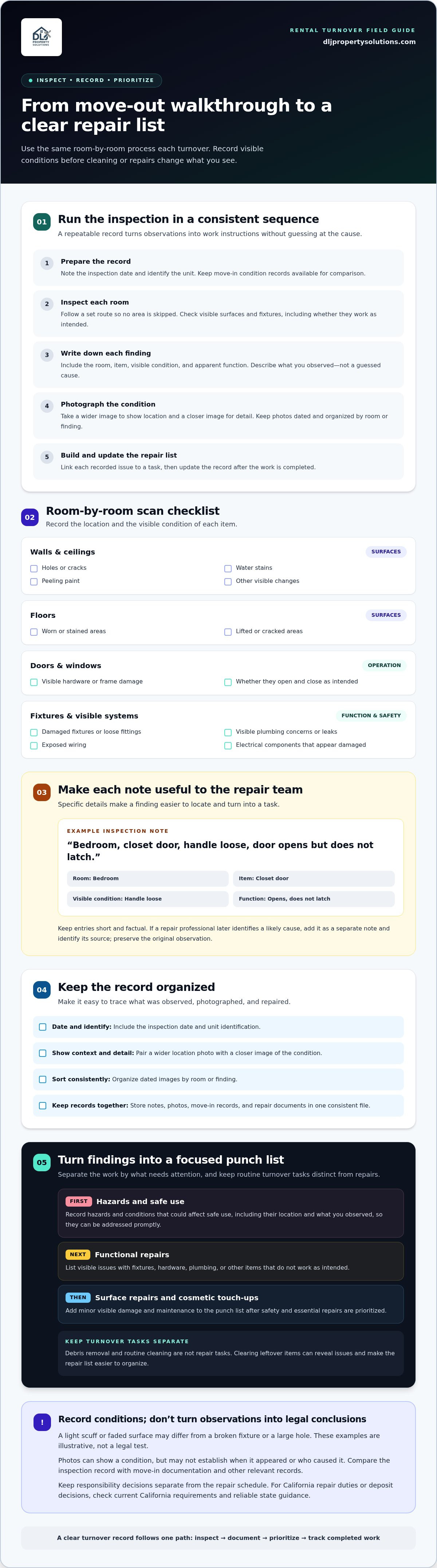
Check walls, ceilings, doors, windows, floors, and built-in fixtures. Note water stains, damaged surfaces, broken hardware, loose fittings, and anything that sticks, leaks, or fails to operate normally. Record the room and exact location, such as “hallway, ceiling near bedroom door.” Specific notes make each finding easier to match to a repair task.
- Walls and ceilings: Look for holes, cracks, stains, peeling paint, or other visible changes.
- Floors: Note worn, lifted, cracked, or stained areas.
- Doors and windows: Check visible hardware and frames, and note whether they open and close as intended.
- Fixtures and visible systems: Note damaged fixtures, visible plumbing concerns, exposed wiring, or electrical components that appear damaged.
How do ordinary wear and damage differ?
Ordinary use can leave marks over time. A light scuff or faded surface may differ from a broken fixture or a large hole, but these examples are illustrative, not a legal test. Don’t label every worn area tenant damage. Record what you observe and keep the description separate from any conclusion about responsibility.
Questions about California repair duties or security-deposit deductions require current California guidance. Don’t rely on assumptions, general online examples, or rules from another state. The phrase Repair and deduct refers to a landlord-tenant legal concept, but a general explanation does not establish how it applies to a specific California situation. Verify relevant rules with current California sources before making legal or deposit decisions.
For repairs after tenant move out, use the inspection to create a factual record: what you saw, where you saw it, and whether the item appeared to function. Keep routine cleaning, debris removal, and repair tasks distinct in your notes. This makes the inspection more useful for planning and helps prevent an observation from being treated as a legal conclusion.
How to Inspect and Document Move-Out Repairs in California
Use the same sequence for each turnover. Once the unit is accessible, work through it room by room. Record what you see before repairs or cleaning change the condition. For repairs after tenant move out, a consistent record makes it easier to turn observations into a clear work list without guessing at the cause.
- Prepare the record. Note the inspection date and identify the unit. Keep move-in condition records available for comparison.
- Inspect each room. Follow a set route so no area is skipped. Check visible surfaces and fixtures, and note anything that appears not to function as intended.
- Write down each finding. Include the room, item, visible condition, and apparent function. Describe facts, such as “bathroom sink cabinet has a water stain,” rather than guessing how or when it happened.
- Photograph the condition. Take a wider image to show the location and a closer image for detail. Keep images dated and organized by room or finding.
- Build the repair list. Link each recorded issue to a task, then update the record after the work is completed.
What should owners record during the walkthrough?
Keep entries short and specific. “Bedroom, closet door, handle loose, door opens but does not latch” gives a clearer work instruction than “closet needs repair.” Use the same photo approach for each item, and store notes, images, move-in records, and repair documents together. A consistent file makes it easier to track what was observed and what work followed.
Don’t edit the original observation to fit a later conclusion. If someone performing a repair identifies a likely cause, add that as a separate note and indicate its source. This preserves the difference between what the inspector saw and what someone determined later.
How should repair responsibility be assessed?
Compare the current record with move-in condition documentation and other relevant records. A photo can show a condition, but it may not establish when it appeared or who caused it. Keep responsibility decisions separate from the repair schedule, and don’t treat a visible defect as automatic proof of tenant liability.
California repair duties and security-deposit rules can depend on the circumstances and current law. Before explaining deductions or deadlines, check current California Civil Code requirements and reliable state guidance. The California Courts Self-Help Guide: Eviction provides information on California landlord-tenant procedures, but it should not replace checking the rules that apply to a particular deposit decision.
Once the findings are recorded, sort the work into a practical punch list and keep completion notes with the original inspection file. In Orange County, DLJ Property Solutions performs focused post-cleanout punch-list repairs for minor damage and maintenance needs. This creates a clear handoff from documented findings to repair work.
Which Move-Out Repairs Should You Prioritize in Orange County?
Sort the repair list by impact, not by how visible an issue looks at first glance. A practical order is safety or habitability concerns, functional repairs, then cosmetic touch-ups. This directs attention to problems that may affect safe use of the unit before time goes to finish work. It’s an operational framework, not a substitute for current California legal requirements or a determination of responsibility.
For repairs after tenant move out, separate urgency from convenience. A damaged item that affects access or basic function may need attention before routine punch-list work. A surface mark can usually be assessed after higher-impact concerns are understood. Don’t assign fixed deadlines based on this order. Applicable requirements depend on current law and the facts of the situation.
Which issues need attention before cosmetic work?
First, flag conditions that could affect safe access, secure doors or windows, or basic use of the property. Next, identify functional issues that could interrupt cleaning, inspection, or preparation for the next occupant. Suspected electrical, plumbing, or structural hazards call for qualified assessment. A visual walkthrough is not a technical diagnosis.
- Safety or habitability concerns: Record conditions that could pose a hazard or prevent safe use. Keep the area clear and note what needs assessment.
- Functional repairs: List items that don’t operate as intended, such as a door that won’t close or a fixture that doesn’t work properly.
- Cosmetic work: Schedule surface and finish tasks after essential functions and access concerns have been addressed.
Unresolved functional problems can slow the rest of turnover. A leak may affect cleaning or conceal further staining. A door that won’t close can complicate access and final checks. Note any dependent task alongside the repair, such as “complete floor cleaning after leak assessment.” This makes the sequence visible and helps prevent cosmetic work from starting before the underlying issue is understood.
When are cosmetic repairs part of turnover?
Assess marks, finish wear, and minor surface damage in context. A faded area or light scuff may be a presentation concern, while a damaged surface may need repair. Repainting or replacing a surface isn’t automatically required every time a tenant leaves. Decide whether the work is needed to restore function, address a documented condition, or improve presentation.
Keep those reasons distinct in the work list. “Repair damaged wall surface” describes a task. “Repaint for a consistent finish” describes a presentation choice. That distinction helps you plan the sequence and avoid treating optional improvements as essential repairs. Once safety and function are addressed, group cosmetic items by room so they can be reviewed together during the final turnover pass.
Move-Out Repair Checklist: From Empty Unit to Ready-for-Turnover
A reliable turnover follows a sequence: clear access, inspect the unit, assign repair tasks, then check the work before moving to the next preparation stage. Keep cleanout and repair scope separate. Removing unwanted items and debris can reveal floor, wall, or fixture conditions that were hidden, but cleanout does not replace inspection or repairs.
Use one task list for the whole unit. Group items by room and priority so the work is easy to assign and track. For each repair, record its location, priority, status, and completion notes. This gives the next person a clear handoff and makes unfinished work visible.
What sequence keeps turnover tasks organized?
Follow the same order each time. Inspect and document before repairs begin, then group tasks by location and priority. This helps limit missed items and repeated trips between rooms. Mark a task complete only after checking the result. Record follow-up work under its own status rather than burying it in general notes.
- Clear access: Arrange removal of unwanted items and debris. Keep cleanout tasks separate from the repair list.
- Inspect and record: Walk each room and compare visible conditions with existing inspection notes. Add newly visible findings to the task list.
- Assign repairs: Group related items by room, then set their priority and status. Note any task that depends on another step being completed first.
- Track the work: Update each item as it moves from planned to in progress or complete. Add a short note describing the work done.
- Recheck the unit: Return to each listed location and confirm whether the observed issue was addressed. Keep outstanding work open.
A useful task entry is specific: “Kitchen, cabinet door, medium priority, in progress, hinge adjusted.” Use the same fields throughout the list:
- Location: Room and exact area or item.
- Priority: Safety or function concern, or routine finish work.
- Status: Planned, in progress, complete, or still outstanding.
- Completion notes: Factual description of what was done or what remains.
What belongs on the final walkthrough?
Take the completed task list back through the unit. Check every repair against its recorded location and note whether the visible issue was addressed. If work remains, list it separately with a clear status and next step. Don’t mark an item complete based on an update alone. Keep the final record factual. It documents the work, but does not provide a legal or occupancy assurance.
For repairs after tenant move out, this sequence turns inspection findings into trackable work and a cleaner handoff. DLJ Property Solutions performs focused punch-list repairs after cleanouts for minor damage and maintenance needs. Post-cleanout turnover repairs can be part of preparing the property for its next occupant.
Plan Post-Cleanout Repairs for an Orange County Rental Turnover
Once unwanted items and debris are cleared, the repair scope is easier to define. A documented inspection shows what needs attention, where each issue is located, and which tasks should come first. That record helps turn a broad turnover job into a focused punch list to prepare the property for its next occupant.
DLJ Property Solutions LLC provides property cleanouts and focused punch-list repairs after cleanouts in Orange County. The work addresses minor damage and maintenance needs as part of turnover, not full-scale renovation or property management. Keep the scope tied to the conditions you observed and the work needed to prepare the unit.
What can post-cleanout punch-list repairs address?
Use the inspection record to identify practical repair tasks. Clearing debris may reveal conditions that were previously blocked from view, so review the unit after the cleanout and update the list before assigning work. Keep each item connected to its location and documented condition. This creates a clear scope for focused repairs rather than expanding the job into a renovation project.
Separate repair tasks from other turnover work. Cleaning, debris removal, and repairs serve different purposes, even when they happen in sequence. A cleanout makes the space accessible; the inspection identifies visible concerns; the punch list captures minor damage and maintenance work. Keeping those steps distinct makes the work easier to organize and the handoff clearer.
How can owners move from checklist to completed work?
Before arranging the work, organize the recorded items by room and priority. Note which conditions are visible, what needs attention, and whether the cleanout is part of the project. DLJ Property Solutions handles property cleanouts and post-cleanout turnover repairs for residential and commercial properties in Orange County, connecting debris removal with focused repair work to prepare the property for its next occupant.
Keep the project details practical. Share the property location, whether items or debris need to be cleared, and the punch-list findings gathered during the inspection. Group related items by room and flag the most important functional concerns. A concise scope helps define the work without confusing routine turnover preparation with a larger renovation.
The aim is a clean handoff: clear the property, document what remains, complete focused repair tasks, and record any outstanding work. For repairs after tenant move out, that sequence gives owners a practical path from an empty unit to the next stage of turnover. Keep inspection notes and the repair list together so the project details stay tied to the conditions on site.
Request a cleanout and repair quote for your Orange County turnover project.
Turn Your Inspection Notes Into the Next Step
A move-out checklist is most useful when it leads to a clear handoff. Keep the final task list with the property records, note any work that remains, and use the documented scope to plan the next stage. That keeps repairs after tenant move out tied to observed conditions and gives the turnover process a practical starting point.
For minor damage and maintenance needs after a cleanout, DLJ Property Solutions provides focused punch-list repairs for property turnover in Orange County, California. The work supports preparation for the next occupant without turning a repair list into a remodeling project.
Have a property to clear and a repair list to address? Request a cleanout and repair quote to share the project details and take the next step toward turnover.
Frequently Asked Questions
Who is responsible for repairs after a tenant moves out?
Responsibility depends on the lease, condition records, the type and cause of the issue, and applicable California law. Owners remain responsible for required property repairs, while a tenant may be responsible for damage they caused beyond ordinary use. Don’t assume every repair belongs to either party. Before making a deposit deduction or other legal decision about repairs after tenant move out, check current California requirements and the documentation for that unit.
Can a landlord charge a tenant for ordinary wear and tear in California?
Ordinary wear and tenant-caused damage are different categories, and a charge depends on the facts and current California rules. Routine fading or minor wear isn’t automatically tenant liability. For example, a worn finish may reflect ordinary use, while a broken item may need closer review. Record the condition and compare it with available move-in information. Check authoritative California guidance before assessing a charge or deposit deduction.
Does a landlord have to repaint after every tenant moves out?
No. A tenancy ending doesn’t automatically mean the unit must be repainted. Consider the actual condition, planned turnover work, and any applicable obligations. A paint touch-up for appearance is different from work needed to address a damaged surface or a condition affecting function or safety. Don’t apply a universal repainting schedule. Record the specific reason for painting and assess whether it is needed for this unit.
How soon should repairs be completed after a tenant moves out?
Timing varies with the repair, the property’s condition, access, and plans for the next occupancy. Assess safety and functional concerns before scheduling lower-priority cosmetic tasks. A loose handle and a condition that may affect safe use don’t have the same operational priority. Don’t rely on a general estimate as a legal deadline. Before stating a California statutory timeline, verify the current rule and whether it applies to the situation.
Should a rental unit be cleaned before move-out repairs begin?
Clear belongings and debris to improve access and make visible conditions easier to assess. Document the unit before work changes what can be observed, then sequence cleaning and repairs according to the scope. They’re separate turnover tasks, even if one follows the other. For example, a stain exposed after debris removal may need assessment before routine surface work proceeds. Suspected hidden or specialized damage may also need review before ordinary punch-list tasks continue.
What should a landlord document before arranging move-out repairs?
Record the inspection date, room, item, observed condition, and whether it appears to function. Take relevant photographs and compare findings with available move-in records. Keep invoices, work notes, and completion details with the inspection file so the project history stays together. This record supports clear repair planning, but it doesn’t establish legal responsibility by itself. Verify current California requirements before using documentation to support a deposit decision.


