

A cleanout can stall before the first load moves if nobody has defined what belongs in the scope. A debris removal cleanout may involve household items, yard waste, construction debris, or leftover materials. Each category affects the access plan and may require different handling. Sorting the debris and marking the work areas before removal begins helps keep the project clear.
A property can be cleared without disrupting its next step, but an undefined scope can lead to missed areas, extra handling, or delays. Local disposal requirements can also vary by material. Identify what is on site early, especially if ordinary contents are mixed with construction debris or items that may need special handling.
This guide explains what a cleanout can cover, how to define the areas and materials in scope, and what to consider when planning access and disposal. It also explains how residential and commercial cleanouts can connect to turnover preparation, including focused punch-list repairs after the debris is removed.
Key Takeaways
- Use a debris removal cleanout to clear unwanted materials from a property or defined area before inspection, repair, or turnover.
- Identify whether the work involves interior contents, shared spaces, exterior areas, or work zones to set a clear scope.
- Separate property cleanouts, junk hauling, and construction cleanup by the materials and areas each typically covers.
- Mark what should be removed, kept, or protected, then document access points before work begins.
- After debris is cleared, assess remaining turnover needs. Focused punch-list repairs can address minor issues before the next use.
What Is a Debris Removal Cleanout, and When Does a Property Need One?
A debris removal cleanout removes unwanted materials from a property or designated space so the area can be inspected, repaired, turned over, or used again. The scope might cover a single room, a whole home, or a commercial property. It depends on what needs to go and which areas need to be cleared.
A cleanout is a removal task, not a catch-all for every step that follows. Removing unwanted contents doesn’t automatically include detailed cleaning, repairs, or renovation. Those are separate work stages. Defining the boundary early helps owners and property teams plan what comes next without treating an empty space as a finished one.
Which property situations commonly call for a cleanout?
Vacant homes may need accumulated contents removed before inspection or repair work can begin. During a rental turnover, clearing items left behind opens rooms for assessment and preparation for the next occupant. Offices may need furniture, discarded supplies, or other unwanted materials removed before the space is inspected or assigned a new use.
A cleanout can also help when accumulated debris blocks access to a particular area. Garages, storage areas, and estates each bring distinct sorting and planning needs. For any of them, start by identifying the exact area to clear and separating items that should stay from those that should go.
What does a cleanout accomplish?
Removing unwanted materials restores usable floor and work space. It can also expose areas that were blocked from view, making it easier to assess walls, floors, fixtures, and access routes. That visibility supports the next decision: inspect, repair, clean, or prepare the space for another use.
Consider an office with discarded furniture and boxes stacked across a room. A cleanout removes the unwanted contents and opens the floor for inspection. It doesn’t, by itself, wash the carpet or fix a damaged wall. Those needs can be addressed after the area is accessible.
Materials matter, too. General contents such as unwanted household or office items differ from debris left by construction or demolition. Demolition waste can include materials generated when structures are taken down, so identify the debris type before planning removal. A property cleanout may involve different categories in different areas, but the work still needs a defined boundary.
For a practical starting point, identify the location, name the materials to remove, and state what should remain. Then connect the cleanout to its purpose: is the space being cleared for inspection, turnover, or repairs? That answer helps keep the work focused. DLJ Property Solutions LLC provides residential and commercial cleanouts, with focused post-cleanout repairs for minor turnover needs. A clear removal scope gives the next stage room to proceed.
What Debris Can a Property Cleanout Cover?
A cleanout can cover different materials across the same property. Start the inventory by location, then separate ordinary unwanted contents from landscaping or construction debris. This makes a debris removal cleanout easier to scope because the plan reflects what is present, where it sits, and what may need separate handling.
- Interior rooms: Unwanted household contents, office materials, and items left in kitchens, bedrooms, or work areas.
- Shared spaces: Discarded items in hallways, lobbies, utility rooms, or other common areas. Note whether access must stay clear for others.
- Exterior areas: Brush, leaves, and other landscaping debris, along with unwanted materials stored outside.
- Work zones: Leftover materials from construction or demolition. Identify these by type rather than grouping them with ordinary contents.
How do indoor and outdoor debris differ?
Indoor contents are usually tied to how a room or workspace was used. Outdoor debris may include cut brush or landscaping material. The location changes the access plan: indoor items may need to pass through doorways or shared areas, while exterior piles may be reached directly or sit behind gates. Material type matters as well, since mixed contents may need to be sorted before removal.
Why sort mixed debris before removal?
Sorting helps identify what should leave and what must stay. Create remove, keep, and protect groups to reduce the chance of moving an item that belongs in place. Separate categories also make it easier to spot materials that may need different handling or disposal. Identifying materials before removal gives the cleanout plan a clear scope and helps surface items that need separate handling.
Start with a room-by-room or area-by-area list. Note each material and its location, then flag anything that could be hazardous or subject to special disposal requirements. Don’t assume every item can go out with ordinary contents. Paint, solvents, and other potentially hazardous materials may need separate handling. Requirements vary by location and material, so check applicable local guidance before deciding how those items should be handled.
Construction debris and landscaping waste also need to be distinguished from general household or office contents. A pile of branches has different handling needs from broken building materials, even if both are outside. If a property contains several categories, record them separately rather than describing everything as “junk.” That distinction helps define what the cleanout covers and what requires a different disposal route.
DLJ Property Solutions LLC handles property cleanout work for residential and commercial properties. A location-based list and a clear keep-or-remove decision give the work a practical starting point.
Debris Removal, Junk Hauling, or Construction Cleanup: What’s the Difference?
These labels can overlap, but they don’t describe the same scope. A property cleanout defines which areas and contents need to be cleared. Junk hauling describes the removal and transport of unwanted items. Construction cleanup focuses on debris from building, remodeling, or demolition work. Define the work by location, material, and next use rather than relying on the label alone.
| Work type | Typical scope | Common areas and materials |
|---|---|---|
| Property cleanout | Clear one or more defined areas or a whole property | Homes, offices, shared spaces, unwanted household or business contents |
| Junk hauling | Move and remove specified unwanted items | Rooms, garages, or outdoor areas; furniture, boxes, and other discarded contents |
| Construction cleanup | Remove debris generated by construction, remodeling, or demolition work | Work zones; leftover building materials and demolition debris |
None of these labels automatically includes demolition, detailed cleaning, or repair work. A debris removal cleanout can focus on clearing a property, while a separate task may be needed to wash surfaces or address damage. State those boundaries before work begins.
How is a property cleanout different from junk hauling?
A property cleanout can cover multiple rooms or areas, with clear instructions about what stays and what goes. Hauling is the physical removal component. For example, clearing an office might involve removing items from several rooms while leaving selected desks in place. The room-by-room scope, retained items, and route through shared spaces all affect the plan.
When does construction cleanup need a separate scope?
Set a distinct scope when debris comes from building, remodeling, or demolition activity. Identify the materials and work zone rather than grouping them with ordinary unwanted contents. Material type can affect how debris is handled and where it can go. Don’t assume a general cleanout includes every construction material or site condition.
Disposal requirements can vary by material and location. For a property in Orange County, check current local requirements for the debris involved before planning disposal. This is especially useful when a load combines ordinary contents with construction-related material. Clear categories help distinguish the property cleanout from construction-specific cleanup and make the next step easier to define.
Use a short scope statement to keep everyone aligned: name the areas, list what is being removed, identify what must remain, and describe construction debris separately. That turns broad service language into a practical work plan. It also clarifies whether the goal is a cleared property, item hauling, or cleanup tied to a work zone.
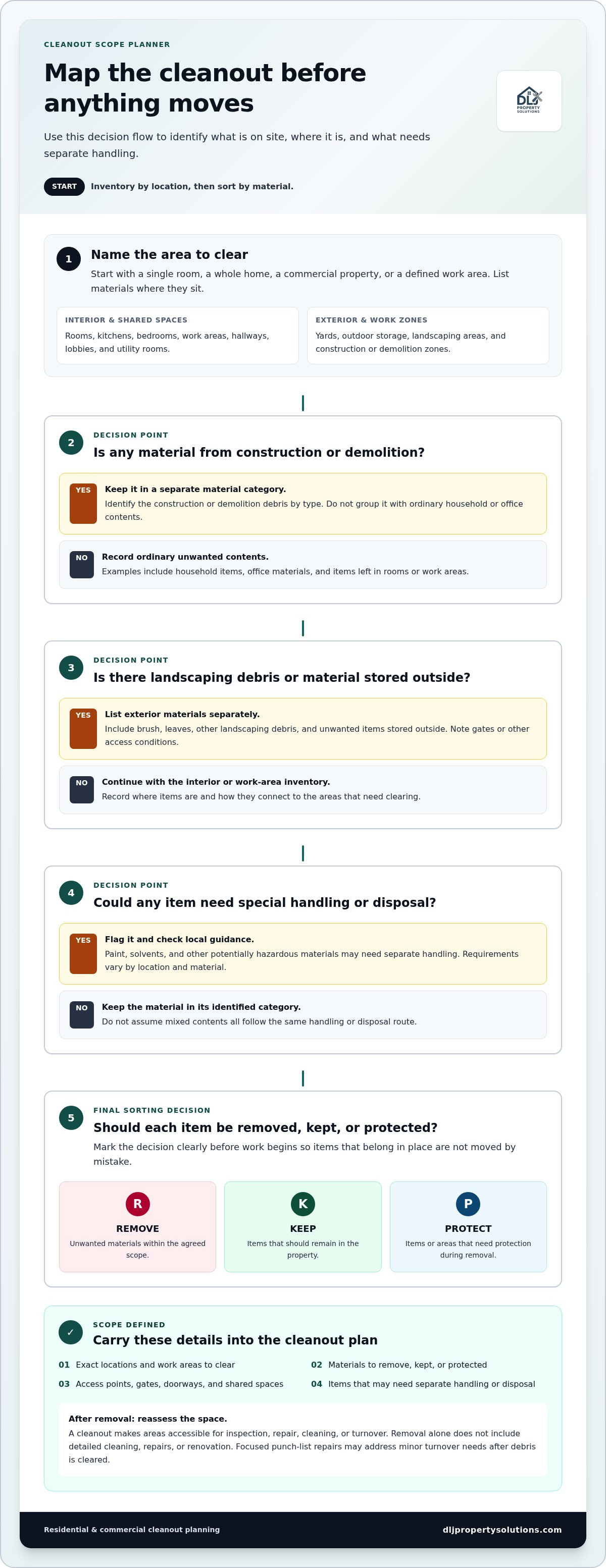
How to Scope a Debris Removal Cleanout Before Work Begins
A written scope turns a broad cleanout request into defined work. It shows which areas are included, what should leave, what must stay, and how the crew can reach the debris. Use this sequence to plan a debris removal cleanout and keep the next steps clear.
- Mark the areas. List each room, shared space, garage, or outdoor area included. Name excluded rooms and spaces so they aren’t swept into the job by assumption.
- Sort items by outcome. Create separate remove, keep, protect, and leave-in-place groups. Mark retained furniture or fixtures clearly, especially when they sit near items being removed.
- Describe the debris. Note household or office contents, landscaping material, and construction debris separately. Flag items that may need special handling rather than grouping everything as general waste.
- Record access conditions. Document stairs, entry points, narrow hallways, shared entrances, gates, elevators, and parking limits. Include any areas that need to remain accessible during the work.
- Capture the site. Photograph each included area, key items to retain, and the route from the debris to the exit. Add notes to identify locations and clarify what each image shows.
- Set the sequence. Note occupied areas or timing constraints, then plan the cleanout around inspection, turnover, or repair work that follows.
What should a cleanout scope document?
Keep the record practical. Identify included and excluded areas, visible debris categories, items to keep or protect, and anything requiring separate handling. Add photos of the work areas and access points. For Orange County properties, account for applicable local disposal rules for the material being removed. Verify current requirements rather than assuming one disposal approach fits every debris type.
How can property access and timing affect the plan?
Occupied rooms, shared entrances, stairs, and limited parking can change how removal is staged. Record these conditions before setting the work sequence. For a turnover, schedule the cleanout before inspection or focused repair work so cleared areas can be assessed and punch-list needs addressed. Mark any route or space that must stay accessible while the work is underway.
Make the written scope match the property on the ground. If a room is excluded, mark it. If an item must stay, identify it. If access is restricted, record the limitation. This reduces ambiguity and helps keep cleanout work aligned with the space’s next use.
DLJ Property Solutions LLC provides residential and commercial property cleanouts in Orange County. Details about the service are available at DLJ Property Solutions LLC.
From Debris Removal to Property Turnover: What Comes Next?
Removal is the first stage, not the finish line. Once unwanted debris is cleared, the property is easier to inspect and the remaining work becomes more visible. A practical turnover sequence is simple: clear the space, assess its condition, then handle the cleaning or repairs needed to prepare it for its next use.
For a home, that may mean checking rooms and access areas for visible issues after contents are gone. For an office, it may mean reviewing flooring, walls, and common areas before the next occupant or use. A cleared space gives owners and property teams a better view of what remains. A debris removal cleanout can serve as the handoff point between removal and turnover work.
What can happen after the space is cleared?
With debris out of the way, inspect exposed areas and note specific tasks. DLJ Property Solutions LLC performs focused post-cleanout punch-list repairs to address minor turnover issues. This is targeted repair work, not remodeling or full-scale renovation. A short list might identify a minor repair needed before a room is ready for its next use. Keep repair needs distinct from removal so each step has a clear scope.
For example, a cleared room may reveal a minor issue that was hidden behind stored contents. Record it after removal, then plan the repair as a separate turnover task. This keeps the cleanout focused while giving repair work an unobstructed space to proceed.
When do related cleaning services fit the project?
Some properties need surface cleaning after removal or repairs. Commercial carpet washing is a separate option for business flooring when carpet care is part of the turnover plan. Pressure washing can be added for relevant exterior surfaces. Neither service defines the cleanout itself. Treat each as a distinct step based on the property’s condition and intended use.
Keep the sequence clear:
- Clear: Remove the unwanted contents and debris within the agreed scope.
- Assess: Review the newly accessible areas and record remaining turnover needs.
- Prepare: Schedule focused repairs or relevant cleaning work as separate tasks.
This order avoids planning repair or surface-cleaning work around items that still need to be removed. It also gives property teams a clear point to assess whether the space is ready for inspection, further work, or its next occupant. DLJ’s residential and commercial cleanouts can connect to focused turnover repairs, commercial carpet washing, or pressure washing where those services fit the property’s needs.
Share the property type, areas to clear, debris involved, and intended next use to request a cleanout quote from DLJ Property Solutions LLC. Clear project details help define the removal scope and the next step.
Set the Property Up for Its Next Use
A clear scope gives the next decision a firm starting point. Identify the property’s intended use, the areas that need attention, and any work that should follow removal. That keeps the cleanout connected to the property’s next step instead of treating it as a job with no handoff.
DLJ Property Solutions LLC handles residential and commercial cleanouts, with focused post-cleanout turnover repairs for remaining punch-list needs. Commercial carpet washing and pressure washing add-ons can support properties where those surfaces need attention. The work stays practical and tied to the space’s next use.
Ready to move from planning to a defined project? Share the property type, areas involved, and what needs to happen after the debris is cleared. Request a debris removal cleanout quote and take the next step toward preparing the property.
Frequently Asked Questions
Is debris removal the same as junk removal?
Not always. Junk removal often describes taking away unwanted items, while a debris removal cleanout can cover multiple material types across defined property areas. For example, a project might include discarded office contents inside and yard debris outside. List each area and material separately, then note anything that must remain. For an Orange County property, include the location and material categories when checking applicable disposal guidance.
Can a debris removal cleanout happen while a property is occupied?
Yes, it can be planned around an occupied property. For example, residents may continue using bedrooms while a garage or storage area is cleared. Identify which rooms are active, where belongings must stay, and which routes need to remain open. Pets, business hours, and shared entrances can affect the order of work, so record those details in the project plan.
How long does a property debris cleanout take?
There isn’t one duration that fits every cleanout. A single, accessible room with clearly identified contents differs from several occupied areas with mixed materials and narrow access. Sorting requirements can also change the work involved. To describe the project accurately, note the number and type of areas, material categories, stairs or other access limits, and whether items need to be separated before removal.
Should I take photos before a cleanout?
Yes. Photos help show the condition and layout of the areas included in the work. Take separate images of each room or outdoor area, then capture entry points and any item that could be mistaken for debris. Add brief labels, such as “keep” or “remove,” and pair the images with written instructions. Photos are useful references, but they shouldn’t replace a clear scope.
Do I need to be present during a debris removal cleanout?
Not necessarily, if access and instructions are arranged in advance. Document how to enter, which areas are included, and where retained items are located. For a commercial site, coordinate access with the people who use or secure the space. If a decision-maker needs to approve uncertain items, identify how those questions will be handled before work starts.
What should I do with items I want to keep?
Move retained belongings outside the removal area when possible. A labeled room, cabinet, or clearly marked section can separate them from items being cleared. If an item must remain where it is, identify it in writing and photograph it in place. This is especially useful in shared garages or storage areas, where ownership and removal boundaries may not be obvious to everyone.
Can a cleanout help prepare a property for its next occupant?
Yes. Clearing unwanted contents can make a space easier to evaluate for its next use. After removal, record any remaining needs by area, such as a repair in one room or carpet care in a business space. Keep those tasks distinct from the cleanout so each has a clear purpose. This gives the owner or site team a useful handoff for turnover planning.


