

What should happen first: clearing unwanted items or fixing the damage underneath? A cleanout and repair service works best as a sequence, not as two disconnected jobs. Start with a walkthrough, remove trash and debris, then inspect exposed areas and complete focused punch-list repairs.
That order helps prevent rework. Repairs done before items are removed can be blocked, missed, or affected during hauling. An occupied property may also need a different access plan than a vacant unit, so map the scope before work begins. Separate removal tasks from maintenance items, and the final readiness review becomes easier to manage.
This guide explains how to coordinate the process from the first walkthrough to the final review. You’ll learn what to document, which tasks belong in the cleanout, how to build a post-cleanout repair list, and what project details to gather for a clear quote. The goal is straightforward: clear the space, address the remaining punch-list issues, and prepare the property for its next step without avoidable rework.
Key Takeaways
- Separate unwanted contents, punch-list repairs, and optional surface cleaning so each task has a clear scope.
- A cleanout and repair service can connect item removal with focused follow-up work to prepare a property for its next use.
- Record access details, affected areas, contents, and known damage before requesting a quote.
- Use a final readiness review to catch remaining issues after the space is cleared and repairs are complete.
- DLJ Property Solutions LLC provides residential and commercial cleanouts and post-cleanout repairs in Orange County.
What a Cleanout and Repair Service Handles During Property Turnover
A property cleanout clears unwanted items, trash, and debris from a home or commercial space. Post-cleanout repairs address focused maintenance and minor damage after those contents are gone. Together, these steps make the property easier to assess and prepare for its next use, whether that means a new occupant, continued business use, or a sale.
Here, “cleanout” means clearing property contents. It does not mean opening or servicing a sewer cleanout, which is pipe access for drain work. When describing a project, list the rooms, storage areas, and contents that need attention. That gives a cleanout and repair service a practical scope based on the building and the work required after it is cleared.
Turnover work can also support a property sale or a flip. The broad idea of property flipping involves buying and reselling property, but this article focuses on practical first steps: removing unwanted contents and addressing limited punch-list issues. It is not a plan for a full renovation.
What does a property cleanout include?
A cleanout removes unwanted items, trash, and debris from the areas included in the project. In a residence, that might mean rooms, closets, a garage, or other storage areas. In a commercial property, the scope could cover work areas, shared spaces, or back-of-house storage. Name the locations and describe the contents; “clear the building” can obscure important differences between rooms.
- Residential: Identify rooms and storage spaces, then describe the items and debris in each.
- Commercial: Note work areas, storage zones, and shared spaces that need clearing.
- Either property type: Flag areas that should remain untouched and any access details that affect the work.
Which repairs belong on a post-cleanout punch list?
A punch list captures focused maintenance and minor damage to address after the contents are removed. It might include a small wall blemish or a loose fixture that was difficult to see around stored items. Treat these as examples to record, not a substitute for assessing the property’s actual condition. List each visible issue by location and note whether it needs attention before the next use.
An empty space is easier to inspect. Items can conceal marks, damage, or maintenance needs, and clearing them gives a clearer view of walls, floors, fixtures, and other exposed areas. First record known concerns. Then review the property after the cleanout and update the list with anything newly visible. This ties repair decisions to observed conditions instead of guesswork.
Keep the scope grounded. Post-cleanout repairs address punch-list maintenance and minor damage. They are not remodeling or a full-scale renovation, which changes or rebuilds larger parts of a property. DLJ Property Solutions LLC provides residential and commercial cleanouts followed by focused repairs to help prepare spaces for their next client.
How to Sequence a Cleanout and Repair Service Step by Step
Keep the work in order. A cleanout and repair service is easier to coordinate when the removal scope is settled first, repair needs are assessed after the space is clear, and the final review checks both against the project plan. This avoids making repair decisions around areas that are still blocked by contents.
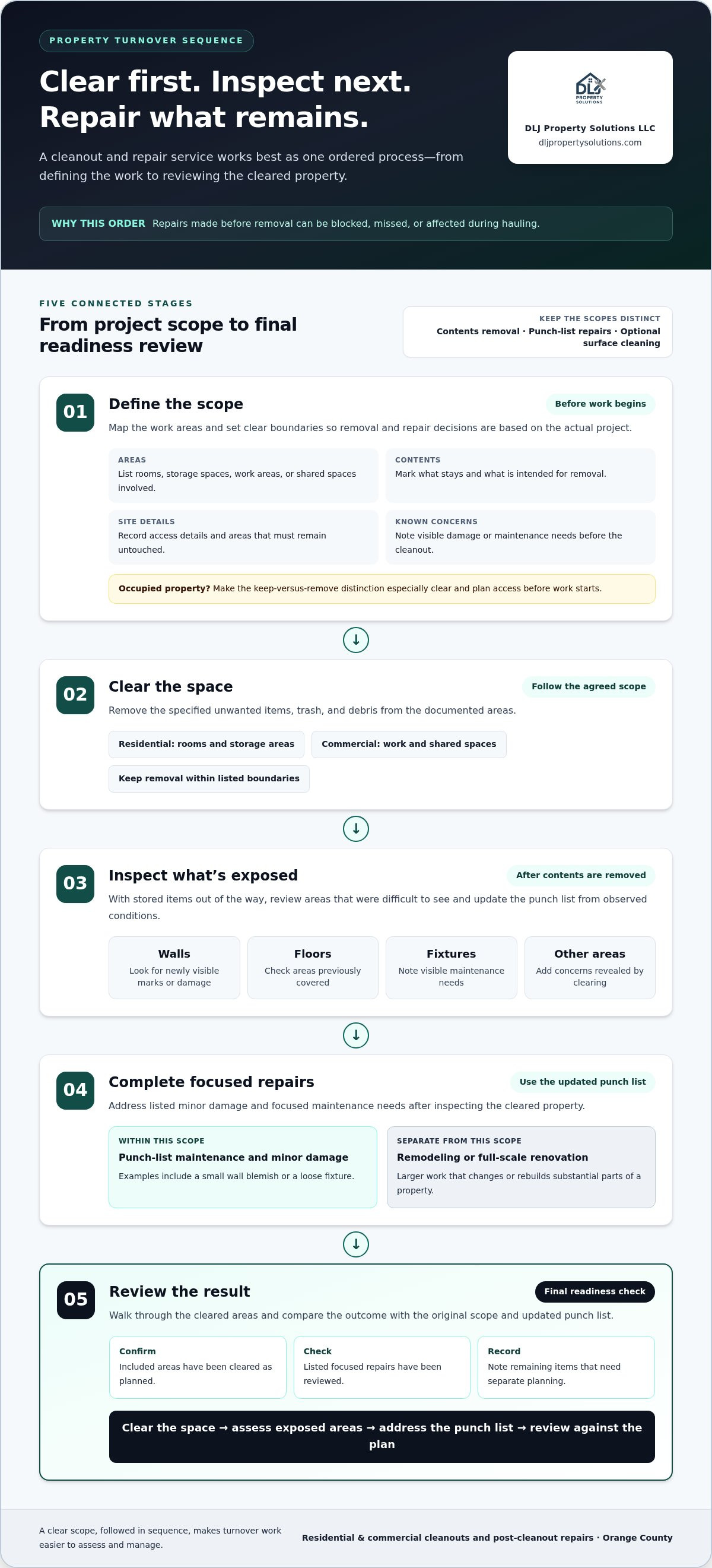
Define the scope, clear the space, inspect what’s exposed, complete focused repairs, then review the work against the plan.
Prepare the project scope before the cleanout
Before removal starts, list the rooms and areas involved. Sort contents into items to keep and items intended for removal, and mark those groups clearly. Note known damage, access details, and any areas that should remain untouched. These decisions set boundaries for the cleanout and help keep important belongings out of the removal scope.
Follow the sequence from scope to final review
- Define the scope. Record the property areas, unwanted contents, items to keep, access details, and known repair concerns. Set clear boundaries before work begins.
- Clear the space. Remove the agreed unwanted items, trash, and debris. Keep the work within the documented areas so other rooms or contents aren’t included by assumption.
- Inspect what’s exposed. Once items are out, review walls, floors, fixtures, and other areas that were difficult to see. Add newly visible concerns to the punch list.
- Complete focused repairs. Address the listed minor damage and maintenance needs. Separate these tasks from larger work that would change or rebuild substantial parts of the property.
- Review the result. Walk through the cleared areas and compare the outcome with the original scope and updated punch list. Record any remaining items that need separate planning.
Use the first step to settle decisions that removal could make difficult to reverse. Identify what stays, what goes, which areas are included, and any access constraints. If the property is occupied, make the keep-versus-remove distinction especially clear to avoid confusion about personal or business contents.
Facilities maintenance depends on clear records and practical follow-through. The Association for Facilities Engineering (AFE) provides resources for facilities professionals. For a property turnover, a project-level scope gives the cleanout and repair work its own concrete checklist.
Inspect the cleared space and complete focused repairs
Assess repair needs after contents are removed because stored items can obscure surfaces and fixtures. Describe each issue by location and type, then separate minor maintenance from broader renovation needs. A final walkthrough should revisit the original rooms and tasks, confirm what was addressed, and capture any newly identified work without expanding the job by assumption.
For a turnover project, provide the property type, areas involved, contents, access details, and known concerns when requesting a cleanout quote. Property cleanout details can establish a defined scope and a practical sequence for follow-up repairs.
How to Coordinate Cleanout Tasks, Repairs, and Turnover Priorities
Put the work into clear categories before setting priorities. Contents removal opens up the space. A post-cleanout inspection reveals repair needs that stored items or debris may have concealed. Surface cleaning is a separate consideration, based on the property’s condition and next use. This division keeps a cleanout and repair service focused and prevents optional tasks from being mistaken for required turnover work.
Separate required turnover work from optional cleaning
Use a simple scope table to show what each task covers and when it fits. Plan access and removal first, then assess exposed areas for repairs. Add surface cleaning only where it serves the property’s needs.
| Work category | What it covers | How to prioritize it |
|---|---|---|
| Cleanout | Unwanted contents, trash, and debris in the agreed areas. | Plan access and removal first so rooms and surfaces are clear for assessment. |
| Punch-list repair | Focused maintenance and minor damage identified in the property. | Assess after removal, then list each issue by area and priority for the turnover. |
| Optional surface cleaning | Commercial carpet washing or pressure washing for relevant surfaces. | Consider it separately based on the surface condition and the property’s next use. |
Commercial carpet washing may fit a project if carpeted areas need attention after contents are cleared. Pressure washing is an add-on for exterior surfaces when relevant. Neither is an automatic step in every turnover. Keep both separate from the core cleanout and repair scope so the project plan reflects the property’s actual condition.
Set priorities for residential and commercial spaces
For a residential property, name the rooms that need turnover attention and separate them from areas that are not part of the work. Note where contents are concentrated and which spaces need to be accessible for inspection. That gives the cleanout a practical boundary and makes the repair review more targeted.
Commercial spaces need a similarly clear breakdown. Identify each room or work area, flag carpeted sections, and describe access considerations such as shared entrances or areas that must remain clear. A single building can contain different surfaces and uses, so avoid treating every room as one undifferentiated job.
In Orange County, base project planning on the site itself. Specify the property type, areas involved, removal needs, visible concerns, and any separate surface-cleaning priorities. Once removal opens up previously obstructed areas, update the repair list based on what can actually be seen. Then compare the planned tasks with the next use of the space. This keeps required work distinct from optional cleaning and avoids assuming every property needs the same package.
What to Prepare Before Requesting a Cleanout and Repair Quote
A useful quote starts with a clear picture of the work. Share the property type, which areas are involved, what contents need removal, and what you already know about damage or maintenance. A specific project brief makes it easier to separate cleanout work from follow-up repairs and avoid assumptions about the scope.
Build a clear project brief
Describe the property as residential or commercial, then break the work into named areas. A room-by-room or area-by-area list distinguishes a small, defined cleanout from a project that covers several parts of a building. Include the general amount and type of unwanted contents, such as furniture, stored items, trash, or mixed debris.
- Property type: Residential or commercial.
- Areas involved: Name rooms, storage spaces, work areas, or other locations.
- Contents: Describe what needs removal and identify anything that must stay.
- Known repair needs: Note visible minor damage or maintenance to discuss after clearing.
- Photos: Include clear views of the areas and contents, along with close-ups of visible concerns.
Photos support the written list; they don’t replace it. Label images by room or area so each connects to a specific part of the scope. If the project includes commercial carpet washing or pressure washing, list those as separate surface-cleaning needs rather than folding them into the cleanout description.
Plan access and the final walkthrough
Include practical instructions for reaching the work areas. Note entrances, access restrictions, occupied spaces, and property-use constraints that could affect how the project is organized. Keep these details factual and specific. For example, identify which rooms are in use and where access is limited rather than relying on a general note that the property is occupied.
Name the person who will review the cleared space and repair punch list. That keeps the final review tied to a clear point of contact and the agreed project scope. After the work, compare the areas addressed with the original list, note completed tasks, and record any remaining concerns for separate planning.
- Access: Provide entry instructions and identify restricted areas.
- Property use: Flag occupied rooms or spaces that must remain usable.
- Review: Identify who will walk through the property and assess the work.
DLJ Property Solutions LLC handles residential and commercial cleanouts with focused repairs after trash out. A clear brief connects those steps to the property’s next use. Cleanout project details help establish the key scope information for a quote.
Plan an Orange County Cleanout and Repair Service Around the Next Use
The next use of a property sets the priorities. A home being prepared for its next occupant may need unwanted contents removed and visible minor damage addressed. A commercial space may need clear work areas, focused punch-list repairs, and attention to carpeted sections. Start with the intended use, then match the scope to the property’s condition. Don’t add tasks simply because they’re available.
Match the work to the property’s next use
For a turnover or inspection, identify which spaces must be accessible and what conditions need attention. Clear contents first, assess exposed areas, then separate minor repairs from broader work outside the turnover scope. Surface cleaning is a separate decision: commercial carpet washing may suit carpeted areas, while pressure washing may fit relevant exterior surfaces. Neither is required for every property.
This keeps the plan practical. The goal is a clear space, focused post-cleanout repairs, and a readiness review against the property’s next use. It isn’t a substitute for a full renovation plan.
Move from project details to a practical next step
DLJ Property Solutions LLC provides residential and commercial cleanouts and focused post-cleanout repairs in Orange County. To frame a project-specific quote, bring together the property type, areas involved, contents to remove, access instructions, known repair needs, and any relevant surface-cleaning priorities. Photos labeled by area can help explain conditions and keep the written scope easy to follow.
Keep the details direct. Identify what stays, what needs clearing, which rooms or work areas are included, and who will review the finished work. If an inspection or next occupant is driving the project, state that purpose so the cleanout and repair service can be planned around the right priorities.
A final walkthrough closes the loop. Compare the cleared areas and completed punch-list items with the agreed scope. Note any remaining concerns separately instead of allowing new work to blur the original plan. That check makes it clear what was addressed and what still needs a decision.
For an Orange County property turnover, a defined scope gives the project a practical starting point. Request a cleanout quote with your property and project details.
Set the Next Use in Motion
A turnover plan is most useful when it leads to a clear handoff. Decide who will review the space, what condition it needs to be in, and which remaining issues need separate attention. That keeps the next step visible without letting unrelated work expand the scope.
A well-coordinated cleanout and repair service gives you a practical way to move from a property full of unwanted contents toward a space ready for its intended use. Keep decisions documented, share the details that shape the work, and review the result against the agreed scope. Clear direction makes the handoff easier to manage.
DLJ Property Solutions LLC supports residential and commercial turnover work in Orange County with cleanouts and focused post-cleanout repairs. Commercial carpet washing or pressure washing can also fit when the project calls for separate surface cleaning.
For a clearly scoped Orange County property turnover, request a cleanout quote.
Frequently Asked Questions
Can cleanout and repair work be coordinated for one property turnover?
Yes. A cleanout and repair service can cover removal and the focused repairs that follow, with tasks tracked by area. For example, an office turnover might include clearing storage contents, then adding damaged trim or loose hardware to the repair list. Keeping one scope document helps the person overseeing the turnover see what’s included, what’s complete, and what remains separate.
What should I do before a property cleanout begins?
Decide which contents should stay and identify them clearly, especially if the property is occupied or several people are sorting items. Gather access instructions, note rooms that aren’t included, and take overview photos of each work area. Keep documents, valuables, and personal items you intend to retain outside the removal scope. Choose one person to answer project questions and keep decisions consistent.
Should repairs happen before or after a property cleanout?
Assess and plan focused repairs after the cleanout. Furniture, boxes, or debris can hide marks and block access to walls, floors, and fixtures. A wall behind shelving, for example, may be difficult to assess until the shelving is removed. Keep known concerns on the initial project notes, then review them and record newly visible issues once the area is clear.
What happens if the walkthrough reveals more damage after clearing?
Record the issue by room, describe what’s visible, and add a photo to the updated punch list. Compare it with the agreed repair scope before treating it as part of the current work. Minor maintenance or damage may fit focused post-cleanout repairs; larger rebuild or renovation needs are a separate scope. Don’t assume a condition that was hidden was included in the original plan.
Does a cleanout and repair service include full remodeling?
No. Turnover work covers clearing unwanted contents and focused punch-list maintenance or minor damage after trash out. It isn’t full remodeling or renovation. A small damaged area or a maintenance item exposed during clearing may be appropriate to list, while redesigning a room or rebuilding major parts of the property goes beyond a focused turnover repair scope. Keep larger changes separate in your project planning.
Can commercial carpet washing or pressure washing be part of a turnover project?
Yes, if those surfaces need separate attention. Commercial carpet washing can suit business interiors with carpeted areas that need washing. Pressure washing is available as an add-on for relevant exterior surfaces, such as an entryway or flatwork. Neither task is required for every turnover. List them separately from contents removal and repairs, and identify the specific surfaces so the project scope stays clear.
How do I request a cleanout quote in Orange County?
Share the property type, areas to be cleared, a description of unwanted contents, access notes, and known repair items with DLJ Property Solutions LLC. Photos labeled by room can clarify conditions, especially in a commercial property with separate work areas. Note whether commercial carpet washing or pressure washing is also relevant. These details give the quote a defined starting scope for your Orange County project.


