

What should happen after the debris is gone: a full renovation, or a focused list of repairs that gets the property ready for its next occupant? In many turnovers, post cleanout repairs should address practical punch-list items, not trigger a larger project by default. Once rooms are clear, damage and maintenance needs are easier to see, and small unfinished tasks can hold up a walkthrough or handoff.
The cleanout is complete, but the next steps may not be obvious. Start with issues that affect function, then address visible damage and finish work that matters to presentation. Keep the scope tied to the property’s condition and turnover needs.
This guide explains which repairs belong after a cleanout, how to prioritize them, and how to sequence cleanout, repairs, and final surface cleaning. DLJ Property Solutions LLC provides property cleanouts and focused post-trashout turnover repairs for residential and commercial properties in Orange County. The goal is a clear punch list and a practical handoff, without treating every turnover like a renovation.
Key Takeaways
- Use the cleared property to spot minor damage and maintenance needs that were hidden by unwanted items.
- Prioritize functional issues and turnover requirements before cosmetic touch-ups.
- Keep post cleanout repairs focused on observed punch-list work. A cleanout does not automatically call for renovation.
- Plan the sequence from clearing the space to reviewing repairs and scheduling final surface cleaning.
- DLJ Property Solutions LLC provides property cleanouts and focused turnover repairs for residential and commercial properties in Orange County.
What Post-Cleanout Repairs Do for an Orange County Property Turnover
Once the last unwanted items and debris are out, the property can be assessed as an empty space rather than through gaps between stored belongings. Visible damage and unfinished maintenance are easier to identify and document.
Post cleanout repairs are focused punch-list tasks that address minor damage and maintenance after a property has been cleared. They help prepare a home, unit, or commercial space for inspection, showings, or handoff to the next occupant. The work should reflect what is visible and relevant to turnover, not expand into a renovation by default.
A cleanout and a repair list solve different problems. Clearing removes unwanted contents; follow-up repairs address minor property issues that remain. Keeping the scopes distinct helps owners and decision-makers plan the next step without confusing an empty space with a finished one. Property operations can involve many responsibilities, as outlined in this general overview of property management, but post-cleanout repairs are a focused part of preparing a space for its next use.
Property cleanout repairs address the space after belongings are removed; sewer cleanout service addresses access to a plumbing line. The similar wording can cause confusion, but these are different services. This article covers property turnover, not sewer-line clearing or plumbing access points.
What changes once the property is cleared?
Clutter can hide surfaces, corners, and areas that need attention. Once the space is clear, owners and managers can walk through each room, see its condition, and note issues that were previously blocked from view. That makes it easier to distinguish observed damage from assumptions about what might need work.
Record each issue by location and general condition. A concise, room-by-room list gives the repair scope a practical starting point and helps keep follow-up work focused.
Who typically needs post-cleanout repairs?
Owners preparing a home or rental unit for its next occupant can use a focused punch list to identify remaining maintenance and minor damage. Managers and commercial decision-makers can use one when a cleared space is moving toward inspection, presentation, or handoff.
The goal is turnover readiness, not ongoing property management or a full renovation. A defined scope keeps attention on the work the cleared property actually needs.
Which Post-Cleanout Repairs Belong on a Turnover Punch List?
A useful repair list starts with what is visible and relevant to the property’s next use. Include minor damage and maintenance that affect function, cleanliness, or presentation. Leave out work that is only a preference unless it is part of the turnover plan.
A turnover punch list is a scoped set of tasks for addressing observed minor damage and maintenance before a property is handed over. It sets practical boundaries: what needs attention now, what can wait, and what falls outside the turnover scope.
How to sort functional needs from presentation issues
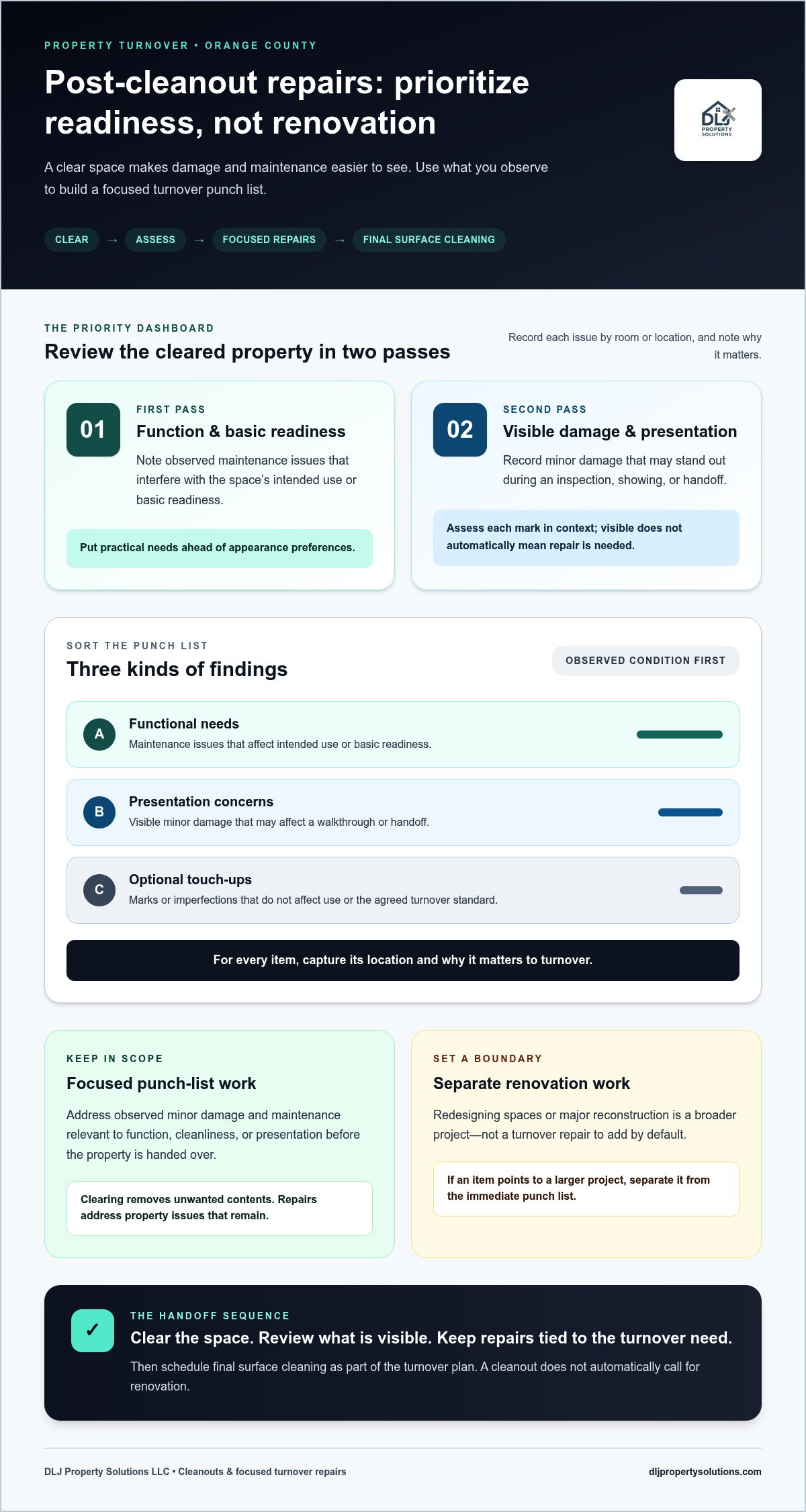
Review the cleared space in two passes. First, note anything that could affect whether it is clean, functional, and ready for use. Then record visible minor damage that may affect an inspection or the way the property presents to its next occupant. This order puts practical needs ahead of appearance preferences.
For each item, write down its location and why it matters. A surface mark may be worth recording, but it does not automatically need repair. Assess it in context: does it affect use, conflict with a turnover requirement, or distract from the condition the property needs to present? General housing resources from the U.S. Department of Housing and Urban Development (HUD) can provide broader context, while the property’s observed condition should guide its specific punch list.
- Functional needs: Note observed maintenance issues that interfere with the space’s intended use or basic readiness.
- Presentation concerns: Record visible minor damage that may stand out during a walkthrough or handoff.
- Optional touch-ups: Separate marks or imperfections that do not affect use or the agreed turnover standard.
This distinction keeps post cleanout repairs tied to actual conditions rather than a desire to make every surface look new. It also makes it easier to explain why each task belongs on the list.
Where minor repairs end and renovation begins
Focused turnover work addresses punch-list maintenance and minor damage. Renovation involves a broader scope, such as redesigning spaces or undertaking major reconstruction. Those projects change the nature of the work and should not be folded into a small turnover list by default.
Set a clear boundary before work begins. Describe the observed issue, the task needed, and how it relates to turnover readiness. If an item points to a larger project, separate it from the immediate punch list rather than letting the scope expand unnoticed. This keeps priorities visible and helps the next decision-maker assess the property’s actual condition.
For Orange County properties that need both clearing and focused follow-up, DLJ’s property cleanout and turnover repair services address the space’s observed needs.
How to Prioritize Post-Cleanout Repairs Without Expanding the Scope
Post cleanout repairs do not automatically mean a renovation. Clearing the space gives you a better view of what needs attention, but the right response is a focused list based on observed condition and turnover needs. Prioritize what affects use first, then decide which visible issues matter for the handoff.
Skipping every small repair can leave distracting or unresolved issues for the next walkthrough. Treating every mark as a project can pull the turnover off course. A practical scope balances both: address items that affect readiness, include relevant minor damage, and leave unrelated upgrades off the list.
A practical order for reviewing repair needs
Use the same sequence for each room. Consistent review makes decisions easier to compare and clarifies why each task is included.
- Assess function and readiness. Note visible conditions that interfere with the space’s intended use or preparation for the next occupant. Keep descriptions factual and tied to what you can observe.
- Review presentation. Identify minor damage that stands out during a walkthrough or affects how the property is presented. Do not assume every scuff or imperfection needs attention; weigh it against the space’s turnover needs.
- Group related tasks. Organize items by area or type of work, then describe each task plainly. “Address the listed minor damage in the entry area” is more useful than a vague request to “fix everything.”
This approach helps owners and managers compare priorities without turning preferences into automatic repair requirements. For broader home upkeep context, the National Association of Home Builders (NAHB) provides industry resources. The repair list for a specific turnover should still reflect the property’s observed condition and agreed scope.
When a repair list signals a larger project
Sometimes a cleared space reveals extensive damage or several issues that cannot be described as minor punch-list work. Separate the larger concern from immediate turnover repairs rather than quietly adding it to the same scope.
Keep the two tracks distinct. The immediate list covers focused maintenance and minor damage tied to readiness. Larger project planning can be considered separately, with its own decisions and scope. DLJ’s post-trashout repair work focuses on punch-list maintenance and minor damage, not remodeling or full-scale renovation.
A defined scope protects the turnover plan from drifting. It also makes trade-offs easier to see: which items affect the handoff, which mainly affect appearance, and which belong in a separate project. Tie each task to an observed condition to keep the work practical and the property’s next steps clear.
How to Coordinate a Cleanout and Repair Sequence in Orange County
A clear sequence keeps a property turnover from becoming a collection of disconnected tasks. Define what needs to be cleared, review the space once it is empty, then set the repair and cleaning scope based on what is visible. For residential and commercial properties in Orange County, this approach keeps the plan tied to the actual turnover rather than assuming every property needs the same work.
The repair scope is clearer after unwanted items and debris are removed. With the space accessible, owners and decision-makers can see which areas need attention and distinguish observed minor damage from work outside the turnover plan.
Sequence the work around the cleared space
Use this order to build a practical project scope. Make the handoff between stages clear, and base follow-up work on the property’s condition after clearing.
- Define the area. Identify the rooms, units, or commercial spaces included in the cleanout. Note what needs to be removed and which areas are outside the scope.
- Complete the cleanout. Clear the agreed areas so surfaces and access points can be reviewed without belongings or debris in the way.
- Review the space. Walk through the cleared areas and record visible minor damage or maintenance needs. Describe each item by location and condition.
- Set the repair list. Turn the observations into focused post cleanout repairs tied to turnover readiness. Keep larger or unrelated work separate.
- Plan surface cleaning. Include commercial carpet washing where it fits the property’s needs. Pressure washing can be added when exterior surfaces are part of the plan. Schedule cleaning after repair work that could affect those surfaces.
This sequence avoids defining repairs around issues that may still be hidden. It also gives related cleaning a place in the plan rather than treating it as an afterthought. The right scope depends on the areas involved and their observed condition.
Keep the handoff clear for the next occupant
Close the project with a concise status update for the owner, manager, or commercial decision-maker. Separate completed tasks from anything that remains. A useful summary identifies the areas cleared, the punch-list work addressed, and outstanding items without implying they are finished.
Keep notes practical. The room or area, task, and status are often enough to make the turnover plan easy to follow. If a remaining issue falls outside the focused repair scope, list it separately for a later decision. Clear records reduce confusion at handoff and keep next steps visible.
DLJ Property Solutions LLC provides property cleanouts and focused turnover repairs for Orange County properties. See DLJ’s cleanout and repair services as you plan the areas to clear and the work needed afterward.
Get Post-Cleanout Repairs and Turnover Support from DLJ in Orange County
DLJ Property Solutions LLC serves residential and commercial properties in Orange County with property cleanouts and focused turnover repairs. The work follows a practical sequence: clear the agreed areas, review the property’s condition, then address punch-list maintenance and minor damage relevant to the next handoff.
These post cleanout repairs are not a default renovation scope. They focus on practical work identified after the space is cleared, helping owners prepare a property for its next tenant or owner. Commercial carpet washing can also fit commercial turnover plans. Pressure washing is available as an add-on when exterior surface cleaning is relevant.
What to include when describing the property project
Start with the basics. Identify whether the property is residential or commercial, where it is located in Orange County, and which rooms, units, or work areas are involved. Then describe what needs to be removed and note any visible minor damage or maintenance concerns you already know about.
- Property type and location: Give the city or area and identify the kind of space.
- Cleanout scope: List the areas that need clearing and describe the unwanted items or debris in practical terms.
- Repair concerns: Note observed punch-list maintenance or minor damage and identify the affected area.
- Turnover goal: Say whether the space is being prepared for a next tenant, owner, or commercial use.
Keep descriptions factual. A clear location and scope help define what belongs in the cleanout, what should be reviewed after removal, and which follow-up tasks matter to the handoff.
Keep the service request focused and actionable
Frame the request around the work sequence: clearing the property, addressing minor repairs identified after the cleanout, and adding related surface cleaning where it fits. For a commercial space, mention whether carpet washing is part of the turnover plan. If exterior pressure washing is relevant, include it as an add-on.
Separate visible issues from assumptions. Describe known concerns by location and explain how they affect the turnover. If an issue may become clear only after the area is empty, note that it should be reviewed after the cleanout. This keeps the project discussion tied to the property’s actual condition rather than unrelated work.
To discuss a property cleanout and focused turnover repairs in Orange County, send DLJ your project details, including the property location, areas to clear, known repair needs, and intended turnover outcome.
Set the Next Turnover in Motion
A clear project brief gives the turnover a practical starting point. Before the next handoff, decide which areas need attention first and what “ready” means for this property. A home prepared for a new tenant may call for a different final check than a commercial space being returned to use. Keep the goal specific and base the work on the condition you can see.
Use the post cleanout repairs list to separate immediate tasks from items that can be handled later. That distinction helps keep decisions moving without letting a short punch list grow into an undefined project. Note the property location, areas involved, cleanout needs, and visible repair concerns so the next conversation can focus on the work at hand.
DLJ Property Solutions LLC provides property cleanouts and focused turnover repairs in Orange County. Send DLJ your project details to discuss your turnover needs.
Frequently Asked Questions
What are post-cleanout repairs?
Post cleanout repairs are focused tasks that address minor damage and maintenance after unwanted contents have been removed. They help prepare a property for its next use without treating every turnover as a larger construction project. Connect each task to an observed condition and the handoff goal. If an issue cannot be described clearly, review it before adding it to the scope.
What repairs are typically considered post-cleanout repairs?
They typically cover punch-list maintenance and minor damage that becomes visible once a space is clear. The specific items depend on what is observed and what the property needs for turnover. Note each concern by location and explain whether it affects use or presentation. Do not assume every mark calls for repair. The list should reflect actual conditions, not a standard checklist applied to every home or commercial space.
Can cleanout and repair work be coordinated together?
Yes. DLJ Property Solutions LLC provides property cleanouts and post-trashout turnover repairs, so both needs can be addressed as parts of one property project. For example, a commercial decision-maker can identify the areas to clear, then list repair concerns to review once those areas are accessible. Commercial carpet washing or pressure washing may also fit a turnover plan when relevant to the property’s surfaces.
How do I decide which repairs to do first after a cleanout?
Start with conditions that affect the property’s intended use and turnover readiness, then consider visible damage that could affect presentation. For each item, note its location, observed condition, and why it matters. This gives owners and managers a basis for comparing tasks instead of treating every imperfection as equally urgent. Keep optional appearance improvements separate from work tied to the immediate handoff.
Are post-cleanout repairs the same as a renovation?
No. Post-cleanout repairs are focused punch-list work for minor damage and maintenance. A renovation involves a broader project, such as major reconstruction or changes to the space. If several concerns point beyond a focused turnover scope, keep them separate from the immediate repair list. This clarifies what is being addressed for the handoff and what needs separate planning.
When should repairs begin after a property cleanout?
Review the property after the agreed areas have been cleared, when conditions needing attention can be seen. Use the walkthrough to identify and describe repair tasks before setting the scope. If areas still contain items or debris, the review may be incomplete. Start when the space is accessible and the repair list is clear, rather than relying on an assumed schedule.
Does DLJ Property Solutions serve Orange County, California?
Yes. DLJ Property Solutions LLC serves residential and commercial properties in Orange County, California. When describing a project, include the property’s location, whether it is a home or commercial space, which areas need clearing, and any known post-cleanout repair concerns. This gives the project discussion a practical starting point and helps connect the cleanout, turnover repairs, and relevant surface-cleaning needs.


