
A cleanout can be complete while the property still looks unfinished. Removing unwanted items clears the interior, but dirty exterior surfaces may affect how the property looks during a walkthrough or handoff. A pressure washing add on can address that gap when the affected areas are part of the turnover plan.
Consider adding exterior washing when visible surfaces need attention alongside the cleanout. Coordinating both needs in one project plan can make it easier to define the work, account for access, and keep the turnover goal in view.
This article explains when to include pressure washing in a cleanout or turnover, which surfaces it addresses, and how to plan the work. DLJ Property Solutions LLC provides pressure washing alongside cleanout and turnover projects in Orange County, California. The service covers flatwork, siding, and exterior entryways. Knowing that scope helps you decide whether the add-on fits the property and set a clear plan.
Key Takeaways
- Use the visible condition of the exterior and the turnover goal to decide whether washing belongs in the cleanout scope.
- A pressure washing add on covers flatwork, siding, and exterior entryways as part of a cleanout or turnover project.
- Compare coordinated and separate work by scope, scheduling, access, and turnover priorities.
- Identify the surfaces that need attention, define the scope, coordinate the work, then review completion.
- DLJ Property Solutions provides pressure washing alongside cleanout and turnover projects in Orange County.
What Does a Pressure Washing Add-On Include in an Orange County Cleanout?
A pressure washing add-on is exterior washing performed alongside a property cleanout or turnover project. It addresses flatwork, siding, and exterior entryways. It covers visible exterior surfaces, not indoor trash or unwanted items. DLJ Property Solutions LLC provides this add-on with cleanout and turnover projects in Orange County.
The distinction matters during a handoff. Cleanout work removes unwanted belongings and debris from the interior, but it does not clean exterior surfaces people see as they approach the property. Including both types of work gives the project a defined interior and exterior scope. For a general overview of the method, Pressure washing describes how water under pressure is used to clean surfaces.
Which exterior areas can the add-on address?
The service scope includes three areas. Flatwork means exterior hard surfaces around the property, such as paved areas. Siding and exterior entryways are visible parts of the building and its approach. Name the areas that need attention in the project scope. This keeps the request concrete and distinguishes exterior washing from other cleanout tasks.
Focus on surfaces that still look dirty after items are removed. An entryway may need attention even when the interior is clear, and so may flatwork along the route to the property. Describe the specific surfaces rather than treating “the exterior” as one broad, undefined task.
How does pressure washing fit a property turnover?
A turnover has an interior side and an exterior side. Cleanout work removes indoor trash and unwanted items; pressure washing addresses the included exterior surfaces. When both are part of the plan, exterior cleanup can complement the cleared interior as you prepare the property for its next occupant.
It’s a practical fit when the turnover goal includes presenting the approach and building exterior alongside the interior. For example, if the entryway or flatwork still looks dirty after the cleanout, adding those areas to the scope addresses a visible gap. Washing these surfaces does not resolve every appearance or maintenance issue, so keep the expected result tied to the surfaces named in the project.
To define a pressure washing add on clearly, identify which flatwork, siding, or entryways need attention and connect that scope to the turnover goal. This gives everyone a shared understanding of the exterior work, separate from clearing indoor items.
When Does Pressure Washing Add Value to a Property Cleanout?
Base the decision on what people will see and what the turnover needs to accomplish. If the interior is clear but the approach still looks visibly soiled, the handoff may feel incomplete to someone arriving for an inspection, walkthrough, or occupancy. A pressure washing add on can address that exterior gap when the affected surfaces are within the project scope.
Pressure washing is not an automatic step for every cleanout. Compare the exterior’s current condition with the standard the property needs to meet next. In Orange County, a property being prepared for a new occupant may benefit from washing if its entryway or flatwork remains noticeably dirty after the cleanout. The location alone is not a reason to add the work. Let the observed condition and turnover goal guide the decision.
What signs suggest exterior washing belongs in the scope?
Walk the planned work area and look for visible soil on flatwork, siding, or entryways. Then consider whether those surfaces affect the upcoming handoff. Washing is more relevant when a dirty approach or exterior is likely to stand out during an inspection or arrival. Keep the scope focused on appearance concerns, not repairs or renovation work.
- Flatwork looks visibly soiled along the route to the property.
- The entryway appears dirty despite the interior being clear.
- Siding needs attention as part of preparing the exterior for inspection or occupancy.
These are signs to weigh, not a checklist every property must meet. Identify the surfaces that are actually affected and connect them to the turnover goal.
When might the add-on be unnecessary?
If the included exterior surfaces already look clean and presentable, extra washing may not add value to the project. Judge the property as it stands rather than following a fixed cleaning schedule. Don’t add a surface that needs no attention simply because the cleanout is happening.
Keep the decision tied to visible condition. If the entryway and flatwork look ready for the next occupant, but the main need is removing indoor items, focus the scope on the cleanout. If the concern is a damaged surface or a broader building issue, distinguish it from exterior washing. Pressure washing addresses surface appearance; it does not resolve every repair or maintenance need.
For a clear scope, note the specific surfaces that look dirty and whether they matter to the handoff. DLJ Property Solutions LLC pairs pressure washing with cleanout and turnover projects in Orange County. If exterior washing fits the observed need, you can include it with a cleanout project as part of the turnover plan.
Pressure Washing Add-On vs. Separate Exterior Cleaning: What Should You Compare?
Decide how to arrange exterior washing by looking at the whole turnover plan, not just the cleaning task. Adding the work to a cleanout project puts both needs into one project scope. Arranging exterior cleaning separately means coordinating it as its own piece of work. Neither option fits every property automatically. The right choice depends on the areas involved, access, and what the handoff needs to accomplish.
A pressure washing add on is exterior work that accompanies a cleanout or turnover project. It lets you consider exterior needs alongside the cleanout, without assuming every task happens at the same time. Compare the practical differences before setting the scope.
Project consideration
Washing added to cleanout
Washing arranged separately
Scope
Cleanout and exterior surfaces can be defined within one project plan.
Exterior areas are scoped as a separate job.
Coordination
Both needs can be considered together, with task order planned for the property.
Coordination with the cleanout is handled across separate arrangements.
Access
Consider access needs for both the cleanout and the exterior work in the same plan.
Plan access for the exterior work separately from cleanout access.
Turnover priority
Useful when exterior condition is part of the same handoff goal.
May suit a project where exterior work has its own priority.
What changes when exterior washing is part of the cleanout project?
The main difference is how the work is scoped and coordinated. With the add-on, cleanout and exterior washing needs can be considered as parts of one turnover plan. Define the exterior areas and how they fit into the overall work. This creates a shared scope while leaving the sequence to the project plan, rather than assuming all tasks happen simultaneously.
What should property decision-makers weigh?
Start with the turnover outcome. Does the visible condition of the exterior areas affect the handoff? Then consider property access and how each arrangement fits the work underway. Limit the scope to areas that matter to the project, such as specified flatwork, siding, or exterior entryways. This avoids adding unrelated work or treating every exterior surface as a priority.
For example, if the entryway needs attention but the rest of the exterior is presentable, define that area rather than expanding the request without a clear reason. If access needs differ between cleanout and washing tasks, account for that in the coordination plan. Separate arrangements can still fit when exterior work has its own priority. The key is to make the scope and responsibilities clear.
Compare the options against the property’s needs, access, and turnover priorities. Pairing the work can simplify coordination, but it does not promise a lower cost or faster completion. Make the decision based on the project, then record which exterior areas are included.
How to Plan Pressure Washing Around a Cleanout and Turnover
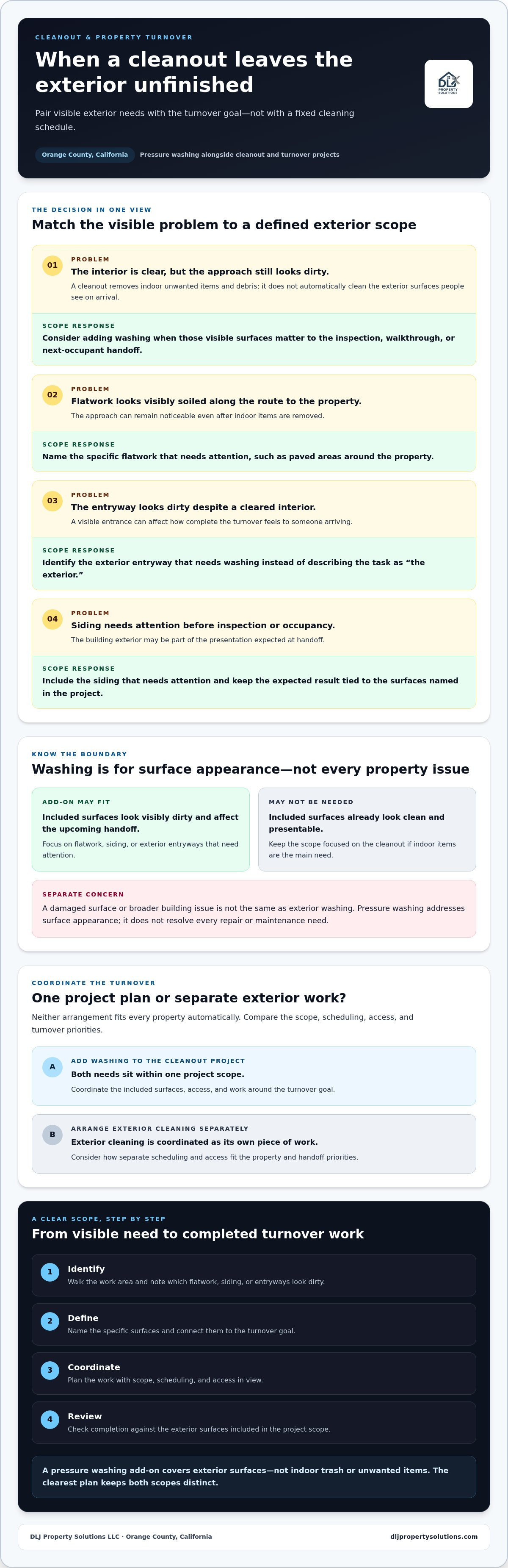
A clear plan ties exterior washing to the reason for the cleanout. Identify the areas that need attention, define the scope, coordinate the work with the cleanout, then review what was completed. This keeps the pressure washing add on focused on the turnover goal instead of adding undefined exterior tasks.
Use this sequence to set the scope:
- Identify exterior needs. Note which flatwork, siding, or exterior entryways need washing. Name specific areas rather than writing “the outside.”
- Define the scope. Record the property location and list the surfaces included. Tie each one to a visible need or turnover priority.
- Coordinate the cleanout. Share the cleanout goal and relevant access considerations so both types of work can be planned together. Don’t assume they will happen at the same time.
- Review completion. Compare the completed work with the agreed scope. Confirm that the included areas have been addressed as part of the overall turnover plan.
What project details should be gathered first?
Start with the property location, the cleanout or turnover objective, and the exterior surfaces that need attention. Name flatwork, siding, or entryways individually. Include practical access information that may affect the plan. A focused description keeps the request within the pressure washing scope and separates exterior cleaning from indoor item removal or unrelated repairs.
How should the work fit the turnover sequence?
Plan washing alongside the broader project so the exterior work supports the same handoff goal as the cleanout. Consider how access and the property’s condition affect coordination. Clarify which areas are included and how the work relates to the turnover, without assuming a fixed order or completion window.
For example, if the entryway needs attention, name it in the scope and note why it matters to the next occupant. Keep other areas out unless they also serve the project goal. This gives the cleanout and exterior work a shared purpose while leaving the sequence flexible.
Before work begins, review the location, included surfaces, turnover objective, and access notes. Afterward, use the same list to review completion. For an Orange County cleanout with exterior washing, plan your cleanout and pressure washing scope with DLJ Property Solutions.
How DLJ Adds Pressure Washing to Cleanout Projects in Orange County
DLJ Property Solutions offers pressure washing as an add-on to cleanout and turnover projects in Orange County. This lets property owners and decision-makers include exterior washing in a broader project plan, rather than treating the cleanout and exterior condition as unrelated needs.
The pressure washing add on addresses three exterior areas: flatwork, siding, and exterior entryways. The work is scoped to those surfaces. Pairing it with a cleanout can help coordinate interior item removal and exterior cleanup for the next occupant, while keeping each task clear.
What does DLJ’s pressure washing add-on address?
It addresses specified flatwork, siding, and exterior entryways as part of cleanout or turnover preparation. To describe the need clearly, identify the surface and its location, such as the entryway or a particular area of flatwork. This keeps the requested work concrete and connected to the property’s handoff goal.
Pressure washing complements the cleanout; it does not replace it. Cleanout work handles indoor trash and unwanted items, while the add-on focuses on the named exterior surfaces. Keep expectations tied to that scope. The service addresses exterior washing, not every repair, maintenance concern, or appearance issue a property may have.
What is the next step for an Orange County project?
Gather the details that define the project: the property location, cleanout needs, exterior surfaces that need attention, and the outcome you’re preparing for. Include any access information that affects the plan. A specific project description shows how exterior washing fits alongside the cleanout.
For example, describe whether the project involves clearing indoor items, preparing the property for a new occupant, or both. Then list the relevant flatwork, siding, or entryways. Keep the request focused on what needs attention rather than assuming every exterior surface belongs in the scope.
DLJ provides cleanout, turnover, and pressure washing work in Orange County, California. Show how the work connects: what needs to be removed, which exterior surfaces need washing, and what the property should be ready for next. This gives the cleanout and add-on a shared purpose without presuming a fixed schedule or result.
Share your Orange County cleanout and pressure washing project details with DLJ to discuss the scope and turnover needs.
Set the Scope, Then Move the Turnover Forward
A cleanout plan works best when it reflects the property’s actual handoff needs. Before adding exterior work, decide what the next occupant or reviewer should encounter and which visible issues belong in the project. Keep the scope specific. That makes it easier to distinguish a useful pressure washing add on from work that can wait or belongs to a separate repair plan.
Use that decision to shape the project brief. State the cleanout objective, identify the exterior areas that need attention, and note access details that affect coordination. Clear instructions give the work a shared purpose without assuming every task must happen at once or promising a particular result.
If you’re preparing a property for its next use, outline the cleanout objective and exterior surfaces that need attention. Share your cleanout and exterior washing project details with DLJ to discuss the scope and move the turnover plan forward.
Frequently Asked Questions
Is pressure washing the same as power washing?
In everyday conversation, the terms are often used interchangeably, though equipment and methods can vary by service. For a cleanout project, focus on the surfaces included and the purpose of the work. DLJ Property Solutions offers pressure washing as an add-on to cleanout and turnover projects in Orange County, California. Its scope covers flatwork, siding, and exterior entryways.
Can pressure washing remove oil stains from a driveway?
It may improve the appearance of an oil stain, but the result depends on the surface, the stain, and how long it has been there. Don’t assume every mark will disappear. An older stain, for example, may remain visible after washing. Describe the affected flatwork and what you can see when outlining the project, and keep expectations focused on the work rather than a guaranteed stain-free result.
How much does a pressure washing add-on cost?
There isn’t one useful price for every property. The project scope matters, including which exterior areas need attention and how the washing fits with the cleanout or turnover work. A pressure washing add on should be discussed in context, not priced from a generic estimate. Share the property details and surfaces involved with DLJ Property Solutions to request project information for your Orange County cleanout.
How often should a property be pressure washed?
There’s no single schedule that suits every property. Exposure, visible buildup, surface condition, and the next turnover goal all affect whether washing is needed. Rather than relying on an automatic interval, inspect the areas and decide based on what you see. A property may need exterior attention before a handoff if visible buildup affects its presentation, while clean surfaces may not need additional washing.
Is pressure washing suitable for every exterior surface?
No. Material and condition matter, so one cleaning approach shouldn’t be assumed to suit every exterior surface. Keep the scope specific and avoid adding areas beyond the work being planned. DLJ’s pressure washing add-on addresses flatwork, siding, and exterior entryways alongside cleanout and turnover projects in Orange County. Don’t assume another surface falls within this add-on’s stated scope.
Should pressure washing happen before or after a property cleanout?
Plan the order around the property’s condition, access, and the work involved. Removing unwanted items may clear access to exterior areas, but the overall sequence should account for both tasks. For example, note whether belongings or debris are near the flatwork or entryway that needs washing. DLJ offers pressure washing alongside cleanout and turnover projects, so include the surfaces and project goals in the plan.


