

More pressure isn’t always the answer. Pressure washing flatwork works best when the cleaning approach matches the surface and the buildup, not when the equipment is simply turned up. Concrete, pavers, and asphalt are all underfoot, but they respond differently to water pressure and cleaning methods.
A clean driveway, walkway, or patio shouldn’t come at the cost of damaging the finish, loosening joints, or pushing grime into nearby areas. Start by identifying the material and the type of soil. Concrete may tolerate a different approach than pavers or asphalt, while oily residue, organic growth, and loose dirt can call for different attention.
This guide explains which surfaces count as flatwork and how material and soil shape cleaning decisions. It also covers practical preparation and how exterior washing can fit into a property cleanout or turnover plan. For residential and commercial properties in Orange County, California, coordinating flatwork washing with cleanout work helps keep exterior cleanup in sequence with the rest of the preparation. DLJ Property Solutions LLC offers pressure washing as an add-on to cleanout and turnover projects.
Key Takeaways
- “Flatwork” refers to horizontal exterior surfaces such as sidewalks, driveways, patios, pavers, and asphalt areas.
- Plan pressure washing flatwork around the material, its condition, and the type of soil instead of assuming more pressure is better.
- Before washing, clear movable items, flag sensitive areas, and note existing stains or damage to define the work area.
- Remove debris before exterior washing, then coordinate punch-list repairs around the cleaned areas.
- Include walkways, patios, and parking areas in the turnover plan to prepare the exterior alongside the interior.
What Counts as Flatwork for Pressure Washing?
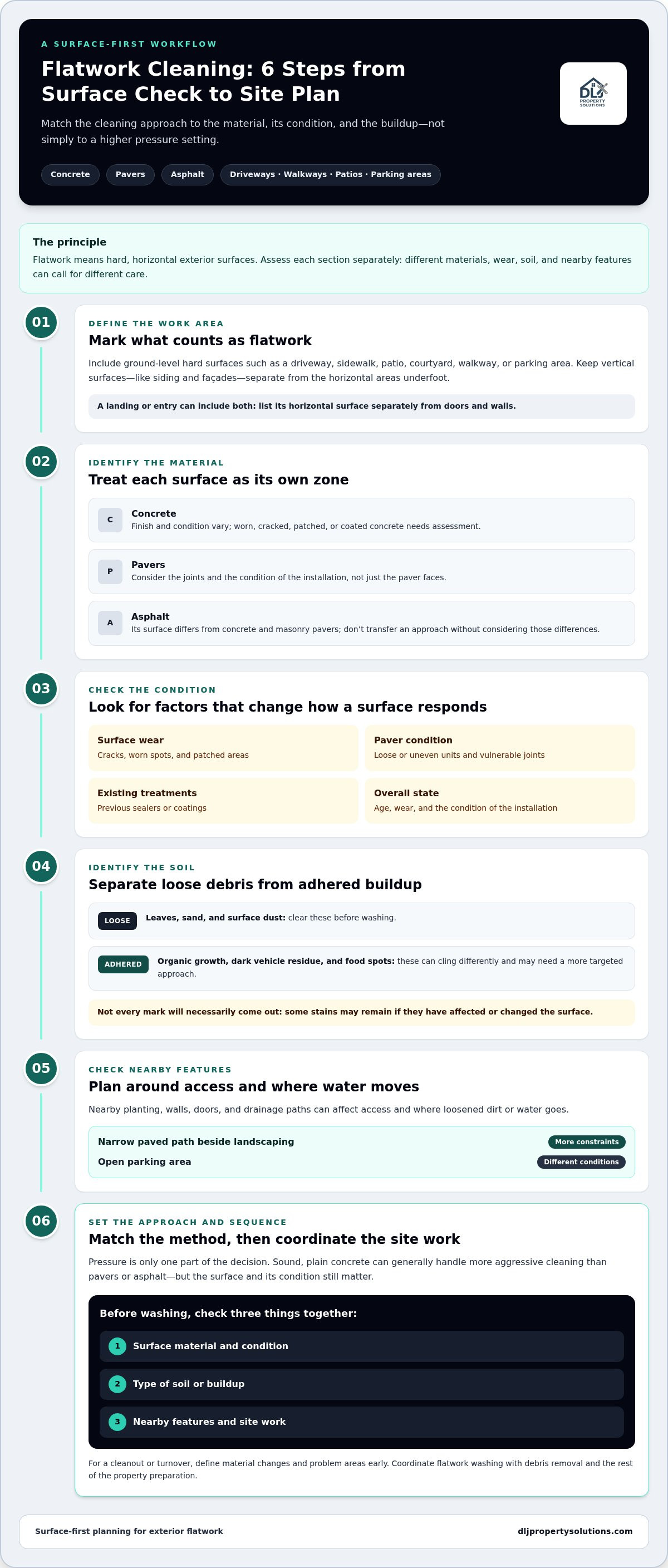
Flatwork is a hard, horizontal exterior surface, including concrete, pavers, and asphalt. The term describes the surface’s position and use, not a specific material or cleaning method. For pressure washing flatwork, a work area might include a driveway, walkway, patio, courtyard, or parking space.
This definition distinguishes ground-level cleaning from other exterior work. A concrete sidewalk and an asphalt parking area are both flatwork, even though they’re made of different materials. A building wall is not. The distinction matters because material, age, wear, and nearby features all affect how an area should be assessed before cleaning.
Which property surfaces count as flatwork?
Common examples include concrete driveways and sidewalks, paved patios, paver walkways, courtyards, and asphalt parking areas. A property may have several types. A home in Orange County might have a concrete driveway, a paver patio, and a narrow side walkway. A commercial property might have concrete paths near the entrance and asphalt where vehicles park.
Assess each ground-level surface as its own part of the site rather than treating the whole area as one uniform cleaning zone. Materials and conditions can change from one section to the next. One area may be intact and easy to access; another may have worn spots, uneven pavers, or edges close to landscaping. These differences help define the scope and identify where cleaning needs extra care.
Flatwork can also include hard surfaces around shared-use spaces, such as a courtyard between buildings or paved access routes. The practical test is simple: if it’s a hard, horizontal exterior surface, it generally fits the category. Soft ground, planting beds, and vertical building surfaces don’t.
How is flatwork different from siding and entryways?
Flatwork means horizontal surfaces underfoot. Siding and façades are vertical surfaces, while an entryway may include both vertical elements, such as a door or wall, and horizontal surfaces, such as a landing or path. Keeping these areas distinct makes the cleaning scope easier to describe. A front walkway is flatwork; the siding beside it is a separate exterior area.
This distinction prevents a broad phrase like “pressure washing the exterior” from obscuring what work is planned. Flatwork, siding, and entryways can be parts of an exterior cleaning plan, but each refers to a different surface area. Pressure washing covers a range of cleaning methods, so the label alone doesn’t specify how a particular surface should be treated.
For turnover planning, list horizontal areas separately from walls, façades, and entry features. Clear boundaries make it easier to coordinate flatwork with other exterior work. Siding and entryway washing are separate from flatwork, so define those areas separately in the property plan.
How Surface Material and Soil Shape Flatwork Cleaning
Good cleaning starts with an assessment, not a pressure setting. The surface material, its condition, the type of soil, and nearby features all help determine the approach. Surface condition matters because cracks, wear, joints, and existing treatments can change how a material responds to cleaning.
Pressure is only one part of the decision. A method that suits sound concrete may be too aggressive for worn asphalt or pavers with vulnerable joints. Soil matters as well: loose dust and ordinary grime differ from organic buildup, vehicle residue, or food spots. Cleaning can improve the appearance of soiled areas, but some stains may remain if they have affected or changed the surface.
Concrete, pavers, and asphalt do not behave the same way
Concrete is rigid, but its finish and condition vary. Sound, plain concrete can generally handle more aggressive cleaning than pavers or asphalt. That doesn’t make every concrete surface alike. Worn, cracked, patched, or coated concrete needs careful assessment before selecting a method.
Pavers add another consideration: the joints between units. Cleaning should account for the joint material and the condition of the installation, not just the face of each paver. Asphalt has different surface characteristics from concrete and masonry pavers, so don’t transfer an approach from one material to another without considering those differences.
Match the approach to the soil and surface condition
First separate loose material from adhered buildup. Leaves, sand, and surface dust may need to be cleared before washing. Organic growth, dark vehicle residue, and food spots can cling differently and may need a more targeted approach. Don’t assume one treatment will remove every mark.
Next, inspect the area. Existing cracks, worn patches, loose or uneven pavers, and previous sealers or coatings can affect the cleaning plan. Note them before work begins. Nearby planting, walls, doors, and drainage paths also matter because they can affect access and where loosened dirt or water moves. A narrow paved path beside landscaping has different constraints from an open parking area.
More force isn’t a substitute for matching the method to the job. Pressure washing flatwork should account for both the surface and what’s on it. For a turnover project, identifying material changes and problem areas early helps define the cleaning scope alongside debris removal and other site work. If flatwork washing is part of a cleanout or turnover, coordinate exterior cleaning with the rest of the property preparation.
Flatwork Pressure Washing Methods: What Changes the Approach?
There isn’t one cleaning method for every driveway, patio, or parking area. The right choice depends on the surface, its condition, the soil, and how open the work area is. Broad, even passes may suit some surfaces. Edges, joints, damaged spots, and stubborn buildup may need more targeted attention.
Pressure washing flatwork isn’t a matter of choosing the highest pressure. The aim is to address the soil while respecting the surface. An approach that suits sound, open concrete may not suit pavers with vulnerable joints or asphalt with worn areas.
Open, suitable concrete: A surface cleaner may help cover broad areas in steady, even passes.
Edges and obstacles: A more controlled pass may be needed around borders, walls, drains, and tight corners.
Pavers or damaged areas: Assess joints and wear before choosing a careful, targeted approach.
Localized stains: Identify the residue and surface condition; don’t assume washing will remove every mark.
When a surface cleaner may suit open flatwork
A surface cleaner is an attachment that moves across broad, suitable areas to clean in a more consistent pattern than a narrow, hand-guided pass. It can be useful on open concrete when the finish and condition are appropriate, but it isn’t a universal fit. Edges, corners, narrow paths, and areas around obstacles may need a separate pass to clean thoroughly.
Before using one, consider the concrete’s condition and any changes in surface or height. A wide, unobstructed driveway is different from a small landing edged by planting or steps. The tool can cover suitable space efficiently, but it doesn’t remove the need to assess boundaries and details.
When careful, targeted cleaning matters more
Paver joints, cracks, worn patches, and areas with stubborn buildup deserve closer attention. Choose an approach based on the material and its condition rather than treating the whole area as if it were sound concrete. More aggressive treatment can be inappropriate where joints or a weakened surface may be affected.
Localized vehicle residue or food spots may need separate assessment from loose dirt across the rest of the surface. Their appearance may improve, but some marks can remain. Don’t assume stronger pressure or a particular detergent is the answer. A measured approach helps keep expectations realistic and avoids treating unlike surfaces the same way.
For property turnover work, note where materials change, where edges are tight, and where stains or damage are concentrated. That gives the cleaning plan a practical starting point and distinguishes broad-area cleaning from spots that need individual attention.
How to Prepare Flatwork Before a Pressure Washing Visit
A clear work area makes it easier to define what needs cleaning and where extra care may be needed. Before pressure washing flatwork, identify the surface types, move what you can, and note existing stains or damage. A short preparation check also helps coordinate washing with cleanout debris removal and turnover repairs.
Use this checklist to prepare the area:
- Identify the surfaces. Mark concrete, pavers, asphalt, and transitions between them. Note joints, cracks, worn spots, and surface treatments.
- Clear movable items. Move vehicles, outdoor furniture, planters, stored items, and loose debris where practical.
- Flag sensitive areas. Point out doors, landscaping, drains, nearby stored property, and spots that need special attention.
- Plan access. Keep routes to the work area open and note obstacles that could limit access or movement around the site.
- Record existing conditions. Photograph or write down stains, cracks, and damaged areas so the work area and pre-existing conditions are clear.
Clear and map the work area
Start by defining the boundaries. Identify where the driveway, walkway, patio, or parking area begins and ends, especially where one material meets another. Note joints, drains, edges, and concentrated staining. Move loose items and vehicles out of the way where practical, then keep access routes clear. These steps distinguish the areas to be washed from nearby surfaces and belongings.
Photos can document the location and condition of a stain or crack before cleaning starts. Add a brief note about what you see and where it is. This record helps set clear expectations; it doesn’t mean a stain will be fully removed or existing damage will change.
Plan around nearby property work
Flatwork cleaning is easier to coordinate after debris removal. Loose trash and material from a cleanout can otherwise end up across a surface that has already been washed. Identify nearby doors, landscaping, stored property, and drains as planning points. Consider where water and loosened dirt may move across the site, since drainage varies from one area to another.
Turnover repairs also affect the sequence. Note repairs that could bring tools, materials, or foot traffic across the work area, then plan the order so completed surfaces aren’t immediately disturbed. DLJ Property Solutions offers pressure washing as an add-on to cleanout and turnover projects in Orange County, California. Plan flatwork washing with your turnover project to align exterior cleaning with the rest of the property preparation.
Add Flatwork Washing to an Orange County Property Turnover
Exterior hard surfaces are part of the turnover picture. A cleaner walkway, patio, or parking area can help a residential or commercial property feel more orderly after unwanted items are removed. It also gives property professionals an opportunity to address visible buildup before the next client uses the space. Flatwork washing is most useful when planned alongside the cleanout and turnover work, rather than left as a last-minute task.
A practical sequence keeps work areas clear and helps limit interference between tasks:
- Remove unwanted items and debris. Clear the surfaces before washing so loose material doesn’t get in the way.
- Assess the flatwork. Identify materials, surface condition, stains, and areas that need extra attention.
- Wash the planned areas. Define the work scope across walkways, patios, driveways, or parking surfaces.
- Coordinate punch-list repairs. Plan post-cleanout repairs around the cleaned areas and the work still needed on site.
Coordinate exterior cleaning with cleanout and repair work
Sequence matters. Washing before debris removal can leave the surface dirty again, while repair work may bring tools or foot traffic through an area. Plan the order around the work at the property. If a repair affects a specific section, account for access to that area when scheduling the wash. The goal is a clear handoff between cleanout, exterior cleaning, and punch-list tasks, without treating repairs as remodeling work.
For property professionals, a coordinated scope can reduce confusion about which areas are included and when each task can proceed. Include the flatwork and related cleanout or repair work in the same turnover plan. DLJ Property Solutions offers pressure washing as an add-on alongside cleanout and turnover projects, connecting exterior work with the broader property preparation.
Plan the next step for an Orange County property
Share practical project details: the surfaces involved, their materials and visible soil, any damaged or worn areas, and how exterior work fits the property’s turnover schedule. Include whether debris removal or punch-list repairs are also part of the project. These details give the work a clearer starting scope and connect exterior cleaning with the cleanout plan.
In Orange County, DLJ Property Solutions can include pressure washing flatwork as an add-on to property cleanout and turnover work. Share your cleanout and exterior cleaning project details.
Set the Next Turnover Up for a Clean Handoff
Use the turnover plan to set a clear target for the exterior. Decide which areas need attention, what should be moved first, and how washing fits around the work still happening on site. That planning helps keep property readiness focused on practical priorities, not just visible marks on the ground.
Pressure washing flatwork works best as part of a defined scope. Note the areas that matter most to the next client, such as the route to the entrance or a shared outdoor space. Then align the cleaning with the broader property preparation to avoid unnecessary overlap between tasks.
DLJ Property Solutions supports Orange County property cleanout and turnover projects, with pressure washing as an add-on and punch-list repairs after cleanouts. Share the surfaces involved, the property’s condition, and how exterior work fits your turnover plan. Plan your cleanout and exterior work. A clear scope is a practical first step toward a smoother handoff.
Frequently Asked Questions
Can pressure washing damage a concrete driveway?
Yes. Pressure washing can damage a driveway if the concrete is weak or the cleaning approach is too aggressive. The surface may become etched, roughened, or show more exposed aggregate, especially where it’s already worn or deteriorating. Check for flaking, deep cracks, and patched areas before cleaning. A careful assessment helps determine whether the driveway can be washed and which areas need gentler treatment.
Can pressure washing remove oil stains from flatwork?
It can reduce the appearance of some oil stains, but complete removal isn’t assured. Fresh residue may respond differently from oil that has soaked into porous concrete over time. For example, a dark spot beneath a regularly parked vehicle may remain visible after washing. Describe the stain’s location and history if known, and treat the expected result as surface cleaning, not a guaranteed return to the original color.
How often should concrete flatwork be pressure washed?
There’s no fixed interval for every property. Base the decision on visible buildup, use, and the surface’s condition. A walkway with frequent foot traffic may need attention sooner than a rarely used patio, while a driveway can show vehicle grime in concentrated areas. For pressure washing flatwork at an Orange County property, use the surface condition and turnover schedule as practical reasons to plan cleaning.
Can pavers be pressure washed without disturbing the joints?
It’s possible, but the joints can be affected if they’re already loose or the cleaning approach is too forceful. Look for missing joint material, shifting pavers, or gaps before washing. A small section can be assessed first to see how the installation responds. If joints appear unstable, account for that condition in the cleaning plan rather than assuming the pavers can be washed like a solid concrete slab.
How long does flatwork take to dry after pressure washing?
Drying time varies with weather, shade, airflow, surface texture, and how much water remains on the area. A sunny, exposed driveway may dry sooner than a shaded patio with textured concrete or low spots where water collects. There’s no single reliable time for every site. If people need to use the area, wait until standing water is gone and the walking surface is dry.
Should flatwork be sealed after pressure washing?
Not automatically. Sealing depends on the material, its current finish, and the condition of any existing coating. Washing may reveal wear or uneven areas that should be assessed before considering a new treatment. Follow guidance specific to the surface and sealer, including any required drying conditions. Sealing is a separate decision from cleaning, not a step every driveway, patio, or paved area needs after washing.
Is pressure washing flatwork useful before a property inspection?
Yes. It can help remove surface grime from visible areas such as an entry walk or parking space before an inspection. It won’t correct cracks, stains that have penetrated the material, or other physical defects, so don’t treat washing as a substitute for documenting condition. For an Orange County turnover, plan cleaning early enough for the surface to dry before the inspection and note any existing damage separately.


