

The strongest spray isn’t always the cleanest choice. Pressure washing siding and entryways can remove grime and improve a property’s appearance, but the wrong approach can damage surfaces or push water behind seams and openings. Vinyl, painted wood, concrete, and other materials need different consideration.
Stains and buildup can make a property look neglected, especially before a turnover. A thorough clean should not come at the cost of damage to the exterior or nearby landscaping. Start by identifying the surface, then choose a cleaning method that suits its material and condition.
This guide explains how to assess siding and entryways, where high pressure may be unsuitable, and what to prepare before washing begins. You’ll also learn how to reduce risks around openings and plants, and when exterior washing can complement a property cleanout or turnover project in Orange County, CA.
Key Takeaways
- Start with the siding material and its condition. Age, loose panels, cracks, and previous coatings can affect the safest cleaning approach.
- Pressure washing siding and entryways calls for surface-specific methods. Concrete, pavers, and siding can respond differently to water pressure.
- Before washing, inspect doors, windows, vents, electrical fixtures, loose items, and nearby landscaping.
- Check sheltered entry areas as well as high-traffic spots where soil gets tracked in.
- For a property turnover in Orange County, DLJ Property Solutions LLC offers exterior pressure washing as an add-on to cleanout and turnover work.
Why Pressure Washing Siding and Entryways Needs a Surface-First Approach
Pressure washing uses a directed stream of water to loosen and rinse away surface dirt and buildup. It is not one setting for every exterior. Pressure, distance, and cleaning method should suit the material and its condition.
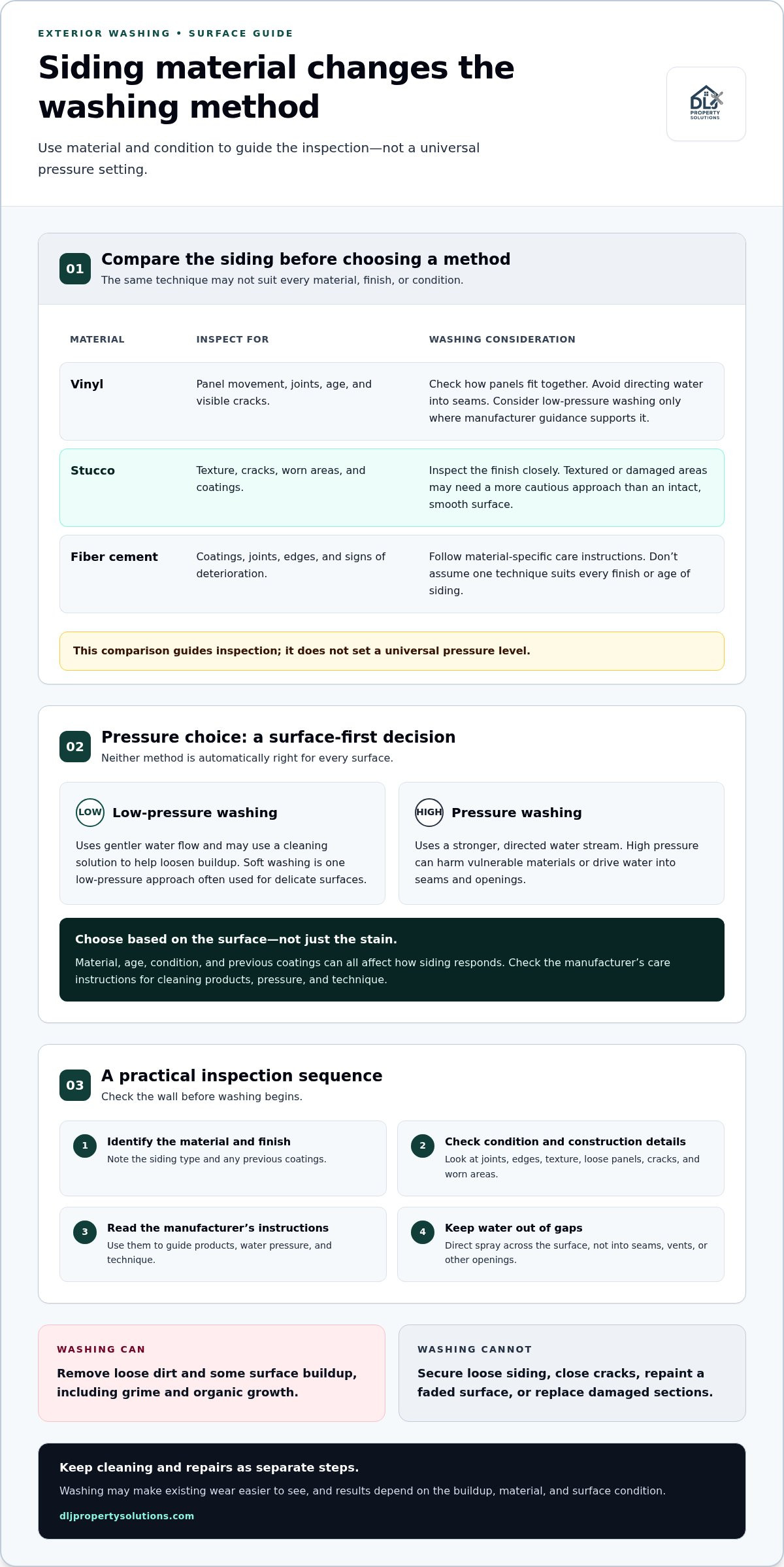
Pressure washing uses a stronger directed water stream; low-pressure washing relies on gentler water flow and may use a cleaning solution to help loosen buildup. Soft washing is one low-pressure approach often used for delicate surfaces. These terms describe different methods, not a guaranteed result. The surface and its manufacturer’s care instructions should guide the choice.
What exterior washing can and cannot do
Washing can remove loose dirt and some surface buildup, including grime and organic growth. It can make an exterior look cleaner, but it won’t necessarily remove every stain. Results depend on the type of buildup, the material, and the surface’s existing condition.
Cleaning is not repair work. It won’t secure loose siding, close cracks, repaint a faded surface, or replace damaged sections. Washing may make existing wear easier to see. Treat cleaning and repairs as separate steps, especially when preparing a property for turnover.
Why siding and entryways should not be treated alike
Siding materials such as vinyl, stucco, and fiber cement differ in texture, construction, and condition. A wall may collect dust, grime, or organic growth. An entryway may be concrete, pavers, or another finish, with foot traffic and tracked-in soil shaping the buildup. Assess these areas separately rather than using one blanket setting.
High pressure can harm vulnerable materials or drive water into seams and openings. Low-pressure methods may suit delicate siding, while some entryway finishes may tolerate a different approach. Neither method is automatically right for every surface. Check manufacturer guidance before choosing a cleaning method or product, and look for wear that could affect how the surface responds.
- Note the material and finish of each area.
- Look for loose panels, cracks, peeling coatings, or other visible damage.
- Plan separately for siding and entryway surfaces.
- Match the method to the surface, not just to the stain.
This surface-first check is the practical starting point for pressure washing siding and entryways. It helps set realistic expectations, protect vulnerable areas, and distinguish removable buildup from damage that needs a different fix.
How Siding Materials Change the Right Washing Method
Material is a starting point, not a complete cleaning plan. Vinyl, stucco, and fiber-cement siding have different surfaces and construction details. Even the same material can respond differently depending on age, condition, and previous coatings. Check the manufacturer’s care instructions first, since they take priority over general washing advice.
Vinyl, stucco, and fiber-cement siding considerations
Use this comparison to guide your inspection, not to set a universal pressure level. Follow the siding manufacturer’s instructions for cleaning products, water pressure, and technique.
| Siding material | What to assess | Washing consideration |
|---|---|---|
| Vinyl | Panel movement, joints, age, and visible cracks | Check how panels fit together and avoid directing water into seams. Assess low-pressure washing as an option where manufacturer guidance supports it. |
| Stucco | Texture, cracks, worn areas, and coatings | Inspect the finish closely. Textured or damaged areas may need a more cautious approach than an intact, smooth surface. |
| Fiber cement | Coatings, joints, edges, and signs of deterioration | Use material-specific care instructions. Avoid assuming the same technique suits every finish or age of siding. |
The material name alone doesn’t establish a safe pressure or method. Previous coatings can change how a wall responds, while loose panels or cracked areas can increase the risk of water intrusion. A low-pressure method may be worth considering for some siding, but it isn’t automatically right for every material or condition. Don’t substitute a universal pressure setting or cleaning mix for the manufacturer’s directions.
Common risks when washing exterior walls
Water aimed into panel seams, vents, or other openings can cause avoidable problems inside the wall or around the opening. Keep the spray directed across the surface rather than into gaps. Assess loose, cracked, or deteriorated areas before washing; pressure won’t correct a damaged section.
Surface condition and material guide method selection. That rule applies across pressure washing siding and entryways, but siding needs its own inspection before work begins. The CDC’s Pressure Washer Safety Guidelines cover risks of pressure-washer use, including injury and electrical hazards. Safe handling is part of choosing the method, not an afterthought.
- Read the siding manufacturer’s cleaning instructions.
- Check joints, textured finishes, coatings, and visible damage.
- Choose pressure and technique for the specific surface condition.
For a property turnover in Orange County, DLJ Property Solutions LLC provides pressure washing for siding and entryways as an add-on alongside cleanout work. Explore property turnover support as part of the project plan.
Pressure Washing Entryways: Match the Method to the Surface
An entryway needs its own cleaning plan. The surface underfoot may be concrete, pavers, tile, or another finish, while the adjacent wall may be vinyl, stucco, or fiber cement. Treating the entire entrance as one surface can lead to a poor result or damage. Identify the entryway material and condition before choosing a cleaning method.
Foot traffic affects what you see. Soil gets tracked across thresholds and settles into joints or textured finishes. Covered porches may stay damp or collect dust in sheltered corners, while exposed steps face weather and regular wear. These patterns help locate buildup, but they don’t determine the safest method on their own.
Concrete, pavers, and finished entry surfaces
Concrete may look uniform, but its age, finish, cracks, and previous coatings matter. Pavers have joints that may be affected by an unsuitable spray or cleaning approach. Finished surfaces can have their own care limits. Don’t assume all concrete or pavers can take the same pressure, or that a method suitable for one entrance will work on another.
Check surface-manufacturer guidance where available. Inspect joints, edges, cracks, worn patches, and coatings before washing. If the surface is deteriorated or the finish is uncertain, account for its condition before selecting a method. Follow product labels when using cleaning products, and avoid guessing at chemical mixes or applying a product without checking that it suits the surface.
This section concerns the immediate entrance, such as a porch, stoop, or short path to a door. Larger paved areas around a property have different scope and runoff considerations. Plan those areas separately.
Protect nearby siding, openings, and landscaping
Entryways sit close to doors, thresholds, wall joints, and often windows or vents. Directing water at seals or openings can push it where it shouldn’t go. Aim the spray away from these vulnerable points, and avoid forcing water under a door or into gaps between the entry surface and the wall. Protect nearby siding from spray that could affect its finish or drive water into seams.
Check where rinse water will travel before starting. Move loose items out of the work area and protect nearby plants from spray and runoff. If a cleaning product is used, follow its label for application and rinsing, and keep it away from areas it could affect. Consider where runoff will go so it doesn’t carry loosened soil or cleaning solution onto adjacent surfaces.
- Identify the surface, its finish, and visible wear.
- Check joints, thresholds, door seals, and nearby openings.
- Move loose items and protect nearby landscaping.
- Choose a method that fits the material and follow product directions.
Keep the entry area distinct from the surrounding wall and wider paved areas. That’s the practical approach to pressure washing siding and entryways: assess each surface, control the spray, and protect the points where water or runoff could cause trouble.
Prepare a Property Before Washing Siding and Entryways
Good preparation reduces avoidable delays and helps protect the property. Inspect first, clear the work area, protect nearby items, identify sensitive areas, then plan the wash. Don’t start spraying until visible damage and access concerns are understood.
Inspect and clear the work area
Walk the exterior and entryways before equipment is brought out. Look for loose siding, cracks, failing caulk, damaged finishes, and visible points where water could enter. Check doors, windows, vents, electrical fixtures, and nearby landscaping. Photograph existing damage to document its condition before washing.
Don’t wash over compromised areas without an assessment. A loose panel, cracked section, or failed seal may need attention before water is directed nearby. Cleaning won’t correct the underlying damage.
- Inspect: Record visible damage, surface wear, and access limits around the siding and entryway.
- Clear: Move furniture, decorations, planters, and other loose items away from the planned cleaning area.
- Protect: Shield or move items and plants that could be affected by spray or runoff.
- Identify sensitive areas: Mark doors, windows, vents, electrical fixtures, wall openings, and vulnerable finishes that need care.
- Plan the wash: Set a clear work sequence and keep people away from the active area.
Keep the work zone organized. Move obstacles out of pedestrian routes, and make sure people can avoid the area while washing is underway. This matters at occupied properties and during turnover work, when belongings or other tasks may still be on site.
Protect openings and plan the cleaning sequence
Close doors and windows before work begins. Identify vents and other openings, then plan around them so water isn’t directed into gaps. Electrical fixtures also need attention. Keep equipment use controlled and follow its operating instructions; don’t improvise settings or direct spray toward sensitive components.
Plan a systematic route across the surfaces being cleaned. Account for how siding and entryways connect, where runoff will travel, and whether access is clear around the building. Weather, site access, and the property’s condition can all affect planning in Orange County. If conditions change or damage becomes visible during preparation, pause and reassess rather than continuing over a vulnerable area.
DLJ Property Solutions LLC provides exterior washing as an add-on alongside cleanout and turnover projects in Orange County. Plan pressure washing with your property turnover.
Add Siding and Entryway Washing to a Property Turnover
A turnover often involves more than clearing items from inside. Exterior siding and the entrance can still show dust, grime, or other surface buildup. Washing these areas can complement a cleanout when a cleaner exterior is part of preparing the property for its next use. It’s a cleaning step, not a substitute for repairs or a promise to restore weathered materials.
DLJ Property Solutions LLC provides pressure washing for siding and exterior entryways as an add-on alongside property cleanout and turnover projects in Orange County. The service focuses on cleaning those exterior surfaces. Damaged siding, failing caulk, and other defects are separate issues from washing.
Coordinate exterior washing with cleanout work
Plan the sequence around the property’s condition and project scope. Clearing loose items and completing relevant cleanout work can make exterior access more manageable. Then assess siding and the immediate entryway as distinct surfaces, each with its own material, condition, and cleaning considerations. Base the plan on what’s actually on site rather than assuming every property needs the same steps.
Keep the entryway scope clear. This section concerns the surfaces at the door, such as a stoop or porch. Wider paved areas around the property are a separate flatwork consideration. Plan them separately rather than folding them into the siding-and-entryway scope by default.
- Identify which siding and entrance surfaces need cleaning.
- Note access limits, visible damage, and items that affect the work area.
- Coordinate washing with the cleanout sequence and the property’s overall condition.
A clear scope helps property owners and professionals organize the work without confusing cleaning with repairs, repainting, or replacement. If damage is present, account for it separately instead of treating washing as a fix.
Plan the next step for an Orange County property
For a useful project discussion, describe the property, the siding material if known, the entryway surface, and any visible wear or access concerns. These details help define the cleaning scope alongside cleanout or turnover work. Keep the goal specific: address exterior surface buildup while keeping repair needs distinct.
Pressure washing siding and entryways can be a useful part of a turnover plan when those surfaces need attention. DLJ Property Solutions LLC offers it as an add-on with cleanout and turnover projects in Orange County. Discuss pressure washing for your property turnover.
Set the Exterior Up for the Next Step
Use the wash plan to decide what the property needs before turnover work moves ahead. Identify the surfaces in scope, note visible concerns, and keep cleaning separate from repairs. A defined scope prevents an exterior wash from becoming a catch-all for work it can’t resolve.
For an Orange County property cleanout or turnover, DLJ Property Solutions LLC can add pressure washing for siding and exterior entryways to the project. Share your property cleanout and exterior washing needs.
A practical approach to pressure washing siding and entryways starts with a clear scope and a method suited to the property. Contact DLJ Property Solutions LLC to discuss pressure washing with your Orange County cleanout or turnover project.
Frequently Asked Questions
How often should siding be pressure washed?
There’s no single washing schedule that fits every property. Vinyl in a sheltered area may show buildup differently from painted siding exposed to dust, tree cover, or regular moisture. Inspect the exterior periodically and clean it when visible dirt or growth warrants attention, rather than washing on an arbitrary timetable. Follow the material maker’s care instructions. If you find loose or damaged areas, have them assessed before washing.
Can pressure washing damage siding?
Yes. Pressure washing can damage siding if the method doesn’t suit the surface. Water forced behind a panel or through an opening may create problems that aren’t visible from outside. Risk varies with the siding material, its condition, and how the wash is carried out. Check manufacturer guidance before cleaning. If you spot cracks, loose panels, or a deteriorated finish, assess those areas before proceeding.
Is soft washing the same as pressure washing?
No. Pressure washing uses pressurized water, while soft washing generally applies water at lower pressure and may use a cleaning solution. These labels are sometimes used loosely, so clarify the process rather than relying on the name alone. Neither approach is right for every surface. For pressure washing siding and entryways, let the material, condition, buildup, and manufacturer instructions guide the choice.
Can pressure washing remove stains from siding?
It can remove some surface dirt and buildup, but it won’t remove every stain. A dark mark could be embedded grime, but discoloration may also come from oxidation, coating wear, or damage. The cause matters: a wash suited to loose dirt may not address a changed or worn finish. Identify the stain and check the siding’s condition before treatment. Don’t assume washing will make aged siding look new.
Should you pressure wash siding before painting?
Cleaning can be one step in paint preparation, but it must suit both the siding and the coating system. A surface that’s still damp or has residue may not be ready for paint. Follow the paint maker’s preparation directions, including any drying requirements, and check the siding manufacturer’s care guidance. Washing doesn’t fix cracks or peeling material, and it can’t guarantee that new paint will adhere.
Does Orange County weather affect when to wash siding and entryways?
Yes, conditions around an Orange County property can affect how quickly buildup appears and how a wash should be planned. A shaded wall near dense landscaping may stay damp longer than a sunny, open entrance; nearby outdoor dust can also settle on surfaces. Check the forecast and consider site access, shade, and moisture. Follow material and cleaning-product instructions, and plan around the property rather than assuming local conditions are uniform.


