

A vacant unit isn’t automatically ready for turnover. A tenant move out cleanout removes unwanted belongings, trash, and debris, but the work stays on track only when everyone knows what goes and what stays. An unclear scope can delay the inspection and the repairs that follow.
That distinction matters. A cleanout clears items from the property. Cleaning addresses dirt and surfaces. Repairs address damage or maintenance issues. Treating them as one task can leave gaps, especially when you’re coordinating access, documenting the unit, and preparing for the next occupant.
This guide explains what typically belongs in a tenant move-out cleanout, how to define the removal scope, and what to do once the unit is clear. You’ll learn how to distinguish belongings from trash and debris, plan the inspection handoff, and move from cleanout to focused turnover repairs. The goal is a vacant unit with a clear next step, not a pile of unfinished work.
Key Takeaways
- A tenant move out cleanout removes unwanted contents, trash, and debris. It clears the unit, but it isn’t the same as cleaning or repairing it.
- Set the removal scope before work begins: inspect each room, mark items to keep or remove, define the spaces, and document exceptions.
- After the unit is cleared, review the space and separate surface-cleaning needs from inspection findings and punch-list repairs.
- Coordinate access, retained items, scope notes, and the turnover handoff to move the work from removal to the next steps.
- For Orange County projects, check current city and county disposal guidance before deciding how items and debris will be handled.
What Does a Tenant Move-Out Cleanout Include?
A tenant move out cleanout removes unwanted contents, trash, and debris from a rental unit. Its focus is removal, not washing the surfaces left behind. The scope depends on what needs to go and which areas are included. Even after a unit is cleared, it may still need cleaning, inspection, or repairs before turnover.
Define the work before removal begins. Identify what stays, what goes, and which rooms or storage areas are included. The rental relationship can involve rights and duties tied to the property, as outlined in this Leasehold estate overview. A cleanout scope is narrower: it records the contents and spaces designated for removal.
Which items and areas can a move-out cleanout address?
Items may include unwanted furniture, bagged belongings, household trash, and accumulated debris. The agreed scope can cover a full unit or specific areas, such as bedrooms, closets, a garage, or another identified storage space.
Separate retained items from items marked for removal before work starts. Use clear labels or written room-by-room notes, especially when belongings are mixed together. Be specific about exceptions. “Clear the bedroom” is less precise than “remove the bed frame and bagged trash, but leave the boxed items.”
How is a cleanout different from move-out cleaning?
A cleanout removes contents. Move-out cleaning addresses the surfaces left behind, such as floors, counters, cabinets, and fixtures. These are separate tasks with different outcomes: one clears space, while the other cleans it.
For example, removing a sofa and several bags from a living room may leave it vacant, but it won’t wash a carpet stain or fix a mark on the wall. Review those conditions after the contents are gone. An inspection can identify what remains, and punch-list repairs can address minor damage or maintenance needs.
Keep the sequence clear: remove the designated items, review the exposed space, then decide what cleaning or repair work follows. DLJ Property Solutions LLC handles property cleanouts to remove unwanted items, trash, and debris, followed by focused turnover repairs after the trash-out. A defined scope makes that handoff easier to manage.
How to Set the Tenant Move-Out Cleanout Scope
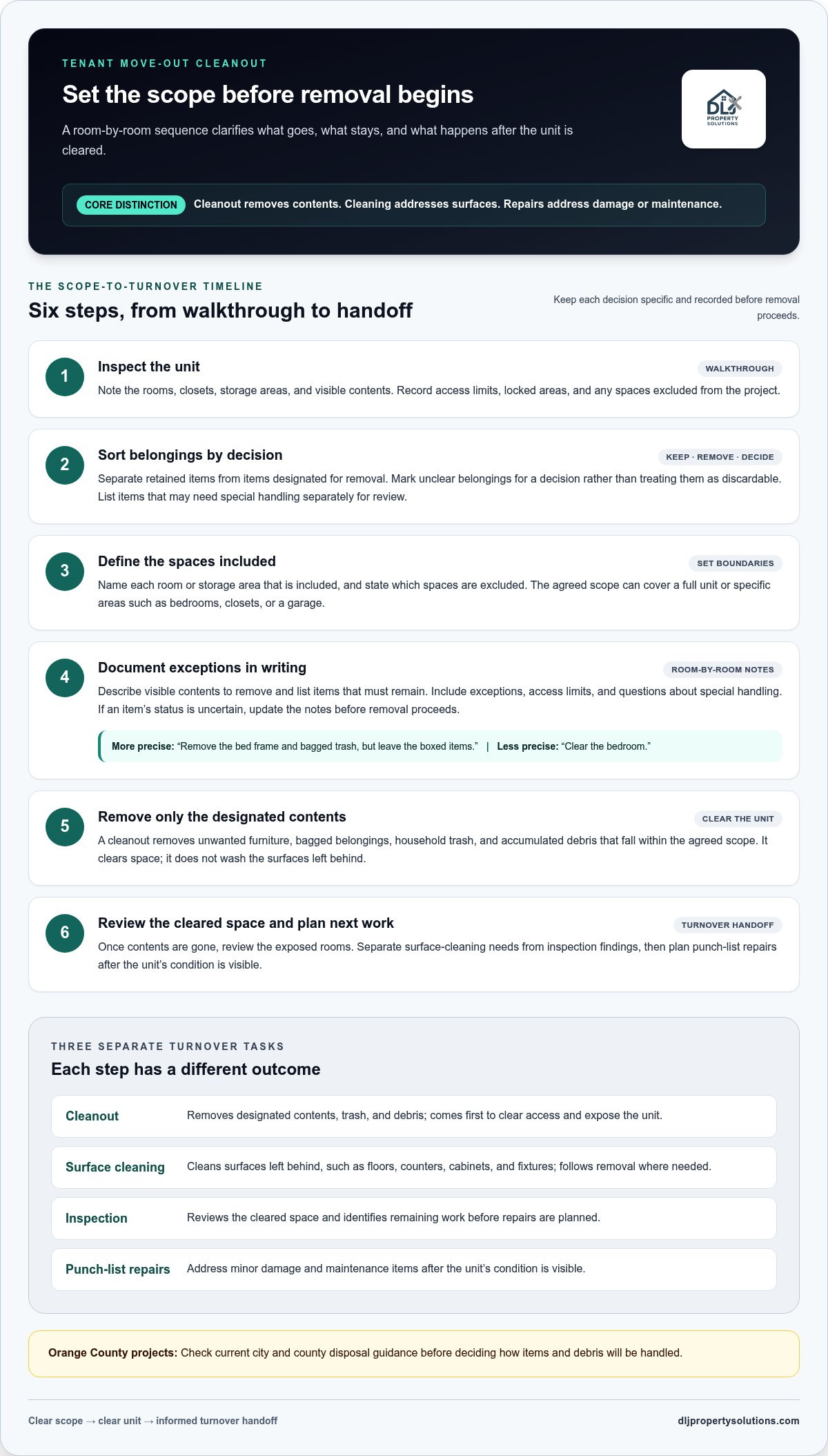
Set the scope before removal begins. Walk through the unit, sort items by decision, define the spaces included, and write down exceptions. A room-by-room inventory helps define the cleanout and gives everyone a consistent reference during the walkthrough.
Keep the notes factual. Landlord and tenant responsibilities can vary by agreement and location, so use the written scope to clarify the removal task, not to settle legal questions. This Landlord-tenant law overview from Cornell Law School’s Legal Information Institute provides general background on the broader relationship.
How should owners sort belongings before removal?
Separate owner-retained items from belongings designated for removal. Mark unclear items for a decision instead of treating them as discardable. Record access limits, locked areas, and spaces excluded from the project. If an item may need special handling, list it separately for review rather than assuming it falls under standard debris removal.
What should the cleanout scope document say?
Write room-by-room notes. Name each included room or storage area, describe the visible contents to be removed, and list items that must remain. Add exceptions, access limits, and questions about special handling. Specific notes make it easier to compare the agreed scope with the property during a walkthrough.
Use this short sequence to build the document:
- Inspect: Walk the unit and note rooms, closets, storage areas, and visible contents.
- Sort: Mark items to keep, items designated for removal, and items awaiting a decision.
- Define: State which spaces are included and which are excluded.
- Document: Record exceptions and special-handling questions in writing.
Be concrete rather than broad. “Remove all items from the storage closet except the labeled tool box” gives clearer direction than “clear the closet.” If conditions change or an item’s status is uncertain, pause that decision and update the notes before removal proceeds. A marked-up room list or simple inventory can keep the walkthrough focused and help prevent avoidable misunderstandings.
Once the scope is set, the removal work has a clear boundary. DLJ Property Solutions LLC handles property cleanouts and focused turnover punch-list repairs after trash-out. Review the property cleanout services to plan the removal and next steps.
Cleanout, Cleaning, and Repairs: What Comes Next?
A tenant move out cleanout clears unwanted contents, trash, and debris. It does not automatically clean every surface, identify every defect, or repair damage. Treat each task as a separate step so the unit can be reviewed before follow-on work is planned.
| Task | Purpose | Typical place in turnover |
|---|---|---|
| Cleanout | Remove designated contents, trash, and debris. | First, to clear access and expose the unit. |
| Surface cleaning | Wash or clean surfaces left behind. | After removal, where cleaning is needed. |
| Inspection | Review the cleared space and identify remaining work. | After removal, before repairs are planned. |
| Punch-list repairs | Address minor damage and maintenance items. | After the condition of the unit is visible. |
Keep the sequence practical: remove contents, review the cleared rooms, then plan cleaning and repairs based on what’s actually needed. The California tenant rights resource from the state Department of Justice provides general information about landlord and tenant issues. For a specific tenancy question, consult the applicable rules and guidance.
Does a cleanout leave a rental unit ready for the next tenant?
Not by itself. Readiness depends on the unit’s condition and any cleaning, inspection, or repair work still required. Clearing a room may reveal carpet marks, grime, or damage that furniture had hidden. Removing debris is separate from carpet washing or exterior pressure washing, which may help when those surfaces need attention. Don’t treat an empty unit as a finished turnover.
When do post-cleanout turnover repairs fit?
Plan punch-list repairs after unwanted contents are out and the affected areas can be reviewed. Repairs may address minor damage or maintenance items identified during the walkthrough. Keep this work focused. A small repair list is different from full remodeling or renovation, and clearing a property does not mean it has been renovated or fully repaired.
DLJ Property Solutions LLC connects property cleanouts with focused turnover punch-list repairs after trash-out. The handoff gives the next step a clear starting point: the unit is cleared, remaining work is visible, and repairs can be identified based on the actual condition of the space.
Coordinate a Tenant Move-Out Cleanout in Orange County
A smooth cleanout depends on clear instructions before work starts and a defined handoff afterward. For a tenant move out cleanout in Orange County, line up access, removal scope, retained belongings, and next steps. Keep those details in one written plan so the cleanout team and the person reviewing the unit work from the same information.
What should a property manager prepare before the cleanout?
Provide access instructions and identify every room or storage area included. Set aside owner-retained belongings and list items that still need a decision. Note access restrictions, excluded spaces, and the intended handoff after removal. A short checklist helps keep the job within scope:
- Access: Record entry instructions and any areas that can’t be entered.
- Scope: List the rooms and spaces included in the cleanout.
- Retained items: Identify what must remain and where it is located.
- Exceptions: Flag uncertain items or items needing separate review.
- Handoff: State who will review the cleared unit and identify follow-on work.
Keep the instructions specific. “Clear the unit” can leave room for interpretation. A room-by-room list of included spaces, retained items, and exceptions gives the walkthrough a reliable reference.
How can local disposal requirements affect planning?
Disposal requirements can differ by material and local jurisdiction. Don’t assume every item is suitable for ordinary trash disposal. Before planning removal in Orange County, check current guidance from the county and the city where the property is located. Use that information to flag items that may need separate handling instead of treating all contents as one debris category.
After removal, document the cleared space. Note visible conditions and remaining items, and record areas that need cleaning, inspection, or punch-list repairs. This creates a clear turnover handoff and separates what was removed from the work that remains.
Use this order: prepare access and scope, identify retained items and exceptions, verify applicable disposal guidance, then review and document the cleared unit. That sequence keeps decisions visible and gives the next step a clear picture of the property.
For help coordinating a property cleanout and turnover handoff, plan your tenant move-out cleanout with DLJ Property Solutions LLC.
Move from Tenant Cleanout to Property Turnover
A cleanout is the handoff point between removing unwanted contents and preparing a property for its next use. Start with the agreed scope. Document what was removed, note any items or spaces outside the scope, then review the cleared unit to identify remaining work. This gives turnover a clear next step instead of leaving cleaning or repairs buried in the removal task.
What happens during a cleanout-to-turnover handoff?
Walk the property after contents are removed. Compare the cleared spaces with the scope notes, and flag anything that remains or needs separate attention. Then identify the work that follows, such as surface cleaning or minor punch-list repairs. Keep the handoff focused on what the property needs next. A tenant move out cleanout clears the way for that review, but it doesn’t replace it.
DLJ Property Solutions LLC handles residential and commercial property cleanouts, removing unwanted items, trash, and debris. When minor maintenance or damage remains after trash-out, focused turnover punch-list repairs can be part of the next step. The workflow is straightforward: clear the unit, review its condition, and define the remaining work.
When can add-on cleaning support the turnover?
Cleaning needs depend on the surfaces and condition left behind. Commercial carpet washing can support turnover when commercial-grade carpet needs attention. Pressure washing may suit applicable exterior surfaces or entryways. These services are distinct from removing contents and fit into the plan when those surfaces need attention.
Keep the final review simple. Confirm which areas were cleared, record items or spaces excluded from the scope, and list the cleaning or repairs still to be handled. That record helps the next person act on the unit’s actual condition, not assumptions about what a cleanout covered.
For a coordinated path from property cleanout to focused turnover work, share your property cleanout project details.
Set Up a Clear Path to Turnover
A well-planned tenant move out cleanout starts with a written scope. Identify what stays, what goes, and which spaces are included. Once contents are removed, review the cleared unit to determine whether surface cleaning or minor repairs remain. Cleanout, cleaning, and repairs serve different purposes, so a clear handoff keeps each task visible.
DLJ Property Solutions LLC removes unwanted contents, trash, and debris from residential and commercial properties. When the walkthrough identifies minor turnover work, post-cleanout punch-list repairs can address those remaining items. Let the property’s condition guide the next step.
Ready to plan the removal and turnover handoff? Share your tenant move-out cleanout project details. A defined scope gives the work a practical starting point and helps move the property toward its next use with confidence.
Frequently Asked Questions
What is included in a tenant move-out cleanout?
A tenant move-out cleanout removes unwanted items, trash, and debris from the rooms or storage spaces listed in the agreed scope. It may cover a whole unit or only specified areas. It’s separate from surface cleaning, carpet washing, inspection, and repairs. Before work begins, write down what stays, what goes, and any exceptions. Clear notes help keep removal focused on the intended contents and spaces.
Does a tenant move-out cleanout include cleaning?
No. A cleanout focuses on removing unwanted contents, trash, and debris. It doesn’t automatically clean floors, kitchens, bathrooms, or carpets. Once the space is clear, review surfaces and list any cleaning still needed. Commercial carpet washing is a separate service for commercial-grade carpets. In an Orange County turnover plan, keep removal and cleaning as distinct tasks so it’s clear what has been completed and what remains.
What happens to belongings left behind after a tenant moves out?
Identify which belongings the property owner wants removed and which must remain. Don’t assume every item left in the unit belongs in the cleanout. Record unclear items as exceptions and resolve them before removal starts. If an item may need special handling, separate it from the standard scope and check current guidance for the property’s Orange County city or jurisdiction before deciding how to manage it.
How do I prepare a rental unit for a tenant move-out cleanout?
List the rooms and storage areas to be cleared, then separate retained belongings from items designated for removal. Write down access instructions, restricted spaces, and items still awaiting a decision. Share these scope notes before work begins. After the unit is cleared, walk through the space and identify any remaining cleaning, inspection, or minor repair needs. A room-by-room plan makes the removal work easier to direct and review.
Can a tenant move-out cleanout make a rental unit ready for the next tenant?
A tenant move-out cleanout can clear unwanted items, trash, and debris, but that’s only one part of turnover. The unit may still need cleaning, inspection, or repairs before the next occupant. Review the vacant space and list any remaining tasks. DLJ Property Solutions LLC provides property cleanouts and focused post-cleanout punch-list repairs for minor turnover needs. The property’s condition determines what work follows removal.
How should Orange County property owners handle items requiring special disposal?
Handling can depend on the item and the local jurisdiction. Don’t assume everything can go in ordinary trash. During scope planning, identify items that may need separate handling and keep them distinct from the standard cleanout list. Then check current Orange County or city guidance that applies to the property before deciding the next step. This keeps disposal questions visible without treating every item as routine debris.
Can cleanout and turnover repairs be coordinated together?
Yes. Clearing unwanted contents first makes it easier to inspect the unit and identify remaining punch-list work. DLJ Property Solutions LLC handles property cleanouts followed by focused repairs after trash-out, including minor maintenance and damage items. Keep removal and repair tasks distinct in the scope, then review the cleared property to define the handoff. This gives the turnover work a clear sequence without confusing cleanout with renovation.


