

The contents set the pace for a storage unit cleanout in Orange County, CA. Storage unit cleanout services may take longer when a unit holds many items, needs careful sorting, or has limited access. The facility may require you to be present or add the crew to its access list.
Clearing a unit takes more than hauling everything out. Decide what to keep, donate, recycle, or dispose of, then leave the space ready for its next use. A clear plan helps prevent delays.
This guide explains what affects the timeline, what can be removed, and how estimates and booking work. It also covers donation and recycling options, plus the access details to arrange before cleanout day. You’ll know what to expect and how to prepare.
Key Takeaways
- Plan the cleanout around the unit’s contents, sorting needs, and access conditions. These factors shape how long the work takes.
- Clear photos or an on-site look can help show the amount and type of material to remove.
- Sort items into keep, remove, donate, and recycle groups before the cleanout to make decisions easier.
- Pricing depends on the project’s scope and handling needs. Share clear details when requesting a quote.
- Ask the storage facility about access arrangements, including whether you need to be present or add the crew to the access list.
Donation and recycling options
Sort contents into groups to keep, donate, recycle, or dispose of. Organize items by condition and material, and follow your instructions for each group.
Donation of Usable Items
Set aside clean, usable items for donation before removing debris. Examples include intact chairs, functional kitchenware, unopened household goods, and clothing without damage. Separate each category in a box or clearly marked pile. Donation centers decide what they accept, so condition matters: a working lamp is a better candidate than one with a broken cord. Keep personal items and anything with identifying information out of donation loads.
What happens to items removed during a storage unit cleanout? Usable belongings can be set aside for donation, recyclable materials sorted by type, and unwanted items prepared for disposal. DLJ Property Solutions can clear unwanted items and debris from residential and commercial properties, following your instructions about what stays and what goes.
Remove confidential documents, valuables, and sentimental items from the general cleanout pile first. Place documents in a sealed box for secure destruction, and keep jewelry, cash, photographs, and family keepsakes with you. Label the box “KEEP” and set it apart before sorting begins. This helps prevent important items from being mixed with debris or donation goods.
Recycling and Eco-Friendly Disposal
Separate cardboard, metal, glass, and recyclable plastics from general debris. Flatten clean boxes and keep recyclable material dry. Set aside electronics separately, since their components differ from household packaging. For example, don’t put a printer in a cardboard pile. Clear sorting makes recycling easier and reduces the chance that reusable materials end up in disposal loads.
Use a simple sorting sequence: identify items to keep, set aside donation candidates, group recyclable materials, then isolate remaining waste. Check each box and container before disposal. Old paperwork may contain account details, while storage bins can hide small valuables. If the unit holds mixed materials, label each pile to keep decisions clear during removal.
Plan the cleanout around the items you’re still paying to store. That example makes the disposal decision practical: keep only what has a clear use, and separate reusable goods before removing the rest.
How long does it take to clean out a storage unit in Concord, NC?
There’s no single timeline for every unit. The amount packed inside, sorting decisions, carrying distance, and access conditions all affect the work. A lightly filled unit with everything marked for removal is different from one with stacked boxes and items to keep. An estimate should reflect the workload, not just the unit’s size. When working with DLJ Property Solutions LLC in Orange County, CA, the facility’s access process also shapes the schedule.
Do storage facilities require proof of authorization before a cleanout? Some facilities require the renter to be present or to add the crew to the access list. Arrange entry with the facility before the scheduled removal.
An on-site estimate makes it possible to assess the contents and route. The crew can see whether boxes block the back wall, whether large furniture needs separate handling, and how far items must travel to the loading area. These details shape the removal plan. For an accurate estimate, describe what stays and what goes before the visit.
Photos can help when an in-person visit isn’t practical. Take clear views from the doorway, then photograph crowded corners and bulky items separately. Add labels or a short note identifying what’s unwanted and what must remain. For example, a picture of a sofa beside stacked cartons gives more useful context than a close-up of one box. Include blocked areas rather than leaving them out.
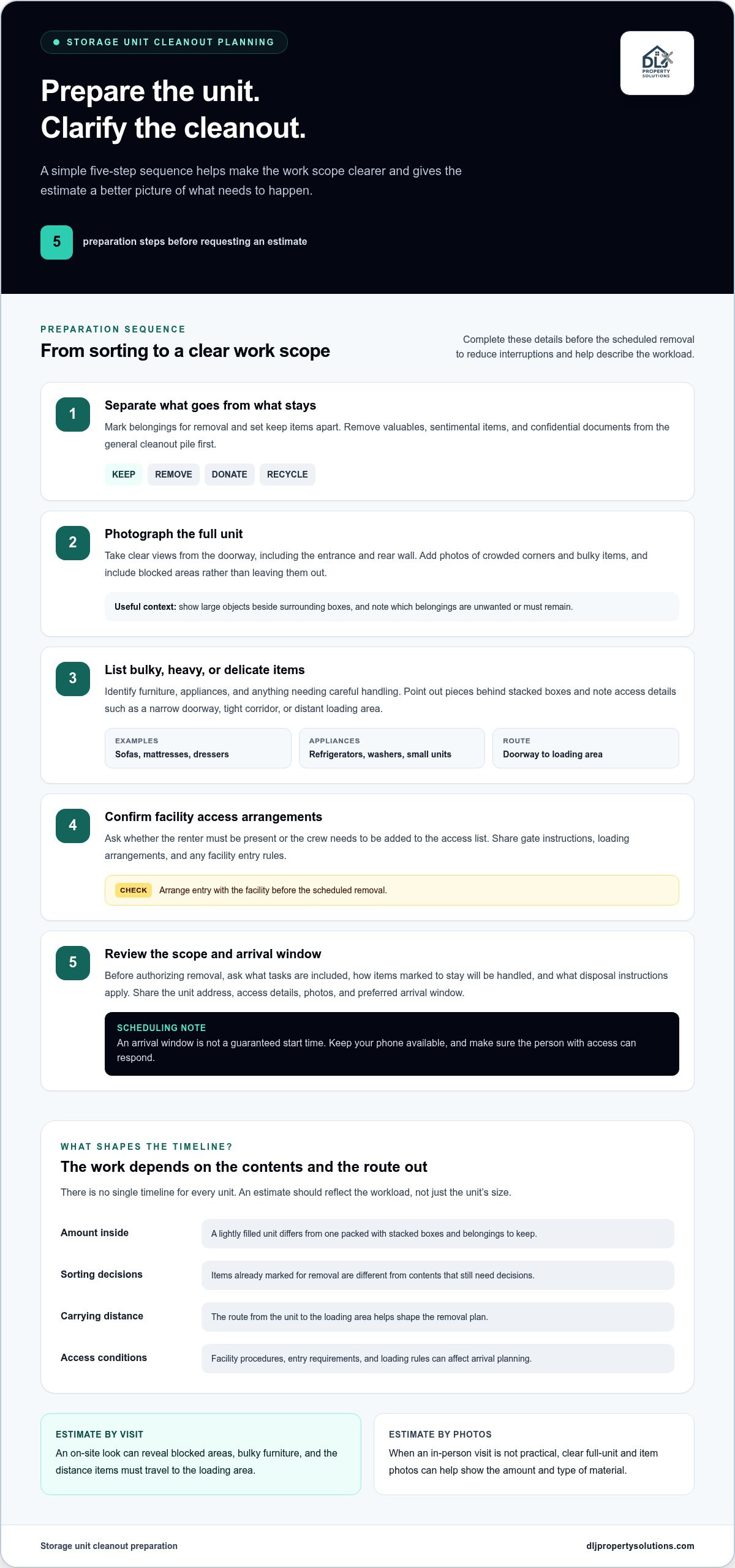
Use this preparation sequence before requesting an estimate:
- Separate items for removal from belongings you’re keeping.
- Photograph the full unit, including the entrance and rear wall.
- List large objects, heavy items, and anything needing careful handling.
- Ask the facility about access, renter presence, and crew listing.
- Request the work scope and expected arrival window before authorizing removal.
An online booking request can start with the unit address, access instructions, photos, and a preferred arrival window. In Orange County, facility entry procedures and loading rules can affect arrival planning, so share gate instructions and any loading arrangements. An arrival window is not a guaranteed start time. Keep your phone available, and make sure the person with access can respond.
A pre-work estimate gives you a chance to review what removal covers before work starts. Ask for the expected tasks, how items marked to stay will be handled, and the disposal instructions. If an estimate is advertised as free, make sure its terms and scope are clear. A written plan helps prevent disagreements when the crew reaches a packed unit.
For a faster clear-out, finish sorting before the crew arrives. Mark items to keep, remove valuables, and clear the path to the unit door. These steps reduce interruptions and give the estimate a clearer basis.
Types of items removed
A storage unit may hold furniture, appliances, boxes, electronics, and loose debris. Sort belongings by type and mark anything that must stay before removal begins.
Furniture and Appliance Removal
Furniture removal may include sofas, mattresses, dressers, desks, and shelving. Appliances may include refrigerators, washers, or small countertop units. Point out bulky items before scheduling, especially pieces behind stacked boxes. Clear a path from the unit entrance to the loading area, and identify items that need careful lifting. A written keep list helps prevent mistakes during removal.
Before arranging junk removal, consider each item’s size, weight, and access route. A narrow doorway, tight corridor, or distant loading area can affect the removal plan. For example, note whether a sectional sofa separates into pieces or a cabinet has loose shelves. Empty drawers and appliance interiors where possible, and set aside items you intend to keep.
Electronics, Boxes, and Other Items
Electronics may include televisions, computers, printers, speakers, and small devices. Keep cords with their matching equipment, and identify anything that contains personal files. Boxes can hold books, clothing, tools, kitchenware, or mixed belongings. Label boxes as keep, remove, or review. Don’t treat a sealed box marked “review” as unwanted until you’ve inspected it.
Other contents may include rugs, lamps, sports gear, plastic bins, and broken household goods. Describe unusual items when arranging removal, such as a long workbench or multiple file cabinets. Specific descriptions give the crew a clearer picture than “miscellaneous junk.” Separate items with sharp edges or loose parts so they don’t become hidden hazards during lifting.
Professional junk removal can make sense when the unit contains bulky furniture, heavy appliances, or more belongings than you can safely move. It can also help when stairs, limited vehicle space, or a tight deadline complicate a self-managed clear-out. Compare the workload with the equipment, help, and trips you can arrange yourself. A few labeled boxes may be manageable; a packed unit with a refrigerator and cabinets is a different job.
To request a pickup, prepare the facility address, unit access instructions, and a short inventory. Include large items, box volume, and anything staying behind. Share clear photos when available, then confirm the arrival window and facility entry process. Keep keys and authorization details ready. If your plans change, update the pickup details before the crew arrives.
Online booking and upfront pricing
A clear booking request gives the estimate a useful starting point. Share the unit location, contents, access details, and preferred arrival window.
Online Cleanout Booking
Use the booking form to describe what needs removal and what stays. Include the facility address, unit number, access instructions, and photos showing the full space. List bulky items separately, such as a sofa, refrigerator, or filing cabinet. Specific details help shape the removal plan before the appointment.
Before submitting, check the storage facility’s entry process. Note whether the renter must attend or add the crew to an access list. Include gate codes or loading instructions where appropriate. Booking is easier to coordinate when the person with access can meet the arrival window and answer questions about belongings left inside.
Choose an arrival window that gives you time to prepare. Remove valuables, mark items staying, and clear clutter from the unit entrance. If access changes, update the booking details promptly. These steps help the removal crew avoid delays and focus on the agreed contents.
Upfront Pricing
The price depends on the unit’s contents, access, removal scope, and handling needs, and is provided after a quote request. A useful quote explains what removal covers, including bulky items, loose debris, and belongings marked to stay. Review the scope before approving the work so the expected tasks are clear.
Photos can improve a quote request when they show the entire unit, not just selected items. Add notes about blocked corners, stairs, long carrying distances, or a tight loading area. For example, a visible stack of boxes beside a large desk gives better context than a photo of the desk alone. Accurate details reduce surprises at the appointment.
Ask how a quote handles changes in scope. Finding extra boxes behind a cabinet can affect the workload, while removing fewer items may change the labor or hauling required. Keep the agreed item list available on cleanout day. The crew should follow your instructions for keepsakes and items not included for removal.
Professional junk removal can help reclaim your space when clutter fills the unit or heavy belongings make moving them yourself impractical. Before booking, decide whether you need a complete clear-out or removal of selected items. Separate recyclable materials from disposal items where possible. A clear plan helps keep reusable contents from going straight to a landfill and sets practical expectations for pickup.
Storage unit cleanout service availability
Scheduling depends on access, the unit’s contents, and the facility’s rules. Plan those details first, especially if you need to clear the space before a rental deadline.
Access determines whether a cleanout can proceed as planned. Storage facilities may require the renter to attend or add the crew to the access list. Arrange entry before the scheduled visit, and account for gate procedures or loading restrictions. If you can’t attend, arrange access for the crew beforehand. Without entry, removal can’t proceed as planned.
The work also depends on the unit’s location and the requested scope. Share the facility address, unit number, and a clear description of what needs clearing. List bulky belongings separately from boxes and loose debris. If the unit is in a multi-level building, mention stairs, elevators, and the distance to the loading area. These details help define the work and equipment needed for heavy lifting.
Use this planning sequence to reduce avoidable scheduling problems:
- Confirm who can provide access to the storage unit.
- Ask the facility about renter presence and crew access-list requirements.
- Separate belongings to keep from items for removal.
- Describe large objects, blocked paths, and loading-area limits.
- Choose an arrival window that works with facility access.
Donation plans can affect the cleanout route. Set aside usable goods and identify local charities you intend to contact. Keep donation items apart from disposal material, and label each group clearly. This prevents a usable chair or unopened household item from being mixed with debris. Follow facility rules about staging items outside the unit, and use exterior space only when allowed.
Clarify what the removal plan covers before the appointment. A full clear-out differs from removing selected furniture while leaving labeled boxes behind. State whether the unit should be emptied completely, and identify items that must remain. Clear instructions help the crew work through the space without interrupting to sort belongings or resolve unclear decisions.
For a smooth arrival, keep the access contact reachable and the path to the unit open. If a facility changes entry instructions, update the plan before the appointment. These practical steps make service availability easier to coordinate without assuming a particular arrival time or access arrangement. To discuss a property cleanout, send your cleanout details.
DLJ Property Solutions: Property cleanouts
DLJ Property Solutions LLC handles property cleanouts when a storage space or property needs unwanted contents removed. This service can also support a turnover when clearing debris is one part of preparing the space for its next occupant.
After a trash-out, DLJ Property Solutions LLC performs repairs to help prepare properties for the next client. Commercial carpet washing and pressure washing add-ons can address additional cleaning needs. These services are useful when storage unit cleanout services are only one part of getting the space ready to use again.
Share the property details and the work needed to plan the next step. Contact DLJ Property Solutions LLC to discuss a cleanout.
Put the Cleared Space to Work
An emptied unit creates a useful decision point. Decide what the space needs to support next, whether that means ending storage, organizing retained belongings, or preparing a property for its next occupant. Set that goal before arranging additional work to keep the next steps purposeful.
Storage unit cleanout services can help when handling the contents yourself no longer suits the task. For broader property needs in Orange County, DLJ Property Solutions handles property cleanouts. Commercial carpet washing and pressure washing add-ons can address related cleaning work when appropriate.
Before reaching out, gather the facility address, access instructions, and a short description of the work. Include what should be removed and what must stay. These details give the conversation a practical starting point and help define the right next step for the space.
Contact DLJ Property Solutions to discuss a property cleanout. A clear plan can help you move from stored clutter to usable space.
Frequently Asked Questions
Do I need to be at the storage facility?
Not always, but facility access rules determine whether you must attend. Some facilities require the renter to be present or to add the crew to the access list. Contact the facility office before the appointment to arrange the required entry method. If you won’t be there, make sure the authorized person can provide access and answer questions about items that must remain.
What do your storage clean out services include in Charlotte, NC?
Property cleanout services can help remove unwanted items, trash, and debris from residential and commercial spaces. The company also performs repairs after trash-outs to help prepare properties for the next occupant. Commercial carpet washing and pressure washing add-ons support related property needs. Check whether the company serves your area before booking.
What is the first thing I should do when I arrive at the unit?
Verify that you’re at the correct unit before moving anything. Compare the unit number with your rental records, then check the doorway and floor for anything obstructing access. Identify belongings you must keep, such as keys, paperwork, or a labeled box, and set them aside before moving items toward the exit. This helps prevent important items from leaving with the load.
What do storage unit cleanout services include?
Storage unit cleanout services generally focus on removing the contents you’ve identified for removal. The agreed scope should distinguish items to take from belongings that stay, such as a desk for removal and sealed boxes to keep. It should also specify whether you need a full clear-out or selective removal. Ask for these boundaries in the written work description so everyone follows the same plan.
How much does it cost to clean out a storage unit?
The price depends on the job and is provided after a quote request. Cost factors include the amount and type of contents, access to the unit, carrying distance, and requested removal scope. A packed unit with bulky furniture requires a different plan from a mostly empty one. Share an accurate inventory and photos so the quote reflects the actual work rather than assumptions.
How do storage cleanout companies price jobs, by unit size, volume, or labor?
Pricing can reflect the workload, not just unit size. The amount to remove, bulky items, access route, and labor required all affect the estimate. For example, two units with the same dimensions may require different work if one contains loose boxes and another holds heavy furniture. Provide a clear item list and access details, then compare the quoted scope with the job you need done.
Can storage cleanout companies donate, recycle, or sell usable items?
Donation and recycling can be part of the plan when you separate suitable items and give clear instructions. Acceptance depends on the receiving organization’s criteria and each item’s condition. Don’t assume a cleanout includes selling belongings or arranging a sale. Identify what you want handled, keep valuables and personal records separate, and label donation candidates so they aren’t confused with items for disposal.
How should I prepare for a storage unit cleanout appointment?
Prepare a keep list and remove valuables before the appointment. Confirm facility access, the correct unit number, and any gate or loading instructions. Mark items staying in place, and clear the route to the exit. If someone else will meet the crew, share the item decisions and access details with them beforehand. Clear instructions help prevent delays and accidental removal.


