

Office cleanouts are won or lost in the haul-out. Office cleanout services in Irvine, CA can remove unwanted desks, chairs, cabinets, and other bulky items, along with general junk and trash. Start by identifying what stays and what goes, then clear the space for its next use.
That distinction matters when furniture is awkward to move and unwanted items are spread across offices, meeting rooms, and shared areas. A clear scope keeps the job organized and helps avoid leaving items behind.
This guide explains what office furniture hauling and junk removal can include, how to plan a cleanout from inventory through final clearance, and which project details to provide when requesting a quote. It also covers when repairs and related property services can help prepare the space for its next use.
Key Takeaways
- Make a furniture list and note access constraints so the haul-out plan accounts for bulky items and the route out of the office.
- Sort unwanted materials by type before removal. Clear categories help define what the cleanout needs to handle.
- Understand what an estimate covers by comparing the requested scope, labor, and removal volume, rather than focusing on office size alone.
- Separate electronics and confidential records from general office debris so each can be handled according to its specific needs.
- Plan the next step for the cleared space, including property cleanout work and any needed repairs after trash removal.
Hauling and furniture removal
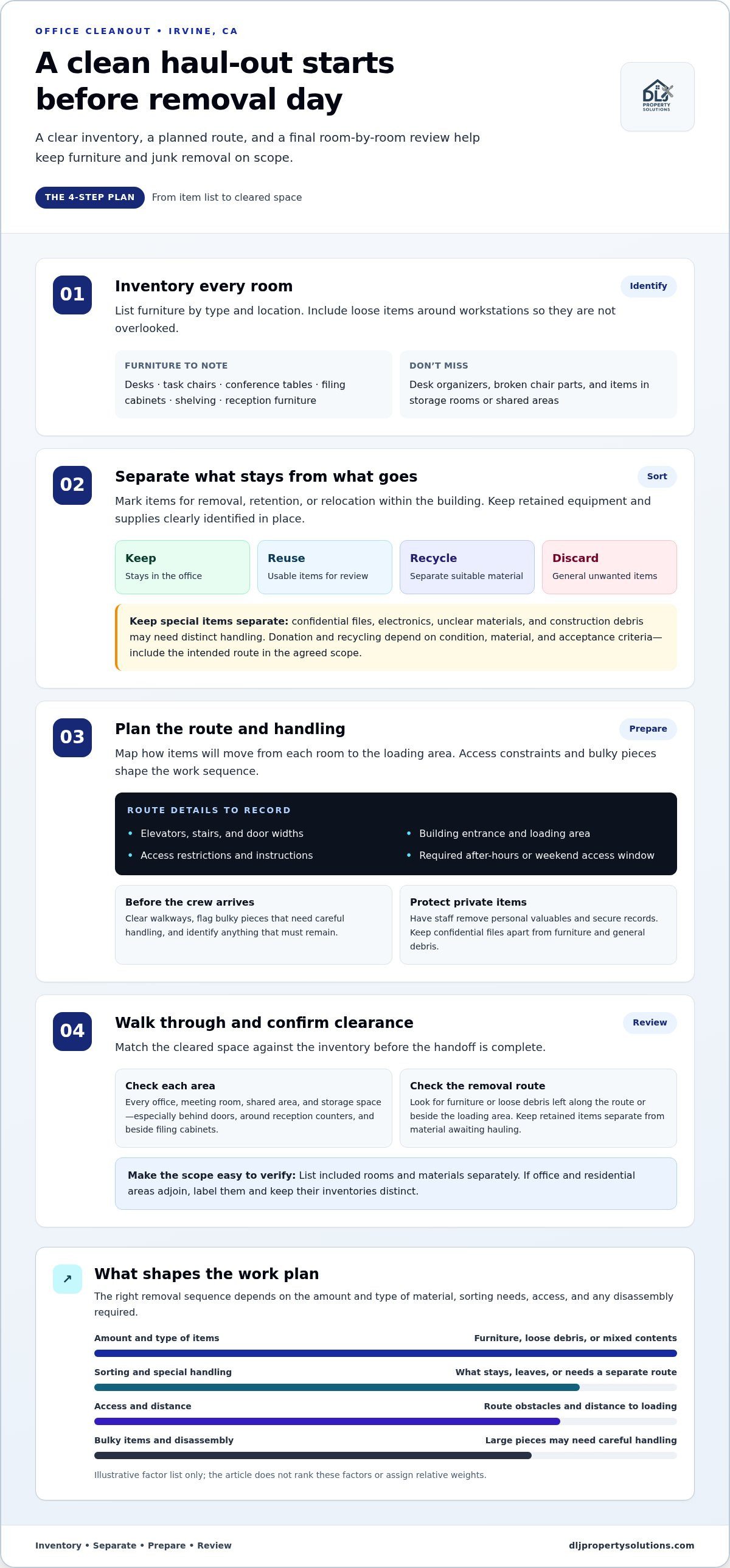
Start office furniture hauling with a room-by-room inventory. List desks, task chairs, conference tables, filing cabinets, shelving, and reception furniture. Mark each item for removal, retention, or relocation within the building. A clear list keeps usable furniture from being mistaken for discarded items.
Next, map the removal route. Note elevators, loading areas, door widths, stairs, and access restrictions. A large conference table, for example, may need partial disassembly to pass through a narrow doorway. Record the building entrance and loading instructions alongside the inventory.
- Identify: Record each furniture type and its location.
- Separate: Mark items staying in the office apart from items leaving.
- Prepare: Clear walkways and flag bulky pieces that need careful handling.
- Review: Match the final cleared rooms against the inventory.
These steps clarify the hauling scope. A single desk and chair call for a different plan than a full suite with cubicle panels, storage units, and meeting-room furniture. Include loose items around each workstation, such as desk organizers or broken chair parts, so they aren’t overlooked.
To compare Irvine companies, review comments about completed commercial jobs, communication, and cleanup, then compare the written scope and service options. Ask for current insurance documentation and check that the described work covers the furniture, access route, and removal area.
Before the crew arrives, have staff remove personal valuables and secure records. Assign someone to identify items that must remain and mark them clearly. Keep confidential files separate from furniture and general debris.
The work plan depends on the amount and type of furniture, sorting needs, access, and disassembly. When planning after-hours or weekend work, include the building’s required access window in your project details.
For example, removing standard desks from an open room involves fewer handling steps than clearing a room with heavy cabinets and partition panels. The number of bulky items, distance to the loading area, and route obstacles all shape the work sequence.
Finish with a walkthrough of every room and shared area. Check behind doors, around reception counters, and beside filing cabinets for remaining pieces. If the office adjoins residential space, label the two areas separately and keep their inventories distinct.
Keep public-area litter work separate from a scheduled office furniture haul. Litter removal on City of Irvine right-of-way is performed three times a year, but that service is not a pickup plan for furniture being removed from a building. Focus the furniture inventory, access instructions, and loading arrangements on items included in the removal scope. If discarded material is near a public route, identify it clearly and specify how it should be handled.
During the final review, check that furniture and loose debris have not been left along the removal route or beside the loading area. Keep items intended to remain on site separate from material awaiting hauling, and make the handoff clear to the person overseeing the work. If the job includes more than furniture, record those materials separately so the crew can distinguish them from the listed pieces. This keeps the walkthrough tied to the inventory and makes it easier to confirm that the agreed removal area has been cleared without confusing building contents with nearby public space.
Junk and trash removal
Office junk includes more than desk-side waste. A cleanout may uncover cardboard, packaging, broken fixtures, outdated supplies, and loose debris in storage rooms. Make a room-by-room list before removal, separating ordinary trash from items for reuse, recycling, or distinct handling.
Start with four categories: keep, reuse, recycle, and discard. Label boxes and mark bulky items clearly. For example, separate empty cardboard cartons from mixed waste and set aside usable shelving for a reuse decision. This helps prevent recyclable or reusable items from ending up with general trash.
Permit requirements depend on the work scope, while disposal depends on the material and the receiving facility’s acceptance instructions. Separate ordinary contents from construction debris or materials needing special handling, then follow the relevant facility requirements for each stream.
Donation and recycling depend on condition, material, and acceptance criteria. Identify usable furniture or supplies first, then separate recyclable materials from trash. Make the intended route for each category part of the agreed scope rather than assuming donation or recycling is included.
- Paper and cardboard: Keep clean, recyclable material separate from food waste and mixed debris.
- Furniture: Set aside usable pieces for a reuse decision before loading.
- Mixed office trash: Gather loose packaging, damaged supplies, and non-reusable items together.
- Unclear materials: Isolate them until their handling route is established.
Plan a clear loading sequence. Remove sorted, non-bulky material first, then clear larger items blocking access to what remains. Keep the route from the office to the loading area open. This reduces repeated handling and makes overlooked debris behind cabinets or in storage corners easier to spot.
Before work starts, assign one person to answer questions about what stays. Mark retained equipment and supplies in place. For example, don’t leave a box of archived paper beside discard piles if staff still need it. A final room check can catch misplaced items before removal is complete.
Request a written removal scope that identifies the included rooms, materials, and handling plan for sorted items. This helps prevent confusion about leftover boxes or items outside the agreed work.
If the work extends beyond loose office debris, plan a complete property clearout around the contents and condition of the space. A defined scope keeps removal, sorting, and final checks moving in sequence.
Which Irvine office cleanout companies offer free estimates and on-site assessments?
A free estimate and an on-site assessment are different parts of project planning. “Free” describes the estimate’s charge; “on-site” describes where the scope is reviewed. A written estimate should state what work it covers, whether it includes a site visit, and which items or rooms are outside the scope.
For an Irvine office, a walkthrough can reveal details photos often miss. A narrow service entrance, a long route to the loading area, or furniture on several floors can affect the work plan. The assessment should identify those conditions and connect them to the requested removal tasks.
Compare companies by the details they put in writing, not by the word “free” alone. Look for an itemized scope that names the rooms, contents, labor, and removal tasks. For example, confirm that a quote covering reception furniture also addresses storage-room debris if both areas need clearing.
- Visit: Does the estimate describe an in-person walkthrough or rely on submitted information?
- Scope: Does it list rooms, furniture, loose debris, and exclusions?
- Access: Does it account for elevators, stairs, loading areas, and building rules?
- Changes: Does it explain how newly identified items affect the written scope?
Use the same inventory for each estimate. List desks, filing cabinets, cartons, and other removal categories, and note which items stay. This gives each company a consistent project description and makes differences in scope easier to spot.
A useful assessment records site conditions, not just item counts. A row of cubicles, for instance, may require a different work sequence from loose chairs in an open room. The written plan should connect the layout to the requested tasks.
Clarify estimate terms before comparing options. Check whether a site visit carries a charge, whether the estimate itself is free, and how long the stated scope remains valid. A no-charge estimate doesn’t automatically mean every assessment or later project change is included.
Before comparing totals, review what each estimate includes. One may cover furniture removal only, while another includes loose trash from back offices. Align the scope first, or a lower figure may simply reflect less work.
If the property cleanout needs more than contents removal, include the space’s condition in the project description. A clear assessment can distinguish clearing rooms from planning repairs after trash removal, rather than combining separate tasks in a vague line.
What factors affect office cleanout pricing, such as office size, volume, and labor?
The price depends on the project scope and is provided after a quote request. Key factors include the amount and type of contents, labor, access, sorting, and any disassembly needed. Office size helps describe the job, but square footage alone doesn’t show how much must be removed.
Volume matters because a mostly empty suite differs from a packed office. A conference room with a table and chairs may take less handling than storage filled with cartons, broken equipment, and discarded supplies. List items by room and category to describe the scope clearly.
Labor depends on the work each item requires. A light chair is handled differently from a heavy filing cabinet or a partition that needs disassembly. Stairs, long corridors, elevator access, and a distant loading area can add handling steps, so note these conditions when describing the site.
Sorting affects the work plan. Separate contents for removal from items that must stay, and identify materials needing different handling. For example, mixed cartons in a storage room need additional sorting if some contain supplies to retain. A clear inventory helps define the work before the quote is prepared.
- Office layout: Describe rooms, floors, hallways, and access points.
- Contents: List furniture, loose debris, cartons, and equipment by area.
- Labor: Flag heavy pieces, disassembly, and difficult routes.
- Scope: Identify what stays, what leaves, and which areas are included.
Project boundaries also shape the estimate. Clearing one storage room differs from removing contents throughout a suite. Name each area included in the scope. If the space needs separate work after removal, describe it as a distinct task rather than assuming it’s part of the cleanout.
Use the same written inventory when comparing estimates. Check whether each covers the same rooms, removal categories, access conditions, and labor requirements. A lower estimate may describe a narrower scope. Compare the work listed, not only the final amount.
Before requesting a quote, walk through the office and record exceptions. Mark retained furniture, note bulky items, and identify blocked routes or loading restrictions. Photos can show a crowded storage area or a large table; label what each image depicts.
Request a written scope that names included areas, removal tasks, and exclusions. This makes changes easier to identify if additional items appear during the cleanout. Clear project details give the estimate a practical basis and help align the work with the space’s actual contents.
A cleaning-service listing advertising service in Orange County quoted a price of 195 for two cleaners and two hours. This is a stated cleaning-service price, not a quoted price for an office cleanout, so it should not be used as a direct estimate for removal work. Its limited value is as a reminder to check what a quoted amount covers: the service, the workers, and the time specified. For a cleanout, compare estimates against the written inventory and tasks included, rather than assuming a cleaning rate accounts for sorting, lifting, or disassembly.
Do Irvine office cleanout services handle furniture, electronics, and confidential documents?
Furniture, electronics, and confidential documents need separate plans. A cleanout scope can identify all three categories, but removal and disposal are distinct tasks. List each category before work begins. For example, separate desks from desktop computers and file boxes instead of treating everything as general office debris.
Furniture is usually the most visible category. Identify desks, chairs, shelves, cabinets, and conference tables for removal. Mark pieces that stay or move to another room, and flag large or assembled items that may need disassembly. This helps prevent a retained cabinet from entering the removal pile.
Electronics need their own sorting step. Group computers, monitors, printers, phones, and cables apart from ordinary trash. Remove business equipment from employee workstations only after the responsible staff member approves it. A labeled “retain” area keeps active devices separate from equipment designated for removal.
Confidential documents require a separate decision. Identify records that must remain accessible, records scheduled for internal retention, and papers approved for disposal. Keep sensitive files in a controlled area until your organization’s records lead directs their next step. Don’t assume a cleanout includes document destruction unless that task is explicitly in scope.
- Furniture: Mark each piece for removal, relocation, or retention.
- Electronics: Separate devices and accessories from mixed office debris.
- Documents: Have the records lead sort and control sensitive files.
- Shared areas: Label equipment in conference rooms and reception areas.
Assign one staff contact to make decisions during the walkthrough. That person can distinguish a retired printer from a shared device still in use and identify file cabinets containing records that need review. Clear ownership prevents rushed decisions when removal reaches an active workstation.
Before work starts, remove access cards, keys, and personal items from desks. Check drawers, cabinets, and printer trays for papers or equipment. A final room-by-room review can catch a forgotten laptop or a folder behind a cabinet.
Include these categories in the project scope. State which furniture leaves, which electronics are included, and how your organization will manage confidential records. This keeps the physical cleanout separate from internal data and records decisions.
If clearing the office also involves preparing the property after contents are removed, plan the next property cleanout step around the space’s remaining needs.
DLJ Property Solutions LLC: Property cleanouts
DLJ Property Solutions LLC handles property cleanouts when an office needs clearing before its next use. The company also performs focused repairs after trash-outs to help prepare the space for its next occupant. This is a practical next step when removal is complete but the property still needs attention.
For offices with additional cleaning needs, commercial carpet washing can address carpeted areas. Pressure washing is available as an add-on for exterior surfaces. These services can help when clearing the interior is only part of preparing the property.
Share the areas to be cleared and describe any follow-up work needed. This gives the project discussion a clear starting point. Request a quote from DLJ Property Solutions LLC for your property cleanout.
Set Up the Space for What Comes Next
A cleared office creates a useful handoff point. Decide what the space needs before employees return, a new occupant arrives, or another use begins. Build that decision into the cleanout plan so removal and follow-up work support the same outcome.
For office cleanout services in Irvine, CA, DLJ Property Solutions LLC connects property cleanouts with practical next steps for the space. After trash removal, focused repairs can help prepare the property for its next occupant. Commercial carpet washing and pressure washing as an add-on can address additional cleaning needs inside or outside the property.
Start with the rooms, contents, and remaining work that need attention. A focused project description makes it easier to discuss the right scope and keep the handoff clear.
Contact DLJ Property Solutions LLC to discuss your property cleanout. Take the next step with a clear plan for the space.
Frequently Asked Questions
What office cleanout services are available in Irvine, CA?
Office cleanout services in Irvine, CA include commercial property cleanouts that remove unwanted furniture, equipment, trash, and non-hazardous debris. In Orange County, DLJ Property Solutions LLC offers three cleanout levels: Bulk Trash Removal, Broom & Rake Finish, and Full Turnkey Cleanout. A business preparing a vacant suite can choose removal alone or add finishing and interior cleaning. Commercial carpet washing and pressure washing as an add-on address additional property needs.
What permits or disposal rules apply to commercial cleanouts in Irvine and Orange County?
Permit requirements depend on the work scope. Disposal depends on the material and the receiving facility’s acceptance instructions. Separate construction debris or materials needing special handling, then follow the applicable facility requirements.


