

What estate clearouts cost depends on what needs to be removed and the work required to clear the property. Volume, access, and bulky items all affect the scope. A piano, appliance, or hot tub, for example, can require more handling than a room count suggests.
Property size is only part of the picture. The contents and their destination matter, too. Separating items for family, donation, resale, recycling, or disposal can change the handling involved, while difficult access and heavy items may add work.
This guide explains what an estate clean-out covers and how those choices affect the overall cost. You’ll see where recycling may reduce disposal, why bulky items need separate consideration, and which details help make a cost estimate more useful. The goal is a clear view of the work before the cleanout begins.
Key Takeaways
- Compare DIY and professional cleanouts by weighing labor, transport, disposal, and the time the work will take.
- Sort belongings by their next destination: donation, resale, recycling, or disposal. Each route has different handling needs.
- Account for hauling and labor separately when reviewing a cleanout estimate; these can shape the total beyond the amount of debris.
- Donated items in good used condition may qualify for a tax deduction based on fair market value under IRS rules.
- Flag pianos, hot tubs, and refrigerant-containing appliances early. Bulky items can require separate handling and affect the cleanout plan.
What Is an Estate Clean-Out?
An estate clearout removes unwanted contents from a home after a death, move, or property transition. It may include furniture, clothing, kitchen goods, documents, and debris. Families can set aside belongings to keep and identify items for donation, resale, recycling, or disposal. The workload depends on volume, access, and the condition of the contents, not just the number of rooms.
Estate cleanout companies may quote by the hour, by truckload, or by project. The estimate often reflects both the volume of belongings and the labor involved. A packed room, for example, can take more work to clear than a sparsely furnished room of the same size.
Estate clearout costs can vary by location because labor, hauling, disposal, and access conditions differ. To understand the local scope, compare estimates using the same inventory and requested work, and note what each includes for removal and disposal.
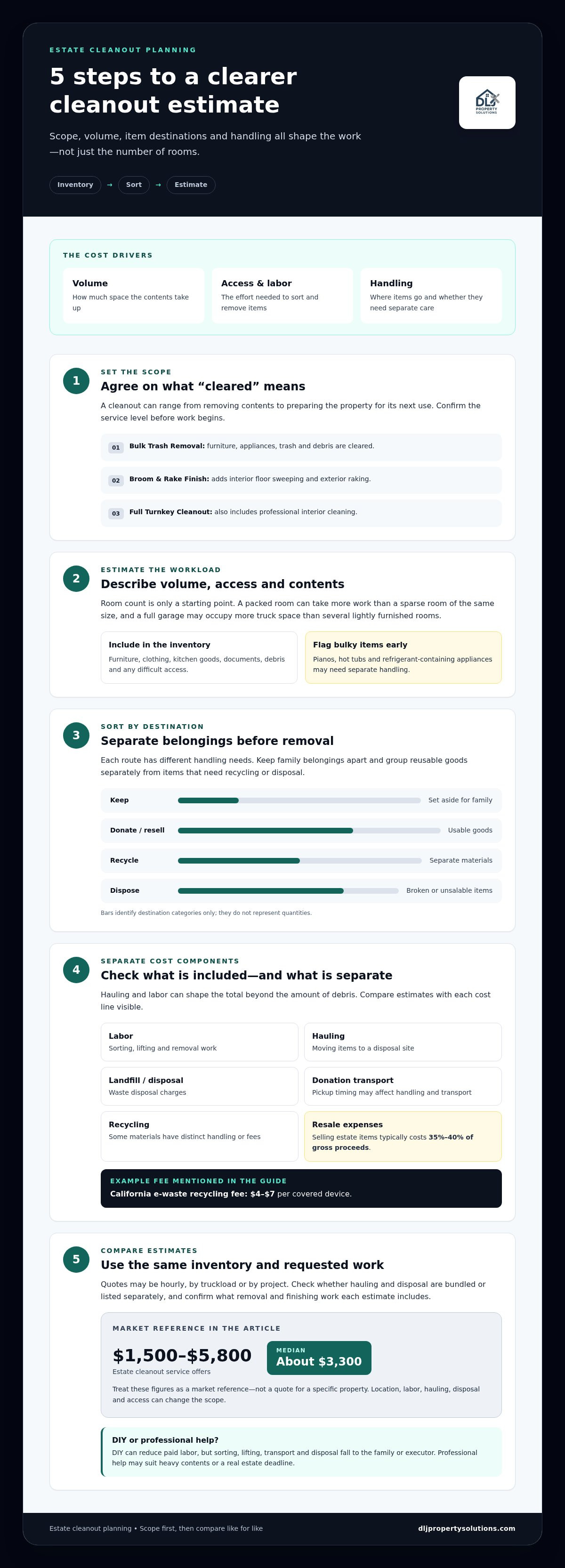
Property size helps set the scope, but it does not determine the final cleanout cost alone. A small apartment generally takes less handling than a large home with full closets, a basement, and a garage. Across the market, estate cleanout service offers typically range from $1,500 to $5,800, with a median of about $3,300. Treat that as a market reference, not a quote for a specific property.
An estate clearout can involve more sorting than basic junk removal. Junk removal typically focuses on hauling unwanted items, while an estate clearout may also separate belongings for family, resale, donation, or recycling. A home with usable furniture and mixed household goods, for example, requires decisions and handling beyond loading everything for disposal.
A cleanout may include removing unwanted contents and finishing the property to a specified level. The scope matters: Bulk Trash Removal clears furniture, appliances, trash, and debris, while Broom & Rake Finish adds interior floor sweeping and exterior raking. Full Turnkey Cleanout also includes professional interior cleaning, leaving the property cleared and ready for sale, rental, inspection, or its next occupant. Agree on the service level before work begins.
A DIY cleanout can reduce paid labor, but it puts the sorting, lifting, transport, and disposal work on the family or executor. Professional help may suit a property with heavy contents or a real estate deadline. Coordinate removal with family decisions and the planned listing date, and set aside documents and keepsakes before the cleanout begins.
Donation, resale, and disposal options
Each item’s destination affects handling, hauling, and the final waste stream. Sorting before removal helps separate reusable goods from materials that need disposal.
Disposal and Recycling Fees
Disposal and recycling may involve different handling, depending on what the cleanout includes. Identify items that need a separate destination when describing the scope.
For example, California’s Electronic Waste Recycling Fee is $4-$7 per covered device. Separating electronics from household trash helps identify that fee and keeps recyclable materials out of the landfill stream.
Donation and resale also involve costs. Selling estate items typically costs 35%-40% of gross proceeds, so compare the expected return with the effort and handling involved.
Landfill and Hauling Charges
Landfill charges pay for waste disposal, while hauling covers moving items from the property to a disposal site. Both can affect the total when the cleanout includes heavy or high-volume loads.
Use a clear sorting plan. Keep family belongings separate, group usable goods for donation or resale, and identify items that require recycling or disposal. An apartment with a few reusable furnishings may need a different mix of services than a property filled with damaged furniture and mixed debris.
Donation can keep usable goods in circulation, but pickup timing and item condition affect the route. A scheduled pickup may add transportation and handling costs. Resale can recover some value, though the 35%-40% share of gross proceeds typically spent on selling estate items reduces the amount returned to the estate.
Disposal may be the more direct route for broken or unsalable belongings. It can also move the cleanout faster when the timeline is tight and sorting or arranging resale would delay removal. Weigh that speed against landfill charges and truckload costs, especially when the property contains dense or bulky materials.
Separate these line items in a cost comparison: donation transport, resale expenses, recycling fees, landfill tipping, and hauling. For example, an estimate that includes hauling but separates landfill charges should be compared differently from one that bundles both. If removal leaves the space needing repairs, repairs after trash out can help prepare it for its next use.
Donation, resale, and disposal costs
Truck volume, labor, and item handling shape the estimate beyond the sale or donation value of belongings. A clear inventory helps show what drives the removal total.
Truckload and Volume Costs
Truckload estimates reflect the space contents occupy, so the volume of belongings matters more than room count alone.
A garage packed with furniture can take up more truck space than several lightly furnished rooms. Grouping belongings by destination also clarifies the work: items for donation, resale, and removal may need separate handling. That gives the estimate a clearer basis than a general description such as “one full house.”
Contents take up different amounts of space. Boxed clothing stacks tightly, while chairs, tables, and mattresses are bulkier. A basement with large furniture, for example, may need more hauling capacity than an apartment with a similar number of smaller items.
Donation and resale plans can change how items are loaded and moved. Separate usable goods before disposal, then identify anything requiring its own pickup or handling. Selling estate items typically costs 35%-40% of gross proceeds, so compare the likely return with the work of managing the sale.
Labor and Hauling Expenses
Labor and hauling expenses cover the crew’s time and the work of moving contents from the property.
Stairs, narrow exits, and a distant loading point can add carrying work even when the contents take up less truck space. A ground-floor room near the driveway is easier to clear than an upper-floor room with the same furniture. Describe both the contents and the route they need to travel.
Use the same inventory when comparing estimates from estate cleanout services. List major furniture, appliances, packed rooms, and any separate donation or resale pickup. This makes differences in labor assumptions easier to spot.
Truckload and hourly estimates measure different parts of a job. A volume estimate reflects how much space the contents take up; an hourly estimate reflects crew time. A project estimate may combine removal, loading, and hauling. Before comparing totals, clarify what each estimate includes and whether disposal is part of the scope.
Time also affects the total workload. Sorting items for resale takes extra handling compared with removing them as disposal. For a property with dense clutter, separate valuable or reusable goods first. That simple sorting step gives the estimate a more accurate picture of what the crew will haul and what requires another destination.
Potential savings through donation and recycling
Donation and recycling can keep some usable contents out of disposal, while resale may return value to the estate. The practical benefit depends on the items, how they are sorted, and the handling involved.
Sort room by room. In a bedroom, separate clean clothing, usable furniture, electronics, and damaged items. Keep family keepsakes and documents apart from goods for donation or resale. This helps prevent personal belongings from being removed by mistake and clarifies what remains to be cleared.
Donations may have tax implications. Taxpayers considering a deduction should follow applicable IRS rules and keep records for qualifying donated items. The relevant value is not necessarily the original purchase price. Consult a tax professional about how those rules apply to your situation.
Resale offers a different kind of return. It can produce proceeds, but managing listings, buyer communication, and item pickup takes work. Selling estate items typically costs 35%-40% of gross proceeds. Compare the expected return with the time and handling required. A usable sofa may be worth listing, while low-value household goods may be easier to donate or recycle.
Recycling can reduce the amount sent to landfill when contents include accepted materials. Separate electronics from general household waste, and keep recyclable metal apart from broken furniture. California’s Electronic Waste Recycling Fee is $4-$7 per covered device. That fee is one example of how recycling a specific item can involve its own disposal cost.
Donation coordination affects the cleanout schedule. Group similar items, keep them accessible, and arrange the intended destination before removal. A family with several rooms of usable goods can set aside one area for donation and another for resale. Clear separation makes it easier to identify what leaves the property and what still needs a decision.
Keep a simple record while sorting. Note each item’s condition and intended destination, such as “working lamp, donation” or “damaged chair, removal.” Keep donation records if you plan to claim a tax deduction. For resale, record proceeds and related selling costs. This helps distinguish financial returns from items simply removed from the home.
Removing fewer contents may reduce the amount of hauling involved, but donation and recycling still require coordination. Compare the likely value of resale or any potential tax benefit with transportation, selling expenses, and the work of preparing items. Decide item by item: a usable appliance, a box of books, and a broken dresser may each have a different destination.
Special handling for bulky items
A piano, hot tub, or large appliance can change the scope of an estate clearout. Its weight, dimensions, location, and removal route affect the handling required. List bulky items upfront so the estimate reflects the actual job rather than treating every item as ordinary household contents.
Access matters as much as an item’s size. A piano on an upper floor with narrow stairs needs a different removal plan from one beside a ground-floor entrance. Describe the route, turns, doorways, and distance to the loading point. A long carry can add work even when the item is near an exit.
Pianos and hot tubs may require specialized handling or dismantling. A piano’s weight and shape can make movement through stairwells and doorways more difficult. A hot tub may need to be disconnected and broken down before removal. Note whether the item is intact, where it is located, and whether the route has obstacles. Photos of the item and access path can help explain the job.
Refrigerators, freezers, and other appliances containing refrigerants need a separate disposal path. EPA Section 608 of the Clean Air Act requires certified refrigerant recovery before appliances containing refrigerants are disposed of. Keep these appliances separate from general debris so their handling doesn’t get lost in a mixed load.
Other oversized items may also need planning. A safe, large cabinet, or heavy exercise machine can be difficult to move through tight spaces. List each separately, note its location and exit route, and describe obstacles such as low ceilings or fragile flooring. This gives the cleanout team a clearer picture of the work.
Bulky-item handling can also affect the rest of the cleanout. A piano may take more crew time and truck space than several smaller pieces. A dismantled hot tub may need its components separated by material or disposal route. These details affect how items are staged, loaded, and removed. They can also influence the number of hauling trips.
Before work begins, use a short inventory:
- Record each bulky item, its condition, and its location.
- Describe stairs, narrow doorways, and the route to the exit.
- Identify appliances that contain refrigerants.
- Separate items for removal from belongings the family is keeping.
That inventory helps expose special handling needs before they become delays. If a property needs a full cleanout alongside bulky-item removal, arrange a property cleanout as the next step.
DLJ Property Solutions LLC: Property cleanouts
In Orange County, California, DLJ Property Solutions LLC provides property cleanouts to remove unwanted contents and clear a space for its next use. After a trash-out, the company also completes turnover repairs to help prepare the property for its next occupant or owner.
For commercial properties, DLJ Property Solutions LLC offers commercial carpet washing to clean flooring after contents are removed. Pressure washing is available as an add-on for exterior surfaces. These services can address different parts of a property turnover, depending on the work the space needs.
Share the property details and the work required, then request a quote from DLJ Property Solutions LLC.
Plan the Property’s Next Use
Understanding what estate clearouts cost is only part of planning. Decide what the property must be ready for next, then set the handoff around that need. A sale, new occupant, or commercial turnover may call for different work after removal. Write down the required condition and who is responsible for each remaining task.
DLJ Property Solutions LLC provides property cleanouts and repairs after trash-outs. For commercial spaces, the company also offers commercial carpet washing, with pressure washing available as an exterior add-on. Keep the property’s next use in mind when defining the scope, so removal and follow-up work support the same turnover plan.
Share the property details and the work needed to move it forward. Contact DLJ Property Solutions LLC to discuss the next step. A clear scope gives you a practical starting point for getting the property ready for its next use.
Frequently Asked Questions
How Much Does It Cost to Clean a House After a Death?
The amount of work depends on what remains in the property and what needs to be removed. Before requesting a quote, identify belongings the family wants to keep, items for donation or resale, and contents to remove. This helps define the scope clearly.
How much does an estate cleanout cost in the United States?
Across the United States, estate cleanout services on the market typically range from $1,500 to $5,800, with a median of about $3,300. This is a market reference, not a price for a particular property or provider. A smaller, lightly furnished home differs from a property with extensive contents, difficult access, or bulky items. Compare estimates based on the same removal scope and disposal arrangements.
What is the average cost per square foot for an estate cleanout?
This measure is only a starting point: square footage doesn’t show how densely rooms are packed or how much sorting and lifting the contents require. Two homes with the same floor area may need different amounts of work if one has clear rooms and the other has full closets and storage spaces.
What factors affect estate cleanout pricing, such as home size and amount of belongings?
Property size and contents volume are major factors, but access and item type also shape the work. A home with a full garage, basement, and storage areas has more to clear than its living space alone suggests. Stairs, long carries, heavy furniture, and items with separate destinations can add handling. A useful scope identifies the areas included, the contents to remove, and the requested service level.
What extra fees apply for hauling, disposal, hazardous materials, or deep cleaning?
Hauling and disposal may be charged separately, so check whether the estimate includes both. Hazardous materials require specialized disposal; their handling needs and applicable processing affect the final scope.
How do estate cleanout costs compare with junk removal, dumpster rental, and DIY cleanouts?
Dumpster rental and a cleanout are different ways to approach removal. Compare the work involved in handling and loading contents yourself with a cleanout scope that includes removal and the requested finishing.
How can I get an accurate estate cleanout quote and avoid hidden fees?
Give the estimator a complete scope: list the rooms, storage areas, large items, and anything staying in the property. Ask for a written breakdown showing labor, hauling, disposal, donation handling, and any requested cleaning as separate inclusions or charges. In Orange County, California, DLJ Property Solutions LLC offers property cleanouts and accepts quote requests through its website. A shared inventory makes it easier to compare the same work across estimates.


