

A vacant apartment isn’t ready just because the keys are back. “Make ready” means preparing the unit for its next resident through cleaning, needed repairs, an inspection, and clear documentation of completed work. Apartment turnover services in Orange County, CA, organize these tasks between move-out and the next move-in.
Turnovers can involve more than a quick clean. The work depends on the unit’s condition, the repair scope, and the property team’s inspection and documentation process. A clear scope and practical sequence help move the unit from vacant to ready without missing tasks.
This guide explains what make ready covers, how turnover work is scoped, and what affects a quote. It also breaks down cleaning, repairs, inspections, and photo documentation so you can plan the handoff and see where property cleanouts and punch-list repairs fit.
Key Takeaways
- “Make ready” means preparing a vacant apartment for its next resident, with work shaped by the unit’s condition and the property’s handoff process.
- Set the work scope before booking. A clear task list helps organize cleaning, repairs, inspection, and documentation.
- Turnover pricing depends on the unit’s condition, the amount of work, and the services required. The quote follows the project details.
- Use inspection notes and consistent photos to record the unit’s condition and show which tasks are complete.
- When a unit needs debris removed, a property cleanout followed by punch-list repairs can help move it toward the next occupancy.
Apartment turnover booking process
Plan a rental turnover around the move-out date, required work, and next move-in. A written scope gives the team a clear sequence and helps track outstanding tasks.
Scheduling and Completion Timing
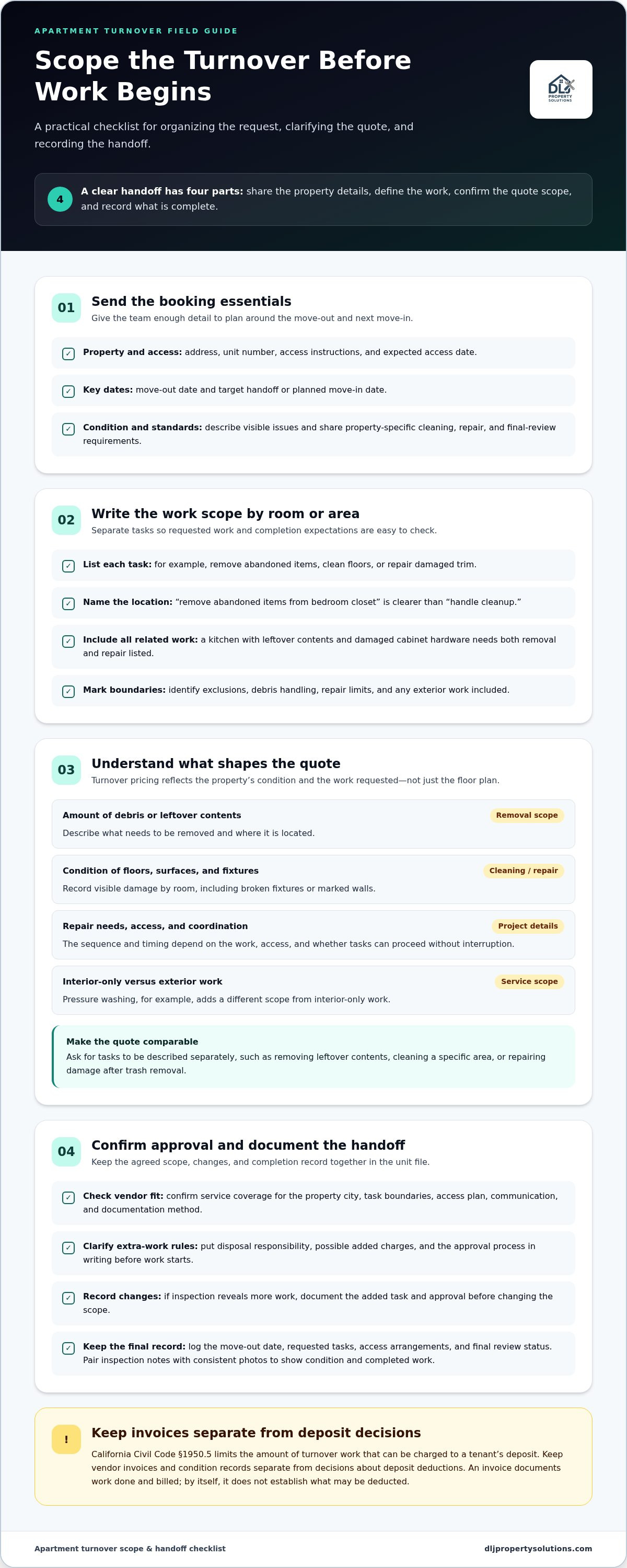
Start by sharing the unit’s address, expected access date, move-out condition, and target handoff date. List each task, such as removing abandoned items, cleaning floors, or repairing damaged trim. The sequence depends on the work, access, and whether tasks can proceed without interruption. A unit needing debris removal and several repairs requires a different plan from one needing cleaning alone.
How quickly can Orange County vendors complete an apartment turnover? Timing depends on the unit’s condition, scope, access, and coordination between work stages. Provide the move-out and planned move-in dates when requesting a quote, then identify which repairs or cleaning tasks must be finished before inspection.
Use this booking sequence to reduce back-and-forth:
- Send the property address, unit number, access instructions, and key dates.
- Describe visible issues and list requested work by room or area.
- Share any property-specific standards for cleaning, repairs, and final review.
- Agree on the task scope and how completed work will be reported.
For example, a kitchen with leftover contents and damaged cabinet hardware needs both removal and repair in the scope. Naming both tasks at the outset helps prevent an incomplete handoff.
Vendor Selection Checks
Before hiring, compare the proposed scope with your turnover checklist. Confirm that the vendor understands unit access, task boundaries, debris handling, repair limits, and how completed work will be recorded. A clear written scope should identify rooms, requested tasks, exclusions, and who handles follow-up if an inspection finds unfinished work.
What should property managers check before hiring an apartment turnover vendor? Review the written scope, communication process, access plan, and documentation method. Match each requested task to the work offered, and clarify how scope changes will be recorded before work begins.
Check service coverage by city as well as by task. Do Orange County turnover vendors serve Anaheim, Irvine, Santa Ana, and nearby cities? Coverage varies between companies. Include the property city and address in your request so the proposed scope and schedule apply to the right location.
Keep the handoff record with the unit file. A property manager can log the move-out date, requested tasks, access arrangements, and final review status in one checklist. This gives the leasing team a practical view of what remains before the rental is ready for its next occupant.
Apartment turnover pricing
Turnover pricing reflects the work required, not just the apartment’s floor plan. A vacant unit needing light cleaning differs from one with abandoned belongings, damaged surfaces, and several repair tasks. Describe the unit’s condition and requested work when asking for a quote.
The quote depends on the property and requested work. Factors include the amount of debris, the condition of floors and surfaces, repair needs, access, and whether exterior work is included. Pressure washing, for example, adds a different scope from interior-only work.
Break the request into clear tasks. Ask for each item to be described separately, such as removing leftover contents, cleaning a specific area, or repairing damage after trash removal. This makes it easier to compare the proposed scope with your checklist and identify work that needs approval before it begins.
- Record visible damage by room, including broken fixtures or marked walls.
- Separate cleaning, removal, repair, and exterior tasks in the work request.
- State access instructions and the required handoff date.
- Ask how added work is documented and approved.
Watch for unclear exclusions, disposal terms, travel charges, or extra-work rules. These can affect the final invoice if the original scope leaves them open. What risks or hidden fees should landlords watch for when booking turnover services? Look for vague task descriptions, unclear disposal responsibility, and charges triggered by added work. Put the scope and approval process in writing before work starts.
California Civil Code §1950.5 limits the amount of turnover work that can be charged to a tenant’s deposit. Keep vendor invoices and condition records separate from decisions about deposit deductions. A work invoice shows what was done and billed; it does not by itself establish what may be deducted from a tenant’s deposit.
Use the written quote as a working document. Match every task to a room or property area, then specify what completion looks like. For example, “remove abandoned items from bedroom closet” is clearer than “handle cleanup.” If an inspection reveals more work, record the added task and approval before changing the scope.
For a useful quote request, send the property address, unit condition, requested tasks, access details, and target handoff date through the turnover service request page. Specific details help connect the quoted scope to the work the property needs.
Photo documentation and inspections
A room-by-room inspection turns a vacant apartment into a clear task record. Pair each photo with a location and written note so the property team can distinguish completed work from open items.
Start at the entry and follow the same route through the unit each time. Capture the kitchen, bathrooms, living areas, bedrooms, closets, and any shared or exterior areas included in the scope. Take a wide view to show the overall condition, then closer images of specific issues, such as a cracked tile or stained carpet. Keep the sequence consistent for move-out and final inspections.
Use a simple label for each image: unit, room, and issue or task. For example, “Unit 12, kitchen, cabinet door damage” identifies the location and concern without relying on memory. Add a short note with the image when the condition needs context, such as whether the item was included in the approved repair list.
- Photograph each room before work begins.
- Record visible damage and items requiring attention.
- Capture completed work from a comparable angle.
- Match each final image to the relevant task or inspection note.
During the initial walkthrough, compare the apartment’s condition with the work order. A loose bathroom handle, for example, belongs in the inspection notes if repair is requested. If the work order covers cleaning only, record the handle separately rather than treating it as completed work. This keeps the inspection tied to the agreed scope.
At the final walkthrough, revisit the same rooms and check each task against its note. Review surfaces under ordinary room lighting, open cabinets included in the scope, and inspect areas where debris or dust may remain. If a repair is unfinished, identify the exact room and item. “Kitchen incomplete” gives less direction than “replace the damaged cabinet pull.”
Keep the photos and checklist together in the unit’s turnover file. Sort images by room, then group them as pre-work, issue, and completed task. This helps leasing and maintenance staff review the apartment without searching unrelated files. It also makes the handoff clear: what was found, what was addressed, and what still needs attention.
Use consistent framing and labels across properties. A close-up of a wall mark without a room view may be hard to place later. Pair it with a wider shot showing the wall and room, then name the area in a note. Clear records make inspection findings easier to act on and reduce confusion between the property team and the people completing the turnover.
Turnover cleaning, painting, and repairs
California Civil Code §1950.5 limits the amount of turnover work that can be charged to a tenant’s deposit. Keep the cleaning and repair work order, condition notes, and invoices distinct from any deposit decision.
A practical turnover checklist starts with the unit’s condition, then assigns each task. Record what needs cleaning or repair and which surfaces may need paint. For example, a stained bedroom wall may need review, while a broken closet track needs a repair entry. Don’t bundle both under “general touch-up.”
What California and Orange County rules apply to move-out cleaning and security deposit deductions? California Civil Code §1950.5 limits the amount of turnover work chargeable to a tenant’s deposit. Keep a record of the unit’s condition and completed work to support the property’s accounting.
Clean from the top of each room down. Remove dust from reachable ledges, clean cabinet interiors included in the scope, wipe fixtures, and finish floors after other work. In a kitchen, check the stovetop, sink, counters, cabinet fronts, and appliance surfaces. In a bathroom, inspect the toilet, shower, mirror, vanity, and floor.
Painting should follow cleaning and repairs. First identify the affected wall or trim, then address holes or surface damage before applying paint. A full-room repaint and a small patch are different tasks, so list the location and extent separately. Record the completed area in the work order for final inspection.
Repairs also need a defined boundary. Note the item, location, and action needed, such as securing a loose doorknob or replacing a damaged cabinet pull. Separate routine punch-list work from larger projects outside the turnover scope. This helps staff assign tasks and review the unit accurately.
What is the typical apartment turnover checklist for landlords and property managers? Include each room’s cleaning, visible damage, requested repairs, paint needs, and final condition review. Use the same list before and after the work, marking each item open or done.
- Kitchen: clean listed surfaces and note damaged fixtures.
- Bathroom: clean plumbing fixtures and record visible defects.
- Bedrooms and living areas: check floors, walls, doors, and closets.
- Whole unit: remove agreed debris, complete repairs, and review the finished work.
For example, if a closet contains abandoned items and has a damaged shelf, record removal and repair as separate tasks. The final walkthrough can then verify each item independently. A room-by-room checklist gives maintenance and leasing staff a direct handoff, making unresolved work easy to identify before the next resident moves in.
Which Orange County companies offer apartment turnover cleaning and maintenance?
Orange County property teams can arrange turnover work through cleaning providers, maintenance services, and companies that handle debris removal and repairs. The right fit depends on the unit’s condition and the tasks needed before the next rental begins. A provider handling only cleaning won’t complete a repair list unless repairs are included separately.
Start with the property address and task list. Anaheim, Irvine, and Santa Ana are distinct locations, so have the work scoped for the actual property rather than assuming coverage across the county. Describe tasks by room, such as kitchen cleaning, abandoned-item removal, or repair of a damaged door frame. This helps distinguish a full turnover scope from a single-task request.
Compare providers by the work they perform, not broad labels such as “make ready.” Review each proposed scope for cleaning, repairs, debris handling, and the final handoff. If several providers are involved, assign a lead contact for scheduling and share the same task list with each. That helps prevent missed handoffs between cleaning and repair work.
Use these checks to sort the options:
- Match each requested task to a specific service in the written scope.
- Confirm the work location, access plan, and target completion date.
- Separate repairs from cleaning so each item has a clear owner.
- Set a process for recording completed work and unresolved items.
For example, a Santa Ana unit with leftover furniture, marked floors, and a loose cabinet door needs distinct work steps. A removal team can clear the furniture, a cleaner can address the floors, and a maintenance provider can handle the cabinet. One provider may cover multiple tasks, but the scope should still identify each one.
Property managers should consider how the vendor’s work fits their inspection process. If the leasing team needs room-by-room completion notes, include that requirement in the request. List exterior surface work separately from interior cleaning. Clear task boundaries make proposals easier to compare and reduce confusion if the scope changes after a walkthrough.
For a multi-unit property, organize requests by building, unit, and access instructions. A shared checklist lets staff track which apartments need cleaning, repairs, or both. Use consistent task labels across units, such as “bathroom fixture repair” or “bedroom floor cleaning.” This makes status updates useful across the property, rather than dependent on one person’s shorthand.
Choose a provider whose written scope aligns with the property’s needs. When debris removal is followed by repair work, coordinate the steps as one clear turnover sequence, with each task documented before the next occupant moves in.
DLJ Property Solutions LLC: Property cleanouts
DLJ Property Solutions LLC handles apartment cleanouts when a vacant unit still contains unwanted debris or belongings. After trash removal, the team performs turnover repairs to help prepare the space for its next occupant. This sequence fits units that need clearing and punch-list work before the property team continues its turnover process.
Commercial carpet washing addresses carpet care in business spaces, while pressure washing is available as an add-on for exterior surfaces. Make the request specific: describe what needs clearing, identify repairs after trash removal, and note any carpet or exterior surfaces requiring attention. A clear task list helps define the work for the property handoff.
Request a quote from DLJ Property Solutions LLC for the property cleanout and turnover repairs your apartment needs.
Set Up the Next Turnover
Keep the next vacancy from becoming a loose collection of tasks. Turn the inspection record into a work order with clear priorities, access details, and a handoff plan. For property teams coordinating apartment turnover services in Orange County, CA, that step helps align the work with the unit’s actual condition.
Choose work that fits the property. DLJ Property Solutions LLC handles property cleanouts, commercial carpet washing, and pressure washing as an add-on. When trash removal leaves repair items behind, the team can complete turnover repairs to help prepare the property for its next occupant. These services suit a turnover that needs focused clearing, carpet care, exterior washing, or follow-up repairs, rather than property management or renovation.
Send the property details and the tasks that need attention. A clear starting point helps move the request toward a defined scope. Contact DLJ Property Solutions LLC to discuss the work needed for your next turnover. A practical plan starts with the condition of the property and the work in front of you.
Frequently Asked Questions
What does ‘make ready’ mean in apartments?
“Make ready” is the work needed to bring a vacant apartment up to the property’s move-in standard. That standard can cover clean surfaces, working fixtures, clear floors, and documented repairs. For example, a unit may need a cabinet door secured before its kitchen passes the property team’s final review. The specific checklist comes from the property’s expectations, not simply from the phrase “make ready.”
What is an apartment turnover?
An apartment turnover is the work that happens between one resident leaving and another taking possession. It can involve clearing items left behind, cleaning, repairs, inspection, and preparing the unit for leasing or occupancy. For example, a property manager may coordinate carpet washing after furniture removal, then document the finished condition. The turnover scope reflects the unit’s condition and its next-use requirements.
What services are included in apartment turnover services in Orange County, CA?
Included tasks vary by provider and written scope. A turnover request may cover unwanted-content removal, cleaning, repairs, carpet care, or exterior work. DLJ Property Solutions LLC offers property cleanouts, repairs after trash removal, commercial carpet washing, and pressure washing as an add-on. For example, a unit with abandoned items and a repair punch list can be scoped around clearing the space and completing the listed repairs.
How much do apartment turnover services cost in Orange County, CA?
The quote depends on the unit’s condition and the work requested. Debris volume, cleaning needs, repair tasks, carpet condition, access, and add-on exterior work all affect the scope. A unit needing contents removed and follow-up repairs differs from one needing a targeted task. DLJ Property Solutions LLC provides quotes by request rather than publishing service prices online. Send the property details and requested work to request a quote.
Do Orange County apartment turnover services include painting, repairs, and carpet cleaning?
Some providers include these tasks, while others define them as separate work. Read the scope item by item rather than assuming “turnover” covers every surface or repair. DLJ Property Solutions LLC performs repairs after trash removal and offers commercial carpet washing. Include painting as a specifically assigned task in the scope. For example, list a damaged wall separately from a carpet wash so each task has a clear status.
How do apartment turnover service packages and pricing compare in Orange County?
Compare service levels by what each includes, not just by its label. DLJ Property Solutions LLC offers Bulk Trash Removal, Broom & Rake Finish, and Full Turnkey Cleanout. The options range from clearing unwanted contents to finishing work, with Full Turnkey Cleanout also including professional interior cleaning. DLJ Property Solutions LLC publishes no prices online. Request a quote based on the property and selected scope to understand the work involved.


